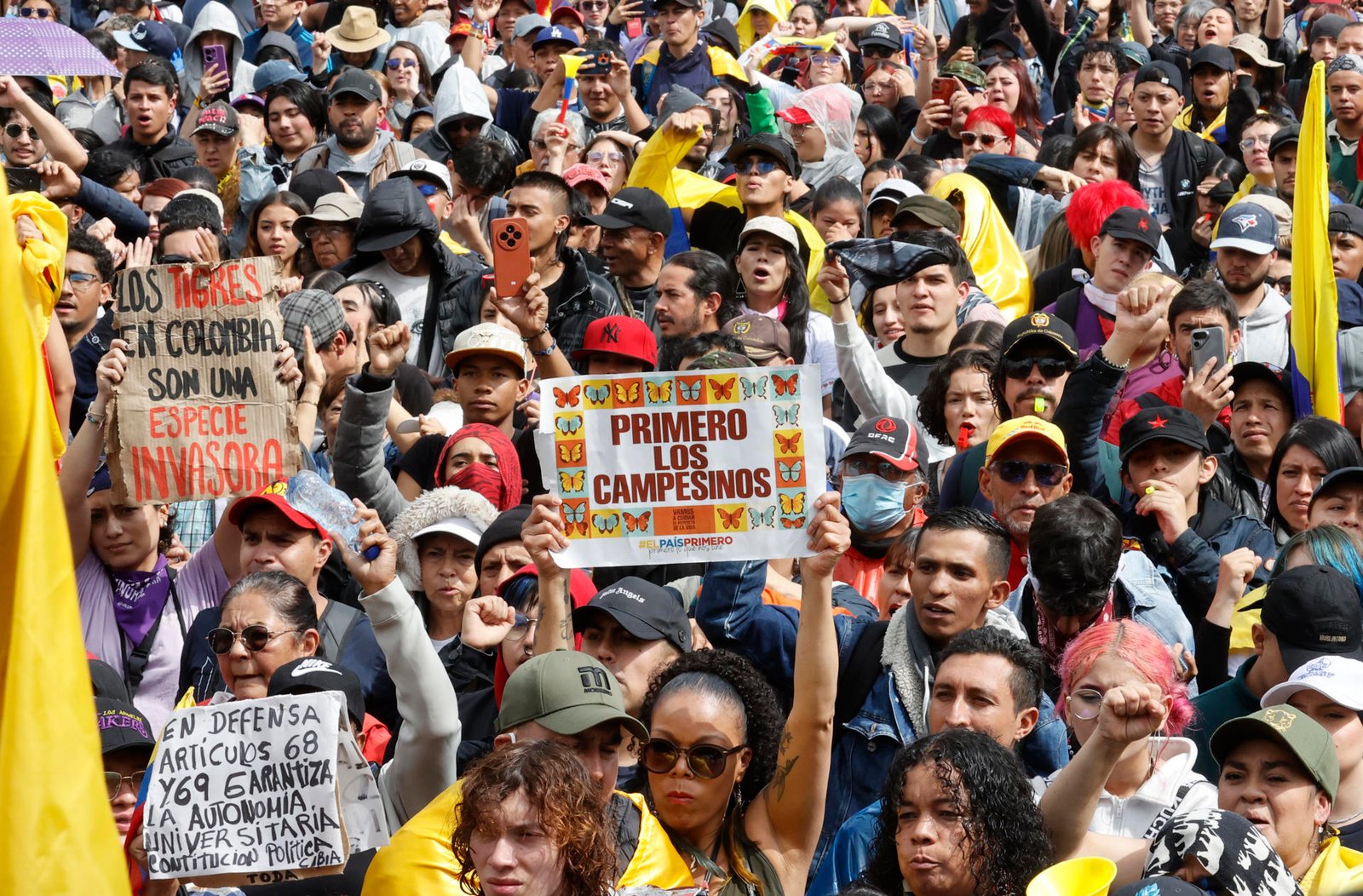
Thousands of Colombians demonstrated this Wednesday in the first national strike against the government of President Abelardo de la Espriellain a demonstration of the strength that opposition parties and union centers maintain on the streets.
The first major protest against the new Executive, which came to power two months ago, brought together different groups in a dozen cities in the country, from union centers to the leftist Historical Pact, to LGBTI groups, indigenous communities, teachers and university students.
The demonstration brought together specific labor, educational, economic, social and territorial demands, but it also gave voice to the general rejection of different civil organizations of the far-right government, its promises (limitations on abortion, ignorance of indigenous associations,…) and its first measures (such as budget cuts and the Social Protest Decree).
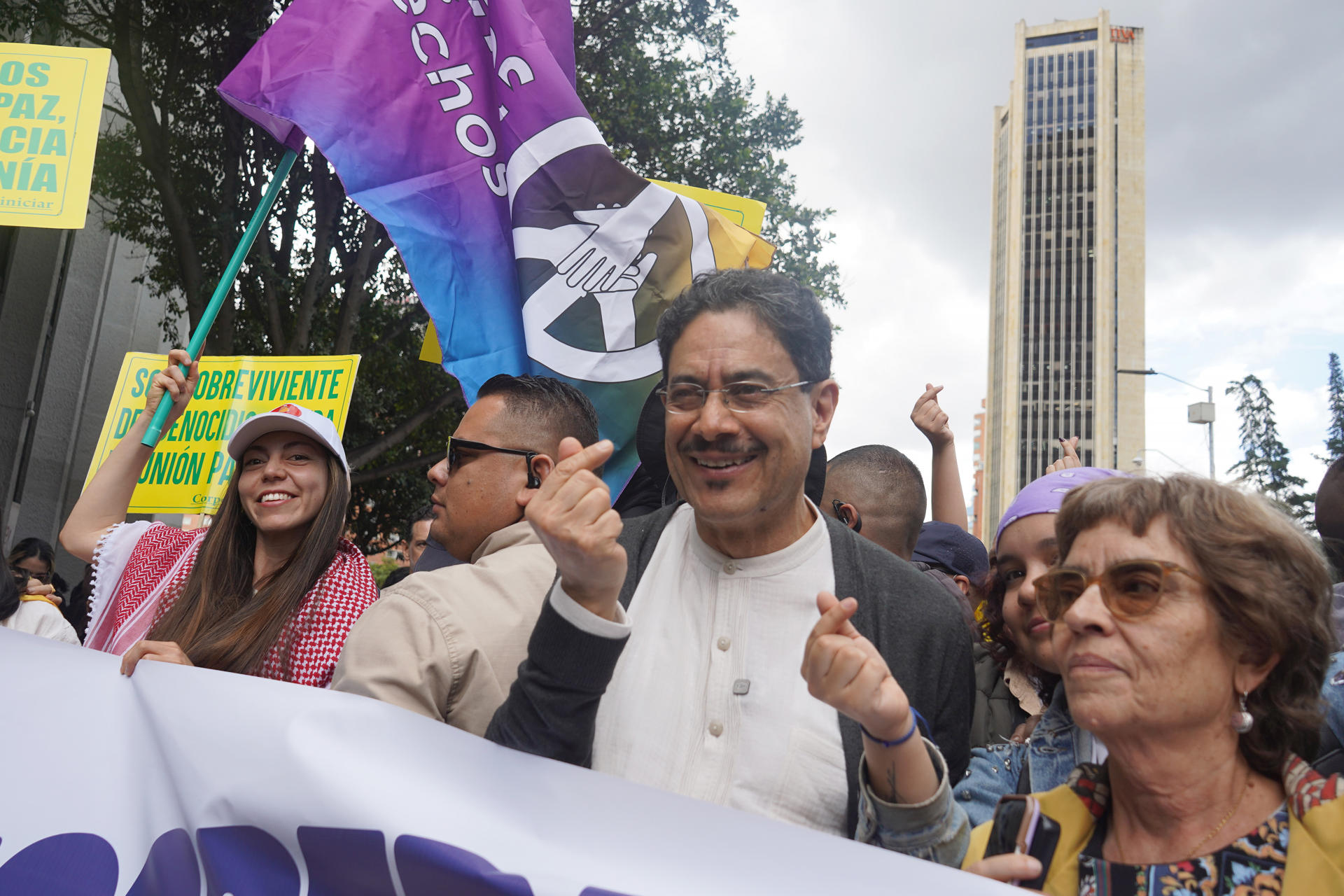
The protesters carried banners with labor demands, flags of Colombia, Palestine and different union organizations, in addition to shouting labor slogans, demanding rights and criticizing the United States and the national government, closely aligned with Washington.
“It is the right time to protest,” the senator of the leftist Historical Pact Wilson Arias stressed to EFE, who justified the mobilization due to the cuts announced in institutions such as the National Learning Service (SENA), the Agency for the reincorporation of ex-combatants (ARN) and the elimination of subsidies for electrical energy, especially in the Caribbean.
A law student at the National Pedagogical University who preferred not to give his name expressed himself along similar lines. “Now is the time to stand against and defend human rights, free education and the value of life,” he assured EFE after accusing the De la Espriella government of “fascism.”
The main march took place in Bogotáwhere the protesters converged in four marches in the Plaza de Bolívar, but the strike was visible in other cities such as Cali, Medellín, Barranquilla, Manizales, Bucaramanga or Cúcuta. At the main concentrations, no notable incidents have been recorded so far.
Former left-wing president Gustavo Petro (2022-2026) briefly joined the rally in Bogotá, but did not address the thousands of people who gathered in Plaza de Bolívar. “The people don’t give up, damn it,” he wrote in X.
Right to protest
The protest, the first of two months of mobilizations, took place just one day after De la Espriella signed the controversial Social Protest Decree, which restricts the right to demonstrate. The text has been the subject of controversy in recent weeks.
Decree 1525 of 2026 states that the authorities must seek dialogue with the protesters, but this is not “a prerequisite that conditions, suspends or postpones intervention actions directed individually against those who carry out acts of violence.”
The president affirmed on Monday that peaceful protest is a “constitutional guarantee,” but that this right “does not authorize attacking other citizens, destroying property, threatening workers, or preventing access to ambulances and emergency services.”
Iván Cepeda, one of the opposition leaders, He considered that the government’s objective is to “intimidate people” and that citizens do not exercise their right to protest for fear of being violently confronted by the police.
“De la Espriella wants to return us to that moment in which fear ends up becoming the way in which the Public Force acts arbitrarily,” added Cepeda.
Gregorio Eljach, Attorney General of Colombia (defendant of the people with disciplinary and sanctioning functions), stressed that social protest is a right but with “limits”, which is why he advocated for a “peaceful” course of the national strike.
In the last two weeks, there have been protests in Bogotá by cultural sectors – due to budget cuts -, by feminist groups – defending the right to abortion in Colombia – and a march in solidarity with Palestine on October 7.
Over the next two months, a calendar of mobilizations is being formed to maintain the political pulse of the Government, which could culminate in a general strike in November, according to union sources.