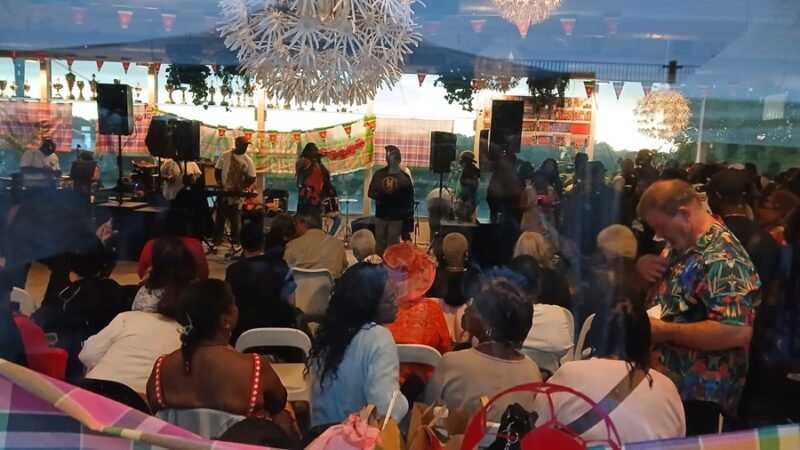
UTRECHT — The Maroon woman took center stage this year during Maroon Day in Utrecht, the Netherlands. The event, organized by the From Roots to Rise foundation, focused on Busikonde Muye: the strength and honor of the Maroon woman.
Initiator Luzulo Emanuels (47) believes that the domestic woman is too often reduced to a simple image. “People often think: making children, cooking. But they have a lot more. We think it is important to honor women,” says the initiator.
“If the maroons had not fled, there would have been no Keti-Koti”
Roll maroons
The day started with a libation, a traditional ritual within the Maroon culture. “That is a traditional way of asking the elders for a blessing. If you do something so big for everyone of Maroon descent, then you should the gingwan also include it. Without them there would be no Maroon Day.”
The ritual was followed by a program of lectures, documentaries and workshops. Then the focus shifted to the celebration, with performances by cultural and musical groups. Emanuels emphasizes that the Maroon community in the Netherlands is often overlooked. “Everyone tars everything with the same brush: Surinamese. But we are Maroons and we know that among ourselves. That is why it is important that we show ourselves with these types of cultural events. There is more.”
He also points out the importance of the Maroons in Dutch slavery history. According to him, when discussing the history of slavery, the focus is more on the people who were freed on July 1, 1863. “If the Maroons had not fled, there would have been no Keti-Koti,” he says firmly.
According to the organizer, the Maroons were the basis for the freedom of enslaved people and the abolition of slavery in Suriname. “That’s where you have to start and that’s what this day is for. To honor these people.”
Memory of father
The event took place on Sunday in Utrecht. It is the first edition under the banner of the From Roots to Rise foundation, which was founded in February. Emanuels organized the day as a private individual in recent years.
With such events he wants to honor the memory of his father, the cultural anthropologist and captain of Santigron, Salomon Emanuels – the late. “He always taught me to keep my identity close to me. Express who you are and be proud of who you are.”