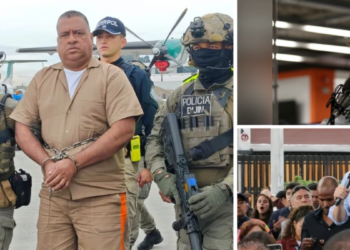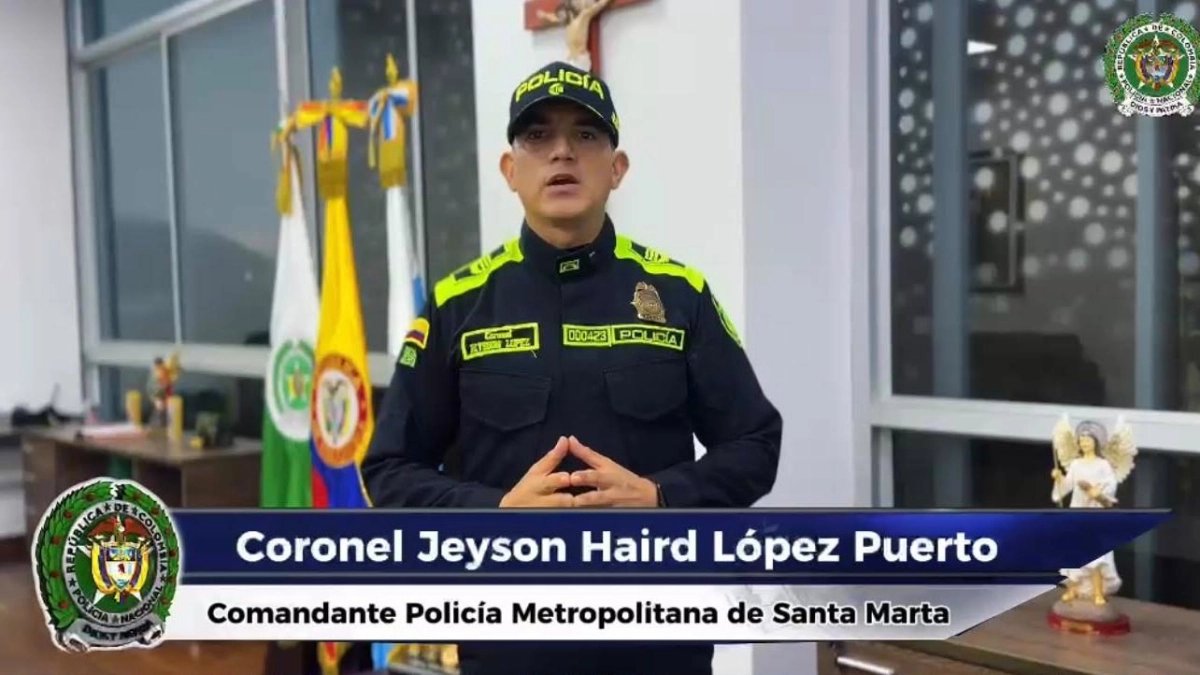
The colonel Jeyson Haird López Puerto will leave the command of the Santa Marta Metropolitan Police by decision of the president Abelardo De La Espriellaafter the escape of 41 detaineesamong them a leader of the ‘Pachenca’, and the questions about the institutional response to the blockade of the Santa Marta-Barranquilla highwayat the height of Tasajera.
Your departure puts the career of an officer under the magnifying glass with more than 26 years of service41 decorations and 144 congratulations, whose professional career now contrasts with the reasons that led the Government to remove him from office.
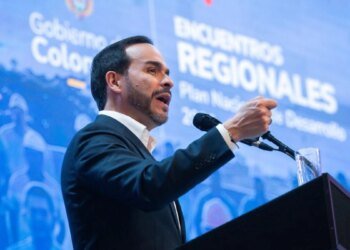
In his statement, De La Espriella was forceful: “I do not accept in the Public Force those who lack the courage and determination to confront crime and excesses appropriately. In this Government, cowardice has no place”.
Colonel Jeyson Haird López Puerto, commander of the Police in Santa Marta. Photo:Courtesy
The president He attributed responsibility for the escape to López of the 41 detainees, accused of being linked to thefts, micro-trafficking and other crimes, as well as for not reporting what happened in time or taking the corresponding measures against the road blockage registered in Tasajera. The decision, as announced, will be calling you to rate servicesa determination that puts an end to its current stage at the head of the institution in Santa Marta.
Amid the concern that these events may generate among the inhabitants, the president assured that fugitives are not highly dangerous criminals and stated that authorities are deploying their capabilities to locate and recapture them. While the relief is taking place, Colonel Urriago, second in command, will temporarily assume command. This week, according to the presidential announcement, Colonel Jimmy Belalcázar will arrive to take office.
In Santa Marta, operations against Los Pachenca will continue to stop commercial extortion. Photo:Private file
A career spanning more than two decades under scrutiny
The decision becomes relevant when reviewing the profile López’s institutional Born in Bogotá, but raised in Cali, the officer joined on January 18, 1999 to the General Francisco de Paula Santander Police Cadet School. Since then, accumulated more than 26 years of career in different regions and specialties of the National Police, with responsibilities that allowed him to learn about different scenarios of security and citizen coexistence.
Your resume records experience in the department of Huila and in the metropolitan police forces of Cali, Bogotá, Soacha, Popayán and Ibagué. Also went through specialized units such as the Directorate of Carabineros and Environmental Protection (Dicar), the Directorate of Anti-narcotics (Dirán), the Directorate of Citizen Security and the Directorate of Protection and Special Services (Dipro). That trajectory allowed him to develop experience in operational areas and administrative, in addition to a broad vision of the functions of the institution.
Police in Santa Marta Photo:courtesy
To his training as a police administrator added a specialization in Environmental Managementwhile the recognitions obtained during his career—144 congratulations and 41 decorations—account for the merits that the institution attributed to him at different times during his service. However, these background They do not exempt you from responding for the actions and decisions adopted during his most recent management. In the exercise of public function, the accumulated recognitions and responsibility for specific events They are different issues.
Before arriving in Santa Marta, López He was assigned to the Ibagué Metropolitan Policewhere, according to its institutional profile, worked on security-related issues and citizen tranquility. His leadership speech highlighted the importance of teamworkprevention, closeness to the community and respect for human rights. Also defended the need to strengthen trust between the Police, local authorities and citizens.
Justice Editorial
justice@eltiempo.com