Among the measures of the draft Finance Law 2027 affecting the vehicle sector in Algeria:
Delays in international transportation and logistical procedures lead to exceeding deadlines, and this is the background to the facilities
An increase of 3 percent per month, provided that the new car is not more than 6 months old and the mileage is 1,000 kilometers
Uploading the voucher includes only cars with 10 horsepower or more and over 6 years old
The draft finance law for the year 2027 seeks to introduce a number of measures that directly affect the automobile and vehicle sector in Algeria, by providing the possibility of customs customs of some new and used vehicles for less than three years that have exceeded the deadlines specified for their import, in exchange for paying a financial increase for the rights and fees owed, in addition to reviewing the car voucher tariff and creating a legal framework for recovering unsold vouchers, as well as giving the concerned authorities the ability to review fuel prices when necessary.
These measures, contained in Articles 32, 34, 168 and 218 of the project, fall within efforts aimed at addressing some of the problems associated with vehicle customs, relieving pressure on ports and facilities subject to customs control, as well as enhancing tax revenues and achieving a balance between economic costs and preserving the purchasing power of citizens.
Possibility of exceeding vehicle customs deadlines in return for an increase of 3 percent per month
Article 168 stands out as one of the most important measures proposed in the field of cars, as it includes amendments to the legislative provisions related to the customs of new and used vehicles, by allowing the possibility of settling the status of some vehicles that have exceeded the specified deadlines, in exchange for paying a financial increase in addition to the rights and fees due in accordance with general law.
According to the details contained in the presentation of reasons, this procedure aims to enable the owners of the vehicles in question to complete customs procedures, despite exceeding the age requirement specified in the applicable legislation and regulation, in exchange for paying an increase of 3 percent of the amount of rights and fees for each month or part of a month exceeding the permissible period.
With regard to new vehicles, the proposed measure stipulates that they can be placed for customs consumption in accordance with the conditions specified in the applicable legislation and regulation, taking into account the condition that the age of the vehicle does not exceed six months, and that the number of kilometers traveled does not exceed one thousand kilometers, with the payment of an increase of 3 percent of the rights and fees imposed in accordance with the general law for each month or part of the month, according to the wording contained in the text provided. As for used vehicles, the measure relates to vehicles that meet the conditions specified by law, with the possibility of customizing them in the cases covered by the measure. Provided that it does not exceed six months old at the date of customs clearance, and an increase of 3 percent of the amount of rights and fees is paid for each month or part of a month exceeding the period of six months.
This procedure, according to the reasons presented, aims to address the situation of a significant number of new and used vehicles whose owners were unable to complete their clearance procedures with the concerned authorities, due to restrictions and circumstances related to international transport and logistical services and delayed procedures, which are factors that may lead to exceeding the specified deadlines for reasons beyond the control of the vehicle owners.
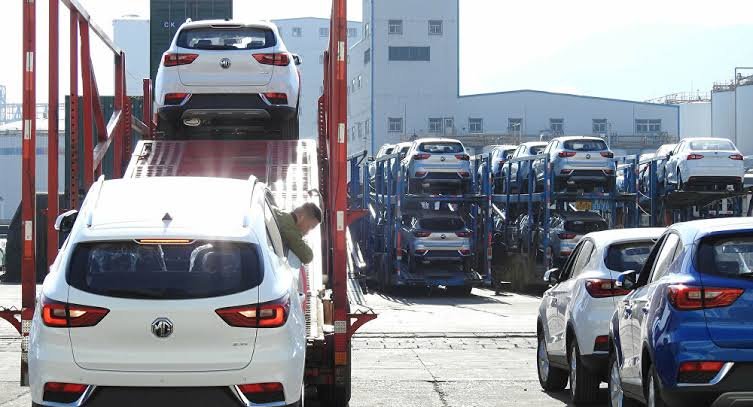
The measure also seeks to reduce the number of vehicles currently stranded at the port level, subject to customs control, and reduce pressure on facilities designated for storing vehicles, as well as reducing the costs of their remaining for long periods in these locations. From the financial aspect, the measure is expected to allow the collection of additional tax revenues for the benefit of the public treasury, through due rights and fees and the financial increase determined for exceeding the deadlines, while maintaining the age requirement as one of the basic controls regulating the import of vehicles.
It is understood from the proposed measure that exceeding the deadlines will not be exempt from additional costs, but rather will be linked to the payment of a specific financial increase. However, benefiting from this measure will remain linked to the final conditions that will be approved by the legal text, especially with regard to the vehicles in question and the methods of calculating the period and the due increase.
An upcoming increase in the coupon for high-power cars
In another context, Article 32 of the draft Finance Law for the year 2027 seeks to amend Article 300 of the Stamp Law, related to the automobile voucher tariff, by reviewing the amounts applied to categories of tourist and utility vehicles. The measure aims, according to the presentation of the reasons, to raise the voucher tariff for tourist cars and utility vehicles with a power of ten steam horsepower or more, and that are more than six years old, noting that the available wording does not include a complete and clear table that would allow determining All new amounts are according to car categories and ages.
This trend is based on the desire of the public authorities to review the tariff applied to some vehicles, in proportion to their nature and value, especially since owning cars with great power does not necessarily reflect the same level of burdens for all vehicle owners. The presentation of the reasons indicates that the nature and value of some cars make them out of the reach of a wide segment of citizens, which prompted the proposal to review the coupon tariff applied to them, in a way that allows keeping up with their acquisition price.
It should be noted that Article 32 relates to amending the provisions of Article 300 of the Stamp Law, while the available data do not allow certainty about all the new definitions that will be applied to the various categories. Therefore, determining the final amounts requires referring to the full official table contained in the draft law.
A legal framework for recovering unsold car vouchers
Among other measures included in the project, Article 34 stipulates the creation of a new article bearing the number 310 within the Stamp Law, relating to vouchers that have not been sold after the expiration of the legal period allocated for collection. This measure aims to provide a legal basis that allows the recovery of unsold car vouchers upon the expiration of the legally specified deadlines, after their accumulation during previous years resulted in pressure on the stamp services, especially at the level of central receipts, due to the retention of quantities of vouchers that are no longer usable.
According to the reasons presented, the car voucher can only be used during the year for which it was allocated, which makes the vouchers not sold after the end of the legal period unusable in subsequent years, which leads to their accumulation within the concerned departments and requires dealing with them according to clear legal procedures.
From this standpoint, the project proposes to establish a legal framework that allows the retrieval of these vouchers, while entrusting the determination of how to implement the provisions of the new article to a decision issued by the Minister in charge of Finance. This measure would allow organizing the process of retrieving unsold vouchers, and reducing their accumulation within administrative facilities, as well as improving inventory management and avoiding the continued retention of documents that are no longer usable after the end of the year allocated for them.
Review fuel prices when necessary without compromising the citizen’s ability
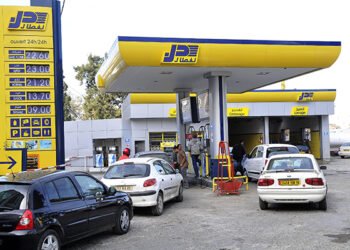
Regarding the fuel file, Article 218 of the draft Finance Law of 2027 stipulates the possibility of reviewing fuel prices, when necessary, by the concerned authorities, in a step that opens the way for making price adjustments in accordance with the considerations required by economic and financial conditions.
The presentation of the reasons indicates that the state bears the burdens associated with subsidizing fuel prices, within the framework of its policy aimed at preserving the purchasing power of citizens and ensuring price stability in the national market. However, the continued gap between production costs and the prices applied at service stations may impose, according to the justifications provided, the search for mechanisms that allow alleviating part of the burdens borne by the public treasury, while maintaining the stability of supplying the market with petroleum products.
The proposed measure aims to give the concerned authorities regulatory flexibility that allows for reviewing prices when necessary, taking into account the balance between the economic viability of producing companies and the continued provision of fuel in various regions of the country, without prejudice to the social objectives of government support. This approach, according to the reasons presented, reflects an attempt to reconcile the requirements of the sustainability of the national energy model and the financial pressures associated with production costs, while avoiding imbalances that may affect the continuity of supplies.
However, Article 218, according to the available wording, does not specify a specific increase or a specific percentage for reviewing prices, nor does it include a new schedule for gasoline or diesel prices. Therefore, the text indicates the possibility of review when necessary, without this alone meaning approving an immediate increase or setting a date for any amendment to enter into force.