PARAMARIBO — For 2027, income for Suriname is estimated at SRD 70.1 billion and expenditure at SRD 80.9 billion. This entails an estimated budget deficit of SRD 10.8 billion in 2027, or 4 percent of gross domestic product (GDP). The government wants to cover this deficit as much as possible without further increasing the national debt. According to Minister Adelien Wijnerman of Finance and Planning, the main focus is on controlling expenditure and increasing income.
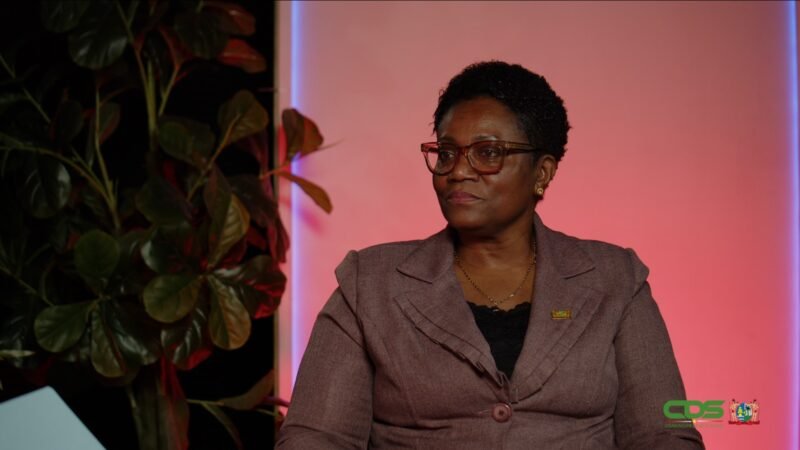
The minister stated the foregoing on Tuesday in the government’s program ‘Annual Speech Explained’ of the Communication Service Suriname, in which she further discussed the financial chapter from the most recent annual speech by President Jennifer Simons. “We will have to control our expenditure as best as possible. That is, we always agree: what resources do we have before we implement a budget, before we spend,” said Minister Wijnerman.
“There is a lot to collect in taxes. But here and there we have some inefficiency”
According to the country’s treasurer, better control of expenditure is one of the ways to reduce the estimated deficit. This must take into account the different priorities and other expenses that may arise during the year. In addition to controlling expenses, we look at options to generate more income. Together with the tax authorities and customs, we look at how the inspection and collection can be carried out as efficiently as possible.
Minister Wijnerman: “There is a lot to collect in taxes. But here and there we have some inefficiency.” The minister says that extra efforts should lead to more income and can therefore contribute to reducing the deficit. The government also wants to prevent new payment arrears from arising, which it believes would put additional pressure on government finances. As far as financing is concerned, according to Minister Wijnerman, the starting point is not to immediately borrow to cover the deficit.
She explains the latter as follows: “You have to borrow to invest in the production sector, to implement projects such as in the social sector or infrastructure. But not to borrow in the consumer sphere. That is not what we are thinking about.” If the deficit does have to be covered, projects and programs that do not yet have financing will first be looked at and other sources of financing will be sought. “We have to cover the state’s other expenses from taxes and also from the non-tax sphere,” the minister said.