The economic slowdown at the beginning of the year did not prompt the Bank of Russia to more decisively reduce the key rate: following the meeting on April 24, it was again reduced by half a point, to 14.5% per annum. The regulator attributed the decline in the first quarter to one-time factors and expressed confidence that it would be compensated for in the future. The Central Bank actually confirmed the priority of achieving the inflation target over the dynamics of other economic indicators, and also expressed concern about the outcome of the government discussion on the current budget, warning that a possible increase in spending relative to the planned level will lead to a tightening of monetary policy.
Following the meeting of the board of directors on April 24, the Bank of Russia continued to cautiously ease monetary policy. The rate cut by another 50 basis points, from 15% to 14.5% per annum, was the eighth in a row: after cutting from a peak of 21% by one percentage point in June 2025, by two in July, by another in September, by half a point in October and December, and then in February and March 2026.
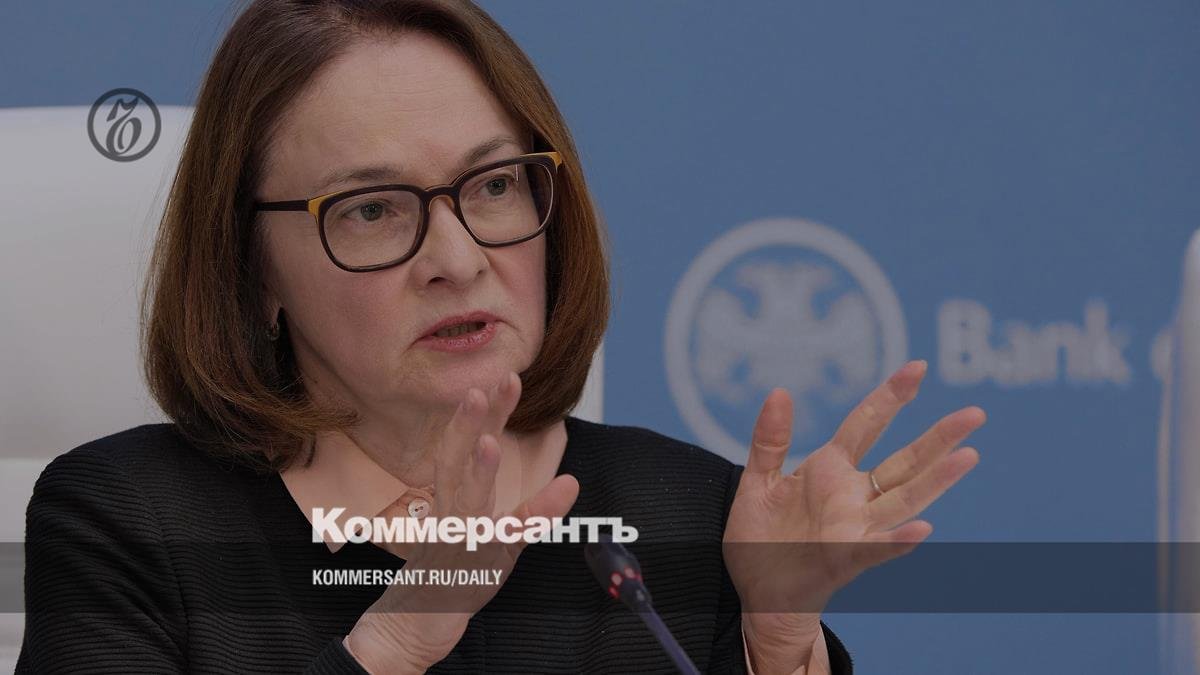
The decision, judging by the polls, turned out to be expected by most analysts, but the background to its adoption, as it turned out after the meeting, was tougher than they expected. Everyone expected the Central Bank to choose between a reduction of 50 and 100 basis points, but, as the head of the regulator, Elvira Nabiullina, said, the alignment at the board of directors was different: either a half-point reduction or maintaining the rate.
Expectations for a more decisive step (without waiting for it, the stock and OFZ markets dropped noticeably again) were fueled, among other things, by recent demands of Vladimir Putin to the government and the Central Bank to find ways to return the slowing economy to growth. According to the results of the first two months, Russian GDP, instead of the forecast growth, shrank by 1.8% year-on-year. The Bank of Russia noted the slowdown in the first quarter, but apparently did not see it as a big problem, attributing it to one-time factors: “adjustment to the tax changes that have occurred,” fewer (than a year earlier) number of working days and unfavorable weather conditions (cold winter). Further, the Central Bank believes, the economic decline will be compensated by the same calendar factor, which will play in the other direction in May-June, as well as some recovery in consumer and investment activity and rising prices on world commodity markets.
Based on this, the Central Bank did not change its forecast for GDP growth in 2026 – it is still 0.5–1.5%. The regulator’s expectations for inflation have not changed either – 4.5–5.5% at the end of this year. However, the dynamics of price growth looks ambiguous – this, in fact, became one of the reasons for the Central Bank’s caution when making a decision on the rate. Price growth in the first quarter, adjusted for seasonality, averaged 8.7%, which is much higher than 4.4% in the fourth quarter of 2025. But here again there are one-time factors (increase in VAT and indexation of utility tariffs). With their exclusion, sustainable inflation remains unchanged and is in the 4–5% range. Data on inflation expectations are also contradictory. Among the population they decreased, among the manufacturing business they did not change significantly, among financial market participants they increased slightly.
The Central Bank left the signal about its future actions soft, still saying that it “will evaluate the feasibility” of further reducing the rate at the next meetings. At the same time, more concern could be seen in the regulator’s comments regarding factors that could hinder the easing of monetary policy. In its statement, the Central Bank already in the preamble pointed to “significant uncertainty” on the part of external conditions and parameters of the government’s fiscal policy.
Noting that the Bank of Russia is waiting for the completion of the discussion on possible changes to the parameters of the 2026 budget, Elvira Nabiullina recalled that if increased spending leads to a larger structural primary deficit than planned, this will require a tighter monetary policy.
“The greater the budget impulse, the less the second component of the money supply, that is, lending, should grow, which means, other things being equal, this will require a higher key rate,” warned the chairman of the Central Bank. According to her, such a risk exists, and it has increased. “We are probably now less confident in the disinflationary contribution of the budget, which was assumed in the budget law,” admitted Elvira Nabiullina.
Some tightening of the Central Bank’s tone can be seen in the narrowing of the forecast range of the key rate for this year – from the previous 13.5–14.5% to 14–14.5% (this means that from April 27 to the end of the year it is expected to be 13.3–14%). The regulator explained this narrowing by the fact that inflation is in the upper part of the forecast range. “And yes, probably, other things being equal, this means less space for reducing the rate,” explained the head of the Bank of Russia.
The next meeting of the Central Bank is June 19.