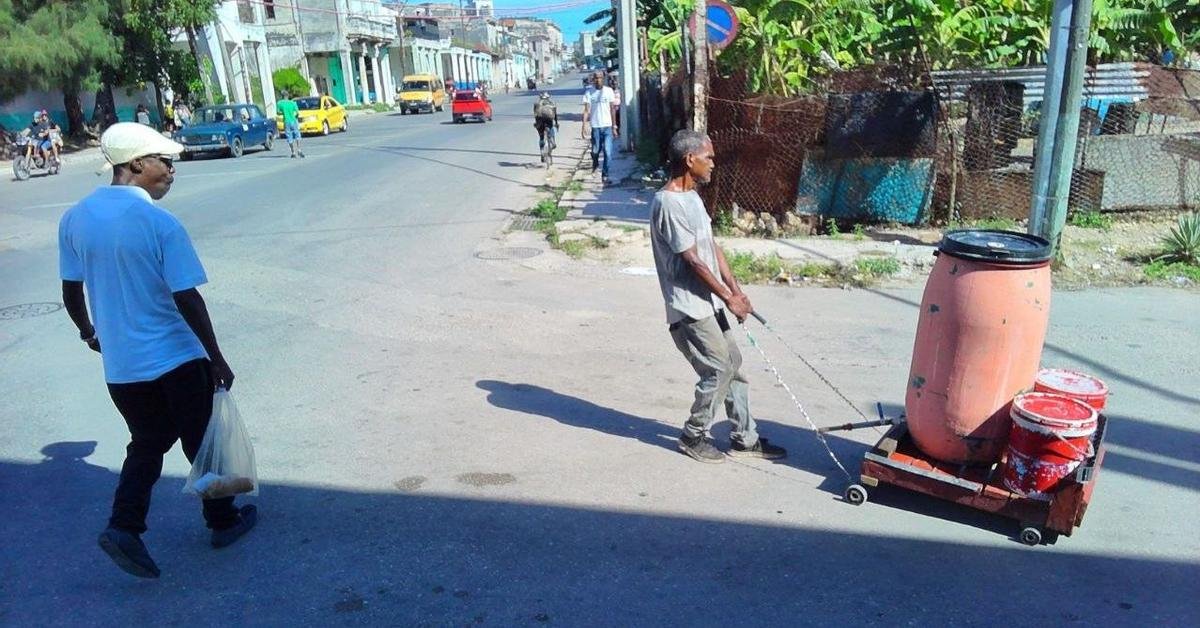
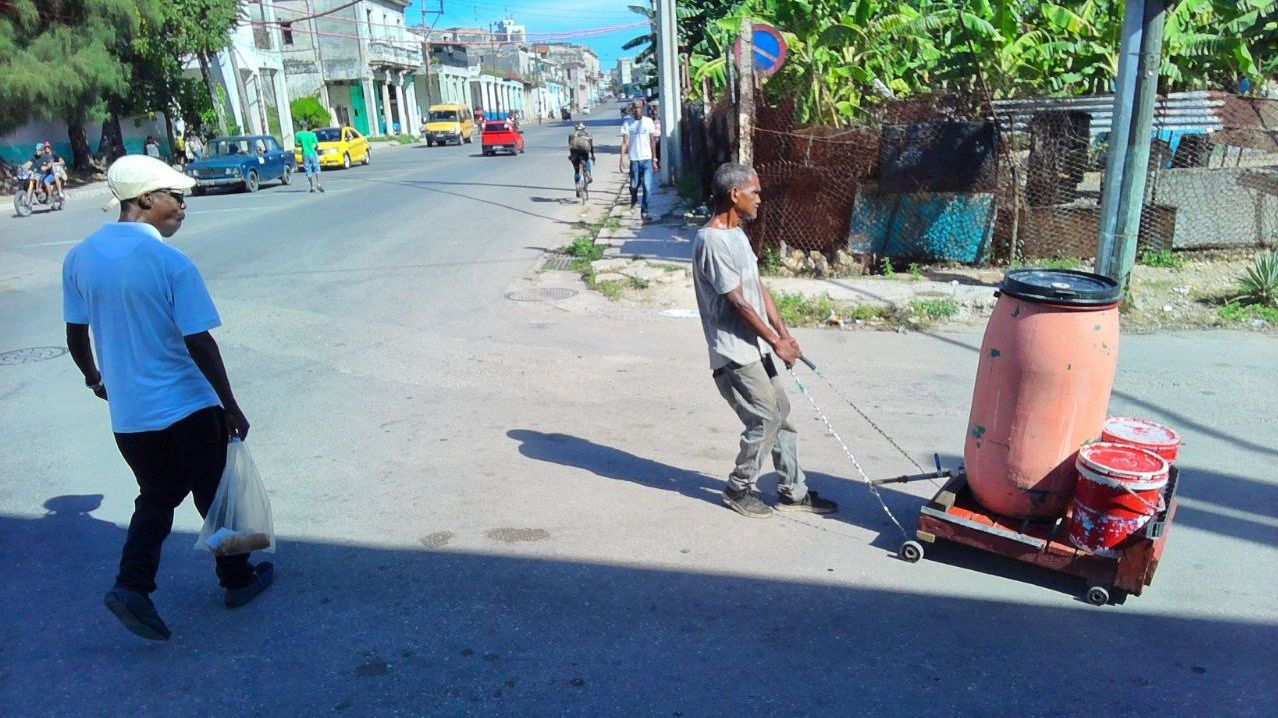
Havana/Four months of pump repairs, conductor maintenance and search for energy alternatives have not managed to reduce the magnitude of the water crisis in Cuba. This Friday, the Government once again estimated that there were 2.7 million consumers with total or partial effects on network supply, exactly the same number that the National Institute of Hydraulic Resources (Inrh) recognized at the end of May.
Then, the president of the Inrh, Antonio Rodríguez, presented those affected as “28% of the 9.7 million inhabitants” of the country. Now, the official press points out which represent around 35% of those who receive water through the networks. In any case, the absolute number of those affected has not changed in that time.
Havana, Artemisa, Matanzas, Santiago de Cuba and Holguín are currently the provinces with the greatest difficulties. The main problem, according to the authorities themselves, continues to be the close dependence between the water supply and a national electrical system incapable of guaranteeing stable current. More than 85% of the country’s pumping stations run on electricity, so each blackout can paralyze wells, pumps and impellers and also cause new equipment and conductor breakages.
The water does not return immediately after a breakdown, but must travel through kilometers of conductors, fill empty spaces and regain pressure before reaching the homes.
In Havana, however, the authorities assure that there has been “an improvement.” The capital began September with more than 577,000 consumers affected and, according to Yosvany Rubí, director of Aguas de La Habana, since then service has been recovered for some 251,000 people, 40,000 of them in the last week alone.
If both figures are comparable, there would still be around 326,000 Havana residents affected, although the company did not expressly offer that information. Rubí also admitted that problems persist in the 15 municipalities and that all the capital’s systems present a deficit in pressures and flows. Boyeros and Cotorro are among the most complicated territories, due to equipment breakdowns and electrical instability.
The manager pointed out that in recent weeks 23 pumping equipment was recovered and announced the reinstatement of another three: La Fortuna, in Boyeros; Villarín, which affects Central Havana, and Peñalver-Los Mangos, in Guanabacoa.
Blackouts also complicate cycle recovery. Unlike the current, Rubí explained, water does not return immediately after a breakdown, but rather must travel through kilometers of conductors, fill empty spaces and regain pressure before reaching homes. The official strategy now focuses on providing greater energy support to the main supply sources, in addition to repairing pumps and eliminating leaks.
In addition to the lack of power, there are breakdowns of pumps, motors and transformers in several Matanzas municipalities.
Outside Havana, some situations are even more extreme. In Holguin, a meeting headed this Thursday by Deputy Prime Minister Inés María Chapman revealed that there are sectors of the Northern system of the provincial capital with shortage cycles of more than 70 and up to 90 days. The data contrasts with the statement of the provincial delegate of the Inrh that the water reserves remain in “favorable” conditions, despite the fact that the rains are below usual values.
In Santiago de Cuba, the authorities recognize also a sharp deterioration in service. The Quintero system, one of the main ones in the city, should receive about 2,300 liters per second, but it was working this week with just 1,400. Aguas Santiago attributes the fall, among other causes, to the lack of electricity to start the Gota Blanca station, and to a breakdown in a conductor that subtracts another 300 liters per second. In some sectors of the city, supply cycles already exceed 60 days, while in others they range between ten and fourteen days.
In Matanzas, the parts from the Aqueduct and Sewer Company show the extent to which blackouts affect the supply. This week, electrical interruptions of 8 and 9 p.m. were reported in areas of Unión de Reyes and the provincial capital, and up to 10 p.m. in Martí. There were also prolonged damages in Colón, Cárdenas, Los Arabos, Calimete and the Ciénaga de Zapata. Added to the lack of power are breakdowns of pumps, motors and transformers in several municipalities, which further prolongs distribution cycles and makes it difficult to recover the service.