
Caribbean countries are being called on to turn regional aviation cooperation from a long-standing goal into a more practical system for sharing expertise, resources and responsibility.
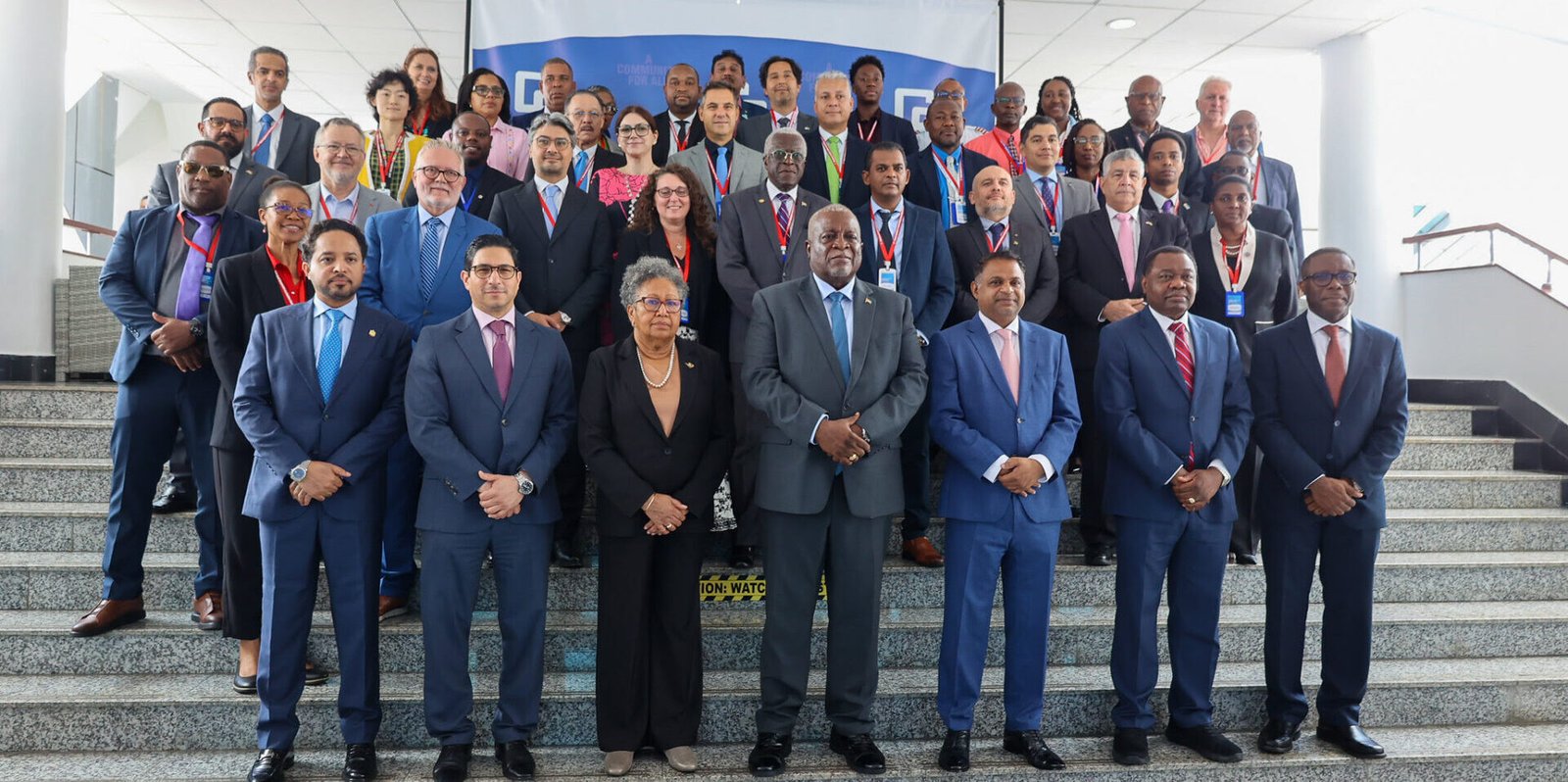
The call came during a one-day regional aviation symposium in Guyana, where more than 70 representatives met to discuss how the region can strengthen aviation safety while dealing with limited technical capacity, financial pressures and growing regulatory demands.
The symposium was convened by the CARICOM Secretariat in collaboration with the International Civil Aviation Organization (ICAO) and hosted by the Government of Guyana and the Guyana Civil Aviation Authority at the Arthur Chung Convention Centre.
According to a CARICOM Communications release, the event was held under the theme “Strengthening Caribbean Aviation Safety: Regional Cooperation, Resilient Oversight and Sustainable Capacity Development.”
A major focus was the Caribbean Aviation Safety and Security Oversight System (CASSOS), the CARICOM institution established to help Member States meet international aviation standards that can be difficult for smaller administrations to maintain on their own.
Participants reviewed the draft CASSOS Roadmap and Action Matrix to 2035, which is expected to address the sustainability of civil aviation authorities, harmonisation of regulations, air transport services under the Multilateral Air Services Agreement, implementation timelines, financing and monitoring.
International and regional partners, including ICAO, the European Union Aviation Safety Agency, the United States Federal Aviation Administration, Transport Canada and the United Kingdom, also shared perspectives on supporting regional aviation safety cooperation.
Airlines, private-sector representatives and revenue authorities provided an industry perspective.
During the opening ceremony, speakers stressed that Caribbean countries face the same international aviation obligations as much larger states, despite having smaller administrations and more limited resources.
Guyana Prime Minister Brigadier (Ret’d) Mark Phillips said passengers should be able to trust that aviation safety systems are working, even when they never see the processes behind them.
“A passenger may never see an inspection record or know the name of the controller guiding a flight. That passenger has every right to expect that the work has been done. Our responsibility is to make that confidence deserved,” said Phillips.
Guyana’s Minister of Public Utilities and Aviation, Deodat Indar, said the region must move from discussing cooperation to putting it into practice.
“The decision before us is whether regional cooperation will remain an aspiration or become the operating principle of Caribbean aviation. Let us choose action,” stated Indar.
CARICOM Secretary-General Dr Carla Barnett said increasing regulatory demands, technological changes, workforce constraints and financial pressures make regional cooperation essential.
She also described air connectivity as critical to small island and low-lying coastal states, supporting tourism, trade, investment, emergency response, family connections and wider regional integration.
ICAO Regional Director for South America Luis Fernando Fiallos said regional arrangements can strengthen national oversight without compromising sovereignty.
“Under the Chicago Convention, ultimate responsibility for safety oversight rests with each sovereign State. Yet regional arrangements do not diminish sovereignty; they reinforce it,” he said.
Caribbean Development Bank representative William Ashby also highlighted the challenge of meeting international standards with limited specialised technical capacity and relatively small markets.