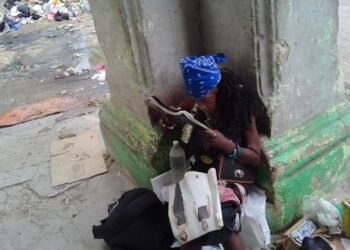
Havana/Studying medicine in Cuba has become a survival challenge for South African students enrolled in the Nelson Mandela-Fidel Castro program. During the six years they spend on the Island, they must share small rooms with poor sanitation, face water scarcity and, due to lack of money, consume food offered in study centers of such poor quality that it causes illness. This is what the story of one of the students draws in a report published by the Daily Maverick.
“It’s horrible,” summarized the girl, who requested anonymity. The serious limitations that she claims to have suffered led her to be “depressed” and even to try desert. The problems began since he arrived in Cuba, in 2024. “I come from a home mired in poverty. I know what it is like, but this is serious, worse than my own situation at home.”
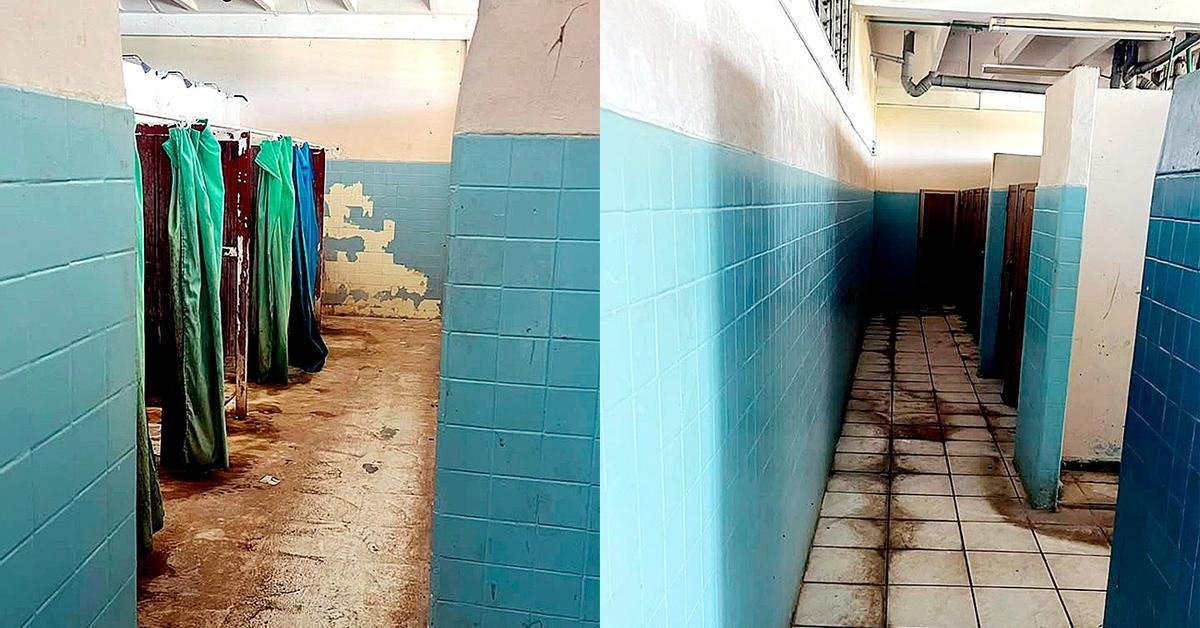
After getting off the plane in Havana, the young woman was taken to school where she ended her love of studying medicine in another country. “They put us in the quarantine zone and, well, it was bad.” In the place it was impossible to bathe, “we couldn’t shower because there was no water, and when it arrived, it did so at intervals, and there was only one bucket.” Furthermore, “there was no food.”
Once the quarantine ended, the situation did not improve. Thirteen people share the bathroom. “You can’t flush the toilet. You have to go get water with a bucket,” he says.

/ Daily Maverick
Regarding the food, he comments that “it is as if the water were the soup for the rice.” The meat served in the cafeteria caused a rash and stomach problems, so he chose to buy outside and only bought bread.
According to the student, the health attaché on the Island knows of the shortcomings that students face, but his only response has been: “I don’t have money, I can’t do anything.”
South Africa has given up on its scholarship recipients. Department of Health spokesperson Foster Mohale acknowledged to the same newspaper that “no supervision visit has been carried out since 2022.” The official argues “increasing financial pressures and strict austerity measures.” Although he stated that students are supported with food packages, occasional double scholarships and a health attaché who “continuously interacts” with students
Mohale said an increase to the stipend students receive is currently under study. “Consultations are underway with relevant decision-making bodies.”
The deputy and spokesperson for the Democratic Alliance, Haseena Ismail, told the same medium that “the Cuban medical training program raises serious doubts about the cost, the value for money and the results.”
While Noluvuyo Tafeni, of the Economic Freedom Fighters party, assured that “the program was failing”, noting that “in 2025 there were 303 graduates of the program who remained unemployed despite the fact that the State had invested approximately $36 million (R606 million) in their training” annually.
/ Ministry of Foreign Affairs
Last July, 19 students completed their training process at Cuban medical universities. Official data reveal that 3,243 South Africans have done so under the Nelson Mandela-Fidel Castro program.
A public consultation of Department of Medical Affairs revealed in 2019 that an average of up to $22,522 was spent on the annual training of a doctor on the Island.
The document details that in the first year known as preparatory, the annual cost is $14,872, of which $6,000 goes to the section called tuition, $6,022 to food and accessories, $2,400 for stipend and $450 for medical insurance. In the first and second year of medicine, 21,422 dollars are disbursed and in the last year of stay 22,522 per year per student.
A day after the limitations that South African students face in Cuba have been exposed, it is announced that another 18 young people from the Gauteng province will soon leave for Havana to train as doctors in Cuban universities.