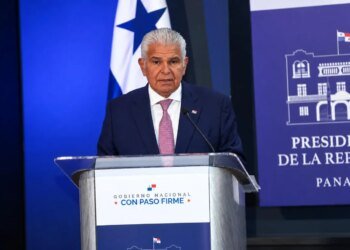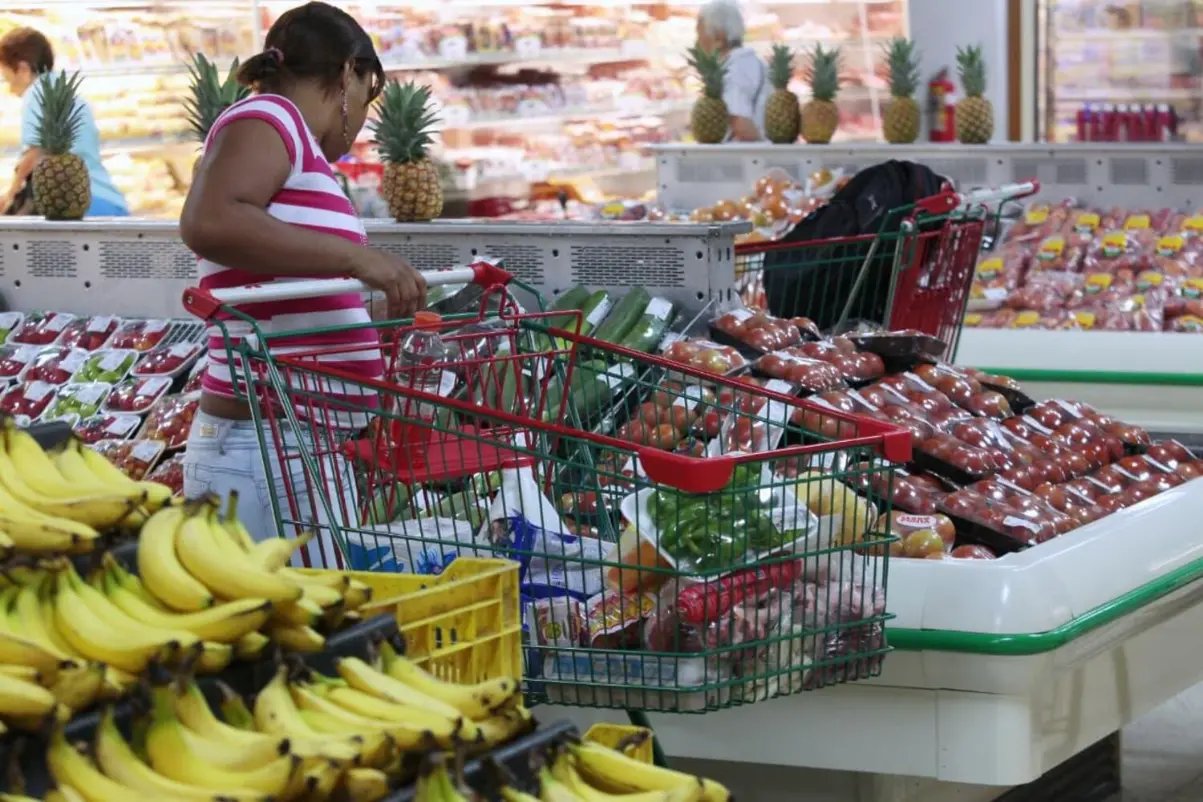
The cost of the basic food basket remains “stable” for the moment, but could register an increase towards the end of the year due to the volatility in fuel prices and the impact that the crisis may generate in the Strait of Hormuz, warned the administrator of Consumer Protection and Defense of Competition of Acodeco, Ramón Abadi Balid.
The official explained that the basic food basket is made up of 59 products and that, from the beginning of the year to date, the accumulated increase has been approximately $1.64.
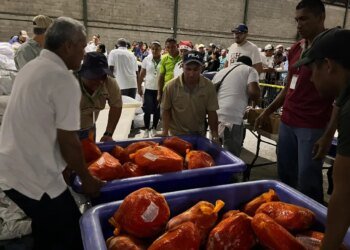
Abadi attributed this behavior, among other factors, to the measures adopted by the Government to contain the impact of transportation costs. These include public transport and the transfer of goods from the agricultural sector to the capital, in addition to the movement of agricultural machinery.
“With this, we have had a practically imperceptible increase in the basic food basket from February to date, with a balance of more or less $1.64 difference“Abadi said in an interview with The Star of Panama, after the inauguration ceremony of the new board of directors of the Association of Cheese and Dairy Processors of Panama (Aproquelpa).
The Acodeco administrator described the transportation subsidy as a “total success”, although he warned that the behavior of fuels could put pressure on the cost of food again.
“Given the dramatic increase in fuel prices, it cannot be avoided that its cost will possibly increase.”, he noted.
The recent evolution of the Consumer Price Index (CPI) of the National Institute of Statistics and Census (INEC) also reflects pressures associated with fuels.
In August, national inflation increased 0.2% compared to July, after two consecutive months of negative variations: -0.3% in June and -0.3% in July.
The transportation division recorded an increase of 1.1%, driven mainly by a 6.4% increase in fuels and lubricants for personal transportation equipment, due to the increase in the prices of diesel, gasoline and lubricants.
According to Abadi, this eventual increase would not be directly attributable to the producers, the Government or the country, but rather to external factors linked to the international behavior of fuels.
“It is not the fault of the producers, it is not the fault of the national government, it is not the fault of the country, and we as consumers have to make an act of constriction and responsible consumption to be able to make a better economic balance for the worker when making their purchases and the products of the basic basket that they are going to consume in our home.”, he stated.
How much does the basic basket currently cost?
Abadi indicated that the cost of the basic food basket is currently around $303 monthlys in supermarkets.
“It is a price that is really competitive and very good and that has been imperceptible from the increases since we began the year with the conflict (in the Middle East)”, he expressed.
When asked if the cost has remained the same or has increased, he reiterated that the variation has been approximately $1.64 since February.
What can happen at the end of the year?
Regarding his forecasts for the last months of the year, Abadi pointed out that November normally sees price increases due to the seasonal behavior of fuels.
“Normally it should increase because November is the month that statistics have always shown an increase due to the issue of fuel prices,” he explained.
The official recalled that during November, in the northern hemisphere, preparation for the onset of winter begins, a period in which fuel demand usually increases.
“Consumption is more due to the cold and there should be much more fuel for consumption in the northern hemisphere, which means we have a possible increase in fuel and what it will bring is an increase in the cost of the basic basket.”, he noted.
However, he considered that the eventual increase “can’t be very high” and will be conditioned by the circumstances that arise.
In his opinion, the main factor of uncertainty is the conflict in the Strait of Hormuz, whose impact on international fuel prices is beyond the control of the Panamanian authorities.
Offer and competition
The Acodeco administrator also highlighted that Panama maintains a wide range of products and recalled that currently there is no longer a general price control scheme, so products are governed by supply and demand.
According to Abadi, this dynamic favors greater competition and allows consumers to compare prices and opt for cheaper alternatives.
“If you consumed a product and that product has increased in price, look for a similar product that has a better price. You will be able to find it in the market, you just have to walk around, compare and be a responsible consumer.”, he recommended.
For Abadi, as long as external pressures on fuel persist and the conflict in the Middle East continues, responsible consumption will be one of the main tools for households to manage their budget.
“As long as the conflict continues… responsible consumption is the best thing each Panamanian can do“Abadi pointed out.
Other prices that affect the cost of living
Although they are not part of the basic food basket, other goods and services also influenced the behavior of the cost of living in August. In addition to transportation, information and communication, and restaurant and accommodation services, they registered increases of 0.4% each; personal care, social protection and various goods and services rose 0.2%, and health, 0.1%.
In contrast, recreation, sports and culture decreased 0.5%; alcoholic beverages and tobacco, 0.4%; while clothing and footwear, and housing, water, electricity and gas, fell 0.3% each.