
Listen to this article
Estimated 3 minutes
The audio version of this article is generated by AI-based technology. Mispronunciations can occur. We are working with our partners to continually review and improve the results.
Some residents on Prince Edward Island’s South Shore are calling for the province to step in with a solution after their drinking water became contaminated with E. coli.
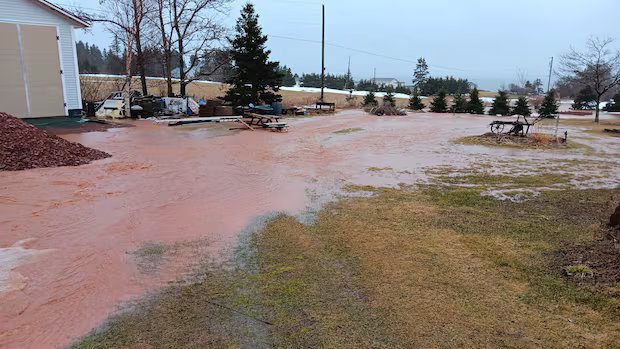
After heavy rain, water runs from higher ground through a culvert and floods their properties.
“The amount of water that comes rushing down is significant, to say the least,” said Rice Point resident Randy Robar.
For years, residents have pushed for government action to rectify the problem.
But Robar said with more land being cleared and heavier downpours during storms, the problem has gotten worse.

Six homeowners in the area share a well and had the water tested following several days of heavy rain over the Labour Day weekend.
Oleg Bebeshko said he believes the rainwater flooded their septic systems, leading to raw sewage contaminating the well water.
The detection of E. coli led to a boil-water order that was lifted after the homeowners shocked the well with chlorine and a later test came back clear.
“This is a big concern for us, for our health,” Bebeshko said.
“We are boiling water just to protect ourselves because we don’t know when we’ll have this E. coli back to our well.”
The provincial Department of Land and Environment said in a statement that it isn’t clear whether a flooded system is the cause of contamination, and that it has recommended additional testing following the next significant rainfall.
“The condition and construction of the well can affect vulnerability to contamination and should be considered as part of any assessment of potential sources,” the statement reads.
“Surface water should be directed away from wells whenever possible to reduce the risk of contamination, and well owners are encouraged to ensure their wells are properly maintained and protected from potential sources of contamination.”

The neighbours said the well was found to be in good condition following a recent inspection and that officials ordered them to install a UV light to kill bacteria in their central water system, which they intend to do.
“We do need to upgrade, but that’s a cost to us that we must bear and we will bear,” Robar said.
“But that’s just the water. That’s not the erosion, that’s not the environmental hazard that’s going to happen should my septic field be washed out.”
Bebeshko said he wants to see government act immediately to remove and replace the culvert to protect nearby properties.
“This culvert was initially installed incorrectly because water goes just to the left to the property boundary and where … the natural ditch is,” he said.
“It should be installed on the property boundary.”

But the province’s Department of Transportation and Infrasatructure said in a statement that the solution isn’t so simple.
“Any changes in one area may have impacts on neighbouring properties, so careful consideration is required,” the statement reads.
“The department continues to work toward a balanced approach that reflects the needs of the entire area and all property owners.”