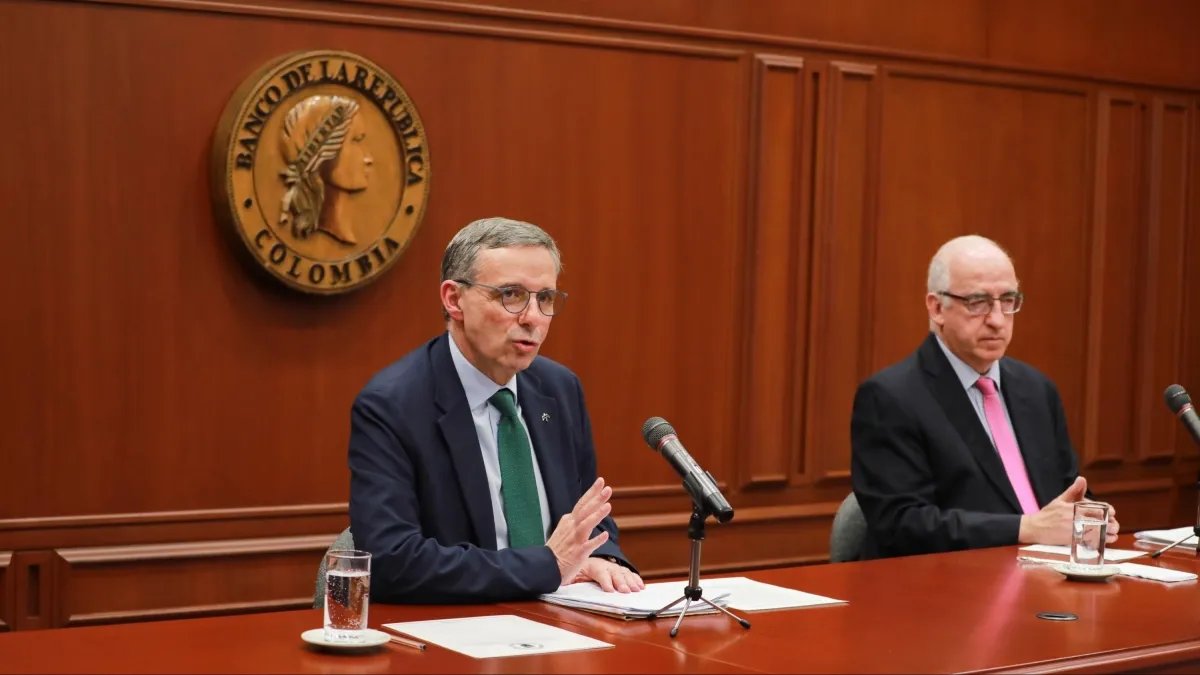
Following the recent decision of the Bank of the Republic of raise its monetary policy rate by 25 basis pointsboth the Issuer and the National Government agreed on a clear premise: the temporary cost on economic growth is a lesser evil compared to the permanent havoc caused by runaway inflation.
For the board of directors and for the Minister of Finance himself, Miguel Gómez, a restrictive monetary policy is the only sustainable path to ensure economic growth, greater investment and more quality employment in the medium and long term.
“A policy of monetary contraction It obviously has an effect on growth.. It has been a very well-considered measure; It’s a modest increase, but it sends a signal that inflation continues to worry us“said the official.
READ ALSO

Minister of Finance, Miguel Gómez. Photo:Bank of the Republic
From the perspective of the National Government, inflation not only punishes the pockets of the most vulnerable households, but also affects the fiscal accounts of the State. The minister warned that the high variation in prices “hits the Executive very hard”among other things, because it defines the floor for the readjustment of the 2027 minimum wage and drastically increases the cost of state payroll.
“That the fiscal situation has deteriorated sharply this year has a lot to do with the excessive minimum wage increase of 23 percent. That represents a blow of immense proportions for the State payroll,” Gómez explained.
Additionally, the senior official assured that an excessive cost of living leads to an increase in the interest rate and that “harms growth, slows down investments and makes debt service more expensive”.
READ ALSO
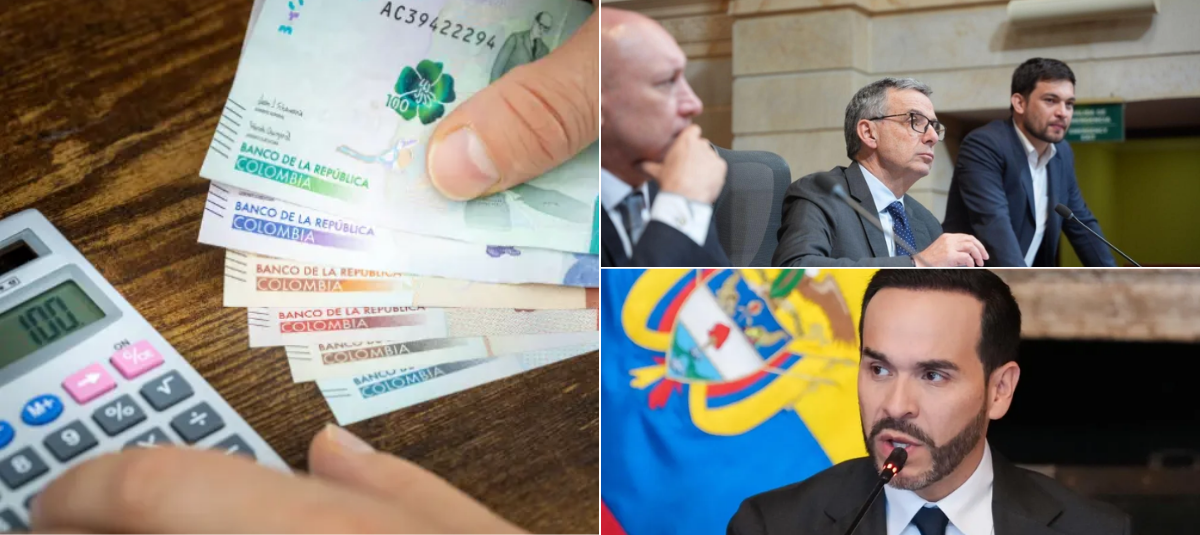
Photo:Bank of the Republic
Under that reading, the Minister of Finance aligned himself with the Issuer’s position: “Any difficult situation in the economy, such as the one we are experiencing today, It is much better if inflation is low. “It would be much easier to make a fiscal adjustment if inflation were not so high.”
In addition, he highlighted that the government of Abelardo De La Espriella has full interest in prices falling because that would also help reduce the cost of debt. “It is more important at this time that inflation begins to decrease because would bring much greater benefits than any other short-term decision for the Colombian economy,” he added.
Meanwhile, the manager of the Bank of the Republic, Leonardo Villar, highlighted that raise interest rates At present it is the fastest way to cut them in the future. “In practice, as soon as inflation begins to subside and converge towards the target, it will be possible to have a lower interest rate”, he indicated.
According to him, this “apparent contradiction” is constant in monetary policy, but it explains why central banks raise rates: curb the cost of living allows you to reduce credit costs in the long termthus favoring investment, employment and economic growth.
READ ALSO
Leonardo Villar, manager of the Bank of the Republic. Photo:Bank of the Republic
In this recovery of the economy, the work after the earthquake of August 10 They could give a boost. The manager of the Issuer assured that international experience reflects that these catastrophes, apart from the human drama they represent, cause an initial brake on economic activity which usually becomes a positive shock in a few months due to reactivation.
However, he stated that investment in reconstruction benefits regions where the tragedy occurred, without necessarily generating a national effect.
“Of course, we will have to follow up to see how the investment behaves and demand in the economy over the coming months and years, because recovery may take several years”added Villar.