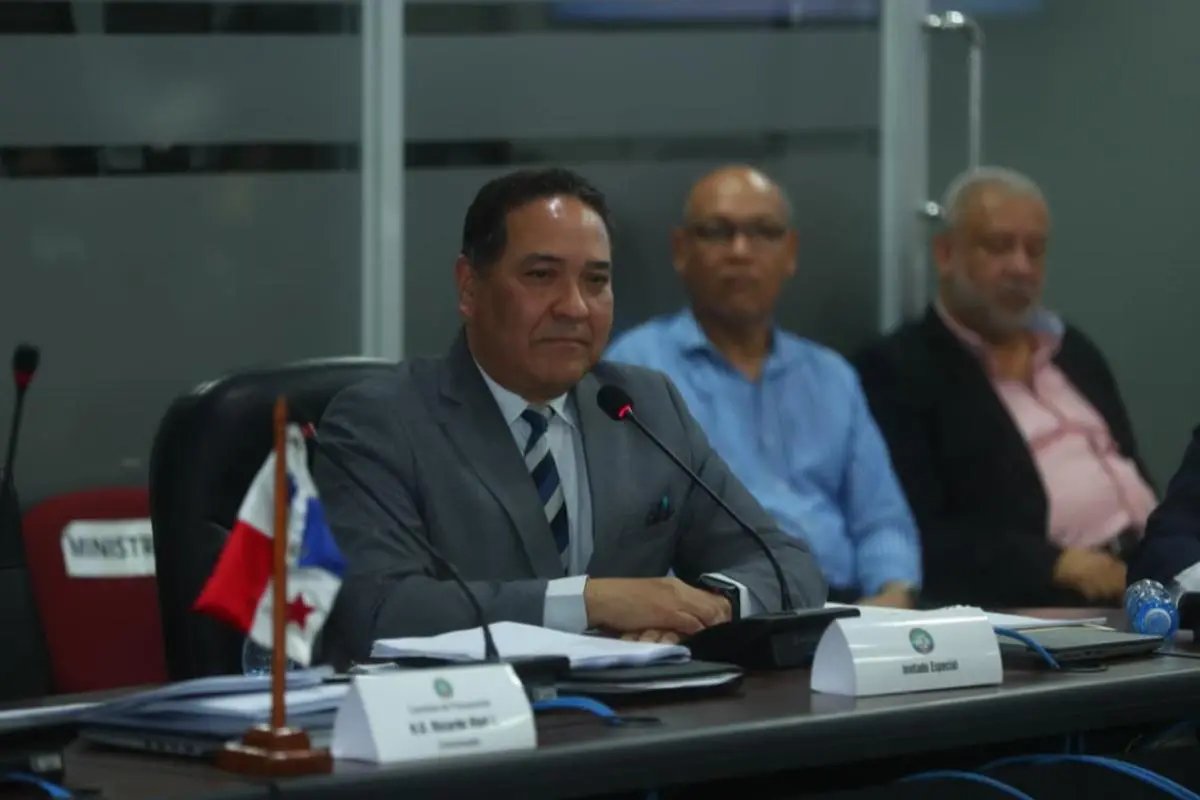
The clandestine sale of tickets has generated losses of more than $150 million since 2019. To counteract this blow, legal and technological initiatives have been created to confront the scourge, as confessed by the general director of the National Charity Lottery (LNB), Isidro Carbonell Olmos, who appeared before the Budget Commission of the National Assembly to respond to questions from deputies Yamireliz Chong and Jhonathan Vega.
During the session, Carbonell explained that clandestinity skyrocketed after the pandemic and that current regulations do not offer effective tools to combat it.
“We have definitely seen that there is an enormous need for the institution regarding the issue of clandestine sales. That is why we submitted a bill to the Ministry of Economy and Finance to elevate this practice to the category of crime”he stated.
According to the director, the proposal seeks to close legal loopholes that prevent justices of the peace and mayors from acting against illegal sellers.
Representative Yamireliz Chong questioned the lack of formal studies that measure the economic impact of these practices and warned that clandestine sellers offer advantages that the LNB cannot match: immediate payments, higher commissions and technological ease.
“The clandestine even pays you for Yappy at once, while the winner in the lottery must travel, validate his ticket and wait for limited hours”he pointed out.
Chong insisted that the institution must modernize its systems to compete on equal terms.
Carbonell responded that the current administration works in coordination with the Government Innovation Authority (AIG) to implement technological projects that streamline payments and reinforce controls.
“If we don’t introduce technology, we’re going to stay exactly the same. Modernization is key to regaining trust and confronting clandestinity,” he stressed.
The director announced that one of the systems under development has an estimated cost of $1.25 million in software, and that the acquisition of additional hardware to support the platform is being evaluated.
Congressman Jhonathan Vega denounced that the institution has been used as a “political bastion and small box”, with notebooks monopolized by intermediaries and politicians who profit at the expense of humble wallets.
“Here is a group of scoundrels who have used the National Lottery as a machine to invoice money,” he stated.
Vega described how powerful people accumulate passbooks and resell them to informal sellers, who end up earning just a few cents per ticket, while the middlemen get rich.
Carbonell recognized the existence of “prestanames” that appear in official records but that in reality serve as a front for third parties.
“The institution has a list of people who have lent their names to carry out these activities. We have a plan to verify and purify these records”he assured.
The director added that the administrative reorganization includes stricter controls on refunds and distribution of tickets, in order to avoid irregularities such as the illicit collection of prizes by officials.
The debate also put on the table the need to review the commissions that wallet holders receive. Currently, the regulations set a limit of 10%, which is equivalent to 10 cents per ticket sold.
Carbonell reported that a second bill was presented to repeal cabinet decrees from 1969 and 1970 and allow a technical study to evaluate the possibility of increasing commissions and adjusting awards.
“It is not just about raising percentages, but doing so based on a financial and scientific analysis. We have already requested a study on the awards plan from the Technological University”said.
The deputies agreed that the LNB must recover its social character and guarantee that the notebooks reach those who really need a livelihood.
Vega warned that the institution has been “eroded and stained” by corrupt practices, while Chong insisted that technological modernization is urgent to compete with the underground.
Carbonell concluded that the current administration seeks to “put the house in order” and that legal and technological initiatives are necessary steps to protect the institution.
“The National Charity Lottery is noble and must help the Panamanian people. With controls, reorganization and technology, we will be able to confront clandestinity and regain citizen trust,” he stated.