In December, a hearing will be held linked to one of the accused in the Odebrecht Case, that is, the people who were excluded from the trial since they maintain a jurisdiction for being part of the Central American Parliament (Parlacen), according to information from the Judicial Branch. The accused in this case are former president Juan Carlos Varela, and the sons of former president Ricardo Martinelli, Luis and Ricardo Martinelli Linares.
“I already believe that in December there are some dates set that correspond to the Secretariat to be able to make the relevant notifications, but in our calendars already in December there is a capacity hearing prepared and as we are ready we will hold the hearings,” said the presiding judge of the Supreme Court of Justice (CSJ) answering a question about these pending hearings.
Chen, who answered questions from journalists during a briefing this Friday, November 13, clarified that he cannot comment directly on any specific case and did not give details about when the sentence would be issued for the trial in which there are more than 20 defendants, including former President Martinelli, several former ministers and businessmen.
“I believe that the judges are working on it and we cannot in any way rush it because that is part of non-interference. When will it be ready? That depends on an analysis that has to do with that mechanism that exists in processes in general terms, which is the law, the facts and in the end in criminal matters, the adequacy,” explained the magistrate.
The Odebrecht trial is pending the issuance of the ruling, which corresponds to Judge Baloisa Marquínez.
In this case, the Martinelli Linares brothers and former President Varela were excluded for being members of Parlacen, which qualifies them as “capable.” It has been learned that these authorized persons have presented various appeals, which must be resolved by the Court.
“What I want is for them to stay with the idea that it is not that there is a resistance to us doing it, but that there are a series of procedural steps that must be completed in order for the hearings to be held, because to reach a hearing within a process there are a series of actions that have to be fulfilled, when they are fulfilled and are ready to be able to hold the hearings, they will be done,” Chen emphasized.
One of the questions that the CSJ faces is that many cases take years, even decades, to be resolved, especially if they involve deputies of the Legislative Body.
An example of this is the investigation against deputy Carlos “Tito” Afú for alleged corruption after the same deputy publicly admitted having received bribes to vote in favor of the law contract for the Multimodal, Industrial and Services Center (Cemis).
The scandal became known in 2002, and it was not until 2019 that the Court ruled only to say that it was declining the process because Afú had lost his status as a deputy after losing in the elections where he was seeking re-election.
In 2023, four years later, the First Criminal Cases Court declared the process statute barred.
There are also cases that do not involve politicians. For example, hundreds of people affected by diethylene glycol poisoning in 2006 have been waiting for a resolution from the Court for 20 years. Although sentences have been handed down in many cases, more than 400 people are still waiting. Many of the patients died during the 20 years since the poisoning became known.
These cases precede the current presidency of the Court, but they are a sample of citizen discontent with the institution that continues to this day. For Judge Chen, there is an inherited problem of perception.
“Working on citizen perception is so difficult because sometimes one is heir to a perception that comes from before he was part of the justice system. And I think that as a whole I can say that if you look at the jurisprudence of recent years, there is a change in relation to the issue of how long processes can take and it is resolved,” he stated. “Without mentioning specific cases, many cases have been resolved, what happens is that the processes have a term, they have a time, they have a procedure that we cannot skip, because that is the guarantee of the citizen, that is the guarantee that due process will be fulfilled and all rights will be guaranteed, not only the Constitution, but also international conventions and the law,” he emphasized.
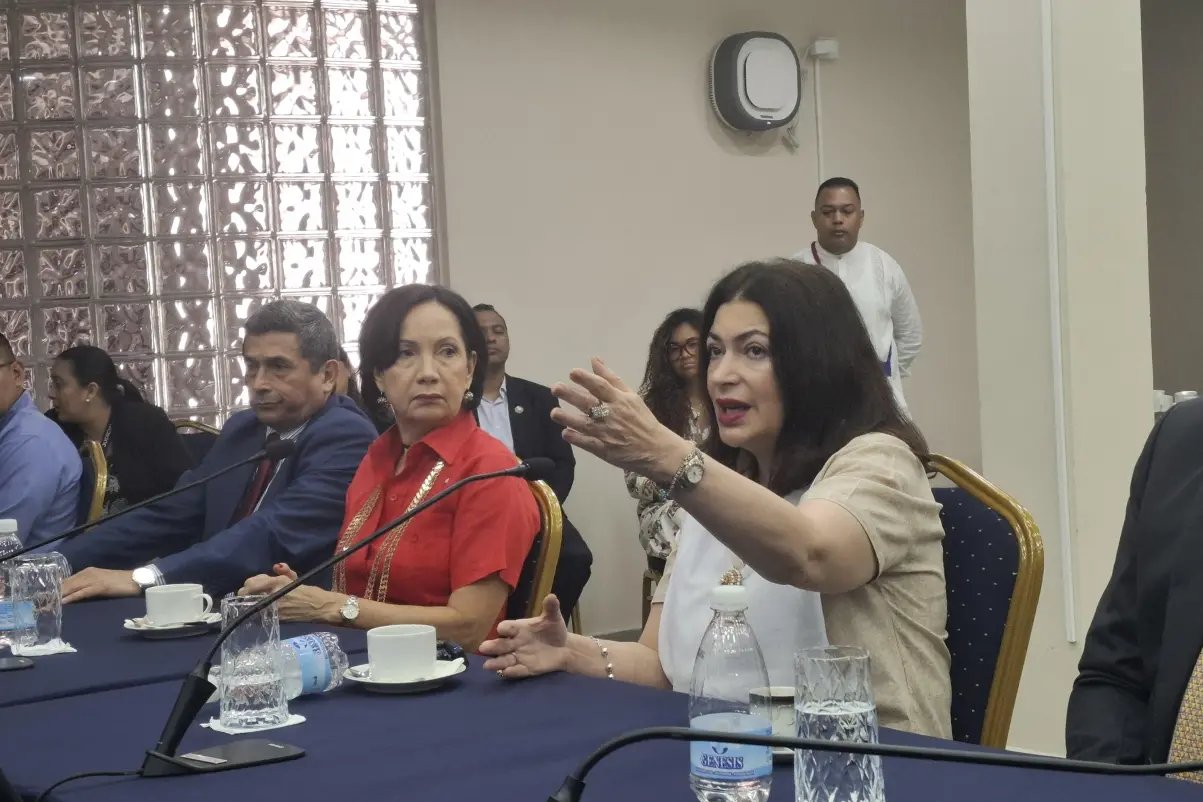
Several judges from the CSJ participated in the information session, held during the celebration of National Journalist’s Day. Specifically, they were asked about the lawsuits filed against journalists that can hinder the exercise of the profession.
Judge Maribel Cornejo, who previously held the position of prosecutor in the Public Ministry, highlighted the importance of investigative journalism.
“Investigative journalism is important, from which in my role as former anti-corruption prosecutor I benefited a lot, because it was a pleasure to pick up those newspapers that informed us about details that were very important to complete an investigation,” Cornejo highlighted. “As long as that journalist is carrying out his work ethically and with all the principles that his own career and profession also has, there should be no problems, because then when the judge receives a case for slander, slander, the judge must also have the ability to distinguish whether this deserves to continue. I know that it is a struggle that journalists have always had not only at the national level but also at the international level, because they always feel persecuted. But the balance is that the work that you do is carried out in an adequate and correct manner, and that the work that the judge is going to do is also done without pressure of any kind,” he concluded.