Bangkok/From the seat of greatest power in Vietnam, the secretariat of the ruling Communist Party (PCV), To Lam was also promoted this Tuesday to the presidency of the country, an expected appointment that gives him even more authority and consolidates him as “supreme leader” of one of the most dynamic economies in Asia.
The Vietnamese National Assembly today unanimously approved the appointment of Lam, a 68-year-old doctor of law, as the new head of state for the next five years, the Government reported today, after months of speculation about whether the movement would become effective.
Since the last National Congress of the PCV, a five-year conclave to designate the country’s road map, the leadership of the party and who will lead the State in the next five years, analysts already anticipated that Lam could end up simultaneously concentrating the general secretary of the party – the highest position in the one-party country, in her hands since August 2024 – and the more symbolic head of state.
Originally from Hung Yen, south of Hanoi, Lam today becomes “supreme leader” of a nation whose leadership has been “transformed” from “a collective model based on consensus” to an “authoritarian style,” Le Hong Hiep, senior researcher in Vietnam Studies and Strategic and Political Studies at the Yusof Ishak Institute (ISEAS), told EFE.
A career policeman, Lam joined the Communist Party of Vietnam in 1981 and joined the Politburo – the party’s highest decisive body – in 2021. Since then, he has been president of Vietnam, albeit briefly, and general secretary of the party.
In May 2024, he was appointed head of state as part of an agreement ad hocoverlapping the position for just over two months with that of general secretary of the PCV, unlike what happened this Tuesday, when his election represents an official mandate, Le Hong Hiep stressed.
Lam personifies Vietnam’s advance towards a command model similar to that of China, more centralized and with reinforced personal authority, and which in part reconfigures the internal balance of the system, supported by four differentiated pillars: general secretary of the PCV, president of the country, prime minister and president of the National Assembly.
Xi Jinping is in charge of the general secretariat of the Chinese Communist Party (CCP), the presidency of the country and the Armed Forces, whose command in Vietnam is formally distributed between the head of state and the party, although the formation exercises effective control.
Erected as one of the most powerful leaders in one of Asia’s most dynamic economies, Lam has advocated accelerating public and private investment and boosting the manufacturing and high-tech sectors, as Hanoi seeks to turn Vietnam into a high-performing developed country by 2045.
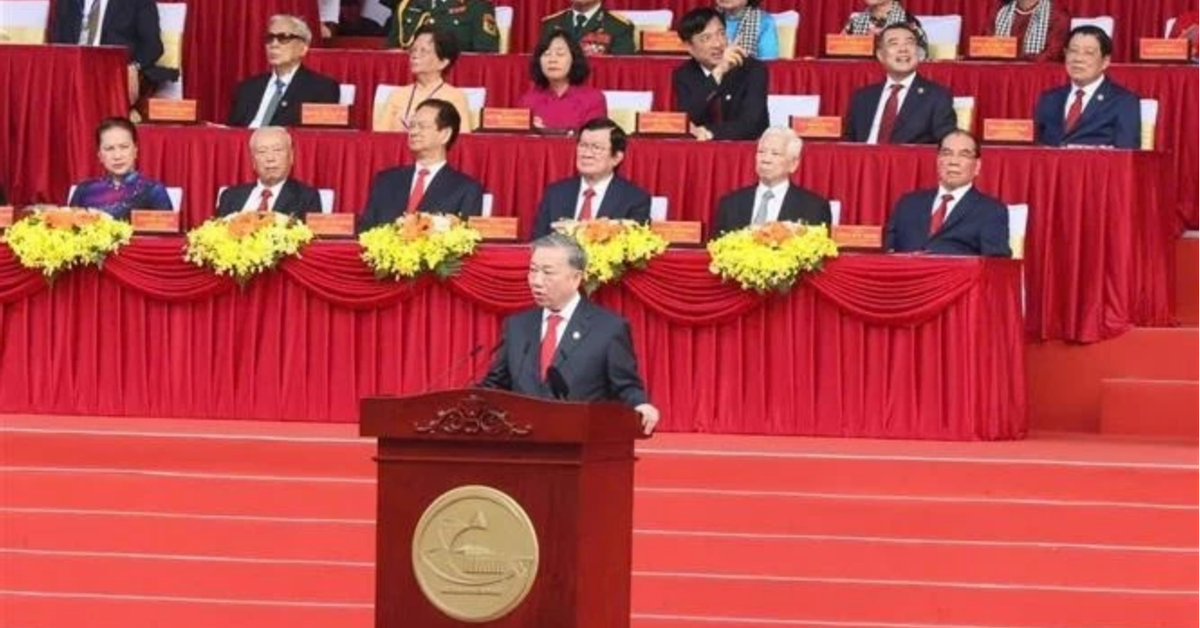
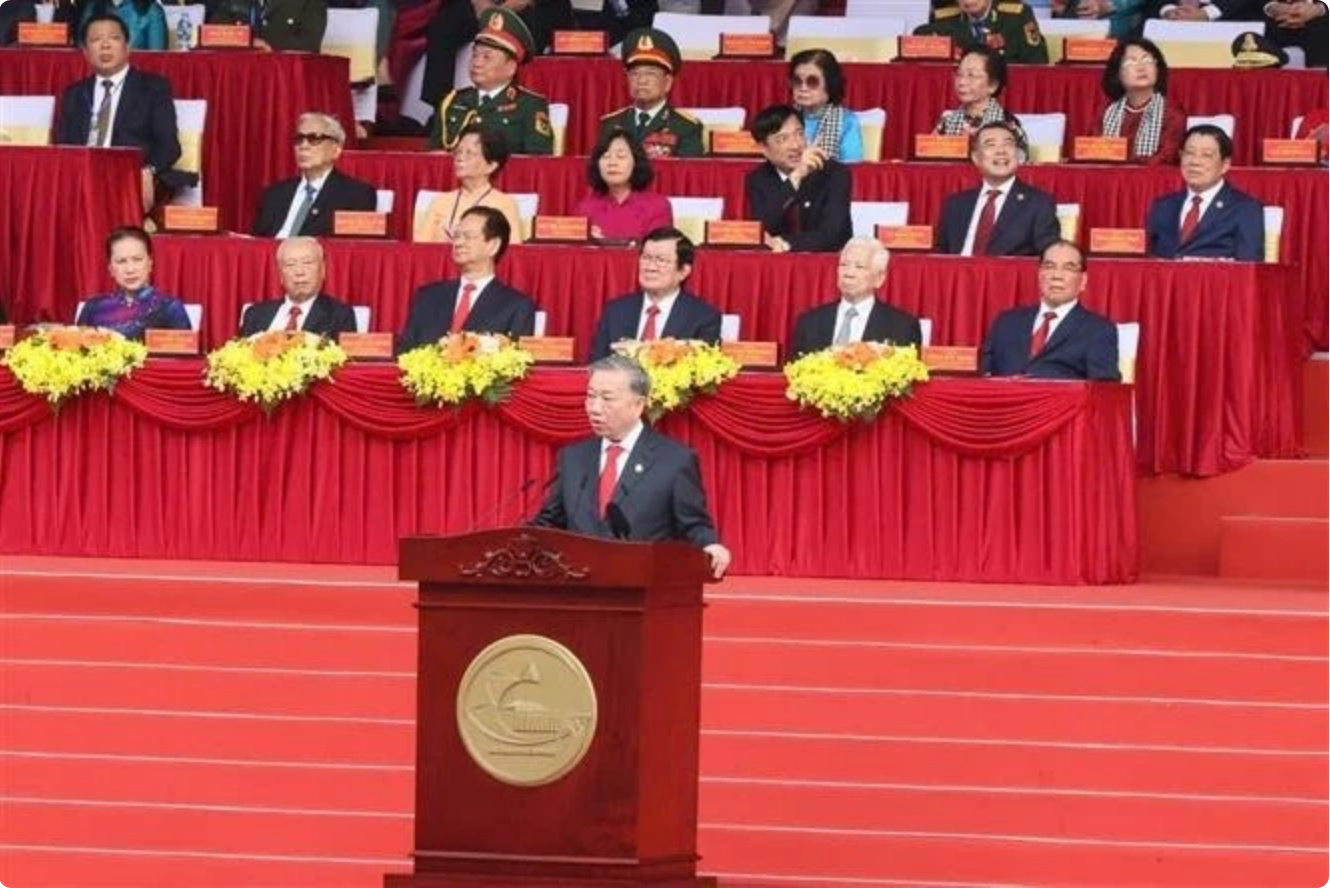
During his inauguration speech, the new Vietnamese president thanked the party for “its vote of confidence” in assuming the head of state.
Likewise, he insisted on the importance of the country’s development and highlighted “the contributions of all sectors of the people who, over generations, have worked tirelessly for the glorious revolutionary cause of Vietnam,” according to the official press.