By Alessio Postiglione
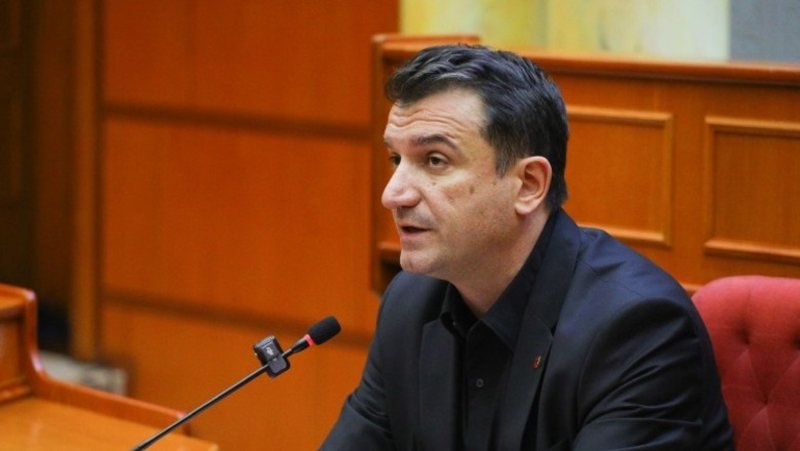
Albania represents a fundamental geopolitical chess piece for Italy led by Giorgia Meloni, but the problems of the rule of law in Tirana risk undermining our government’s strategy. The wrong step – matured entirely within the Albanian Socialist Party, the privileged interlocutor of our prime minister – has to do with the mayor of the capital, Erion Veliajn.
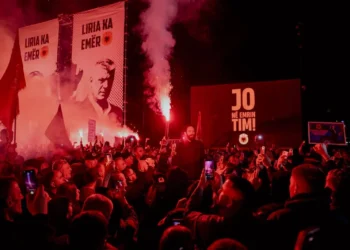
The story is a kind of local “Tangentopoli”, which casts a shadow not only on corrupt phenomena, but also on the political use of justice and the abuse of security measures in the Balkan country. Last September 15, the Albanian Supreme Court decided to leave in force the security measure “arrest in prison” for the mayor of Tirana. The decision disregarded a previous decision of the Albanian Constitutional Court, which had called Veliaj’s detention “disproportionate” and his dismissal from the post of mayor as unconstitutional, depriving the citizens of their democratically elected representative still officially in office. Veliaj was assigned a security measure on February 10, 2025, by order of the SPAK, the Special Prosecutor’s Office against Corruption and Organized Crime.
This body, created with the support and financing of the European Union, constitutes one of the institutional pillars for the alignment with the acquis communitaire, necessary for Tirana’s entry into the EU, a journey for which Italy has become a guarantor. However, beyond the accusations of corruption directed at the mayor (which will have to be examined in a regular judicial process), Veliaj remains deprived of personal freedom. What makes the picture special is the motivation presented by SPAK, which relied on the non-registration of the mayor in FARA (Foreign Agents Registration Act), the American registry of lobbyists. In fact, a law firm associated with the mayor was registered in this register, to defend his cause in the United States, where Veliaj has always been very active.
The call to FARA is, however, a procedural anomaly: it is an American bureaucratic obligation that does not constitute a criminal offense either in the USA or in Albania. Not coincidentally, the Albanian Constitution herself had condemned the disproportionate use of detention. The issue takes on subtle nuances both domestically and internationally. Veliaj, a key figure of the Socialist Party (SP) and former minister, has been considered for years as the dolphin and natural successor of Prime Minister Edi Rama. However, over time, the relationship between the two gradually deteriorated and turned into an open rivalry for leadership. Is it, therefore, a case of judicial abuse? For a case of politicized justice, developed paradoxically by the same Prosecutor who was born to align Albania with European standards? A warning in this direction has come directly from Brussels.
MEP Sandro Gozi, general secretary of the European Democratic Party (PDE/Reneë Europe), has expressed strong concern. He stated that the prolonged detention raises “serious questions about the necessity and proportionality” of the measure and reminded Rama that “Albania deserves answers, an effective state of law and respect for the democratic will, not judicial shortcuts”. It is not about determining the guilt or innocence of Veliaj, nor about stopping the necessary fight against corruption, but about understanding the dangers of silence on democratic guarantees in Tirana. If the anti-corruption institution acts through vague detentions, instrumentalizes foreign administrative obligations such as FARA and proves impervious even to the appeals of the country’s own Constitutional Court, then the whole model of pre-accession to the EU is shaken. This exposes Italy to the risk of becoming the unconditional guarantor of a system that violates the rule of law.
Original article: https://www.ilriformista.it/caso-veliaj-la-giustizia-albanese-sotto-esame-il-caso-che-mette-in-difficolta-meloni-532099/