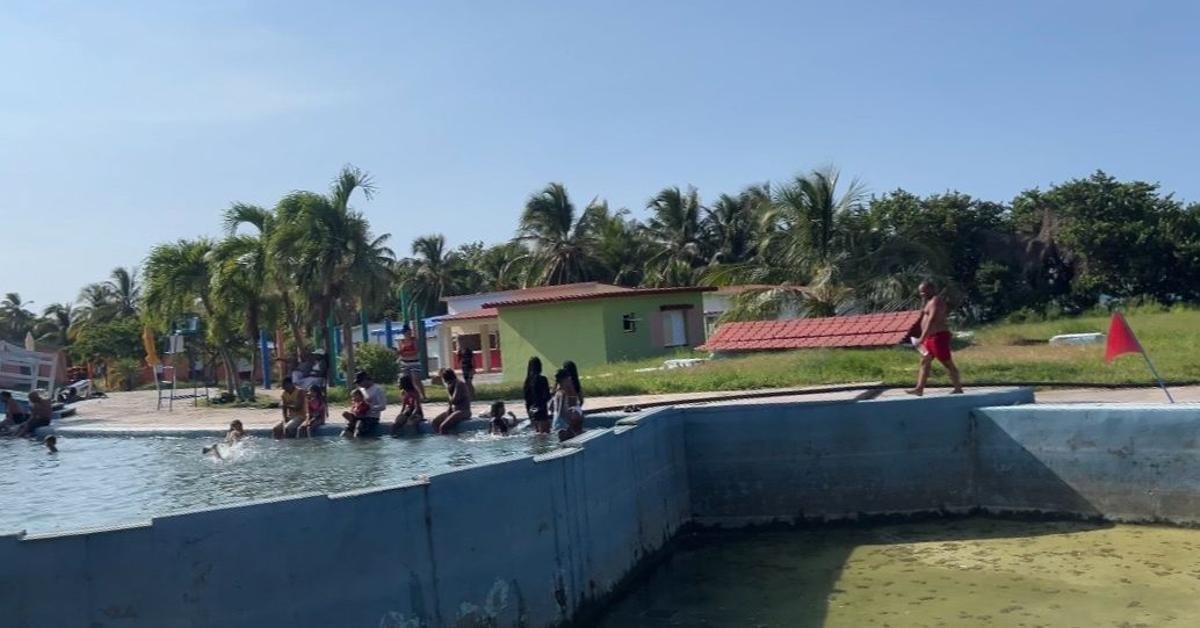
Mayabeque/What for years was one of the most affordable options for family vacations in Cuba today survives among weeds, dismantled cabins and ruined recreational areas. A tour of the popular campsites near Jibacoa beach – Los Cocos, Las Caletas, El Abra and La Laguna – reveals the deterioration of facilities that previously had to be reserved at least a week in advance and that now show clear signs of abandonment.
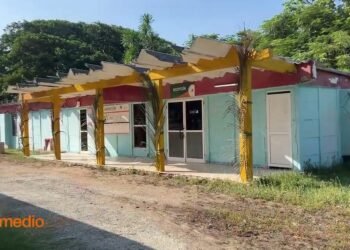
As he was able to verify 14ymedio In the place, located in Santa Cruz del Norte, Mayabeque, only the rooms and the pool of Los Cocos were in operation, in addition to a few cabins in Las Caletas. The rest of the facilities were in a very precarious state: buildings surrounded by bushes, common areas without maintenance and recreation areas that barely retain traces of their former use.
A worker in the area explained to this newspaper that one of the main problems is the impossibility of assuming the cost of some services. “It is becoming very difficult to maintain them, especially because of the issue of chapeo,” he commented. As these are large areas, clearing the undergrowth depends on mowers that run on fuel, an increasingly scarce and expensive input on the Island. According to his testimony, the last time this work cost 25,000 pesos, a figure that today is almost impossible to assume.
The lack of clearing is noticeable with the naked eye. Around many cabins, grass grows uncontrollably and reaches the entrances. Some buildings have lost doors and windows, while others barely preserve the structure. Added to the decline of the accommodation is the state of the spaces for collective use. Playgrounds, cafeterias, ranches and other recreational facilities show obvious deterioration and give the impression that they have not been repaired or attended to for a long time.

/ 14ymedio
In several areas, the pavement appears cracked, dirty or invaded by vegetation. Where once there were spaces designed for leisure and rest, abandonment and lack of maintenance now predominate. The scene contrasts with the natural beauty of the surroundings of Jibacoa, one of the best-known beach destinations in the western area.
The Los Cocos pool, one of the few areas still usable, also shows general deterioration. Although it remains open, a part of the facility is out of use and dirty, confirming the partial state of operation of the campsite. Even in the best-preserved complex in the area, neglect is evident.
The difference with previous years is notable. According to testimonies collected in the area, at this time it was common for the cabins to be in high demand, despite the fact that the conditions were poor even then. Now, however, demand appears to have plummeted at the same rate as the state of the facilities. “Removing the first cabins of Los Cocos, this looks like a movie from resident Evil”summarizes a camper during the tour.
/ 14ymedio
Beyond the extreme image of some areas, the underlying problem is the same that hits almost all services in Cuba: lack of resources, fuel shortages and accumulated deterioration. In the case of campsites, this wear and tear also has a symbolic value. For many years, popular camping was presented by the Union of Young Communists as an accessible rest alternative for Cubans, especially for students and working families who could not aspire to higher-cost hotels or destinations.
Today, in many of these enclaves, the official promise has been reduced to a handful of rooms in use and facilities that are barely maintained. The case of the Jibacoa campsites also illustrates a deterioration that does not seem temporary. It is not just a lack of paint or a specific breakdown, but a deep wear and tear on the infrastructure and basic maintenance services. Not only are food, transportation or electricity in short supply: the few places where generations of Cubans could afford a modest vacation near the sea are also crumbling.
/ 14ymedio