Chief Secretary Farley Augustine says Tobago’s inclusion as District Seven under the Special Operations Bill is necessary to address the island’s unique security challenges.
The bill was passed in the Senate yesterday morning after Senate President Wade Mark used his casting vote to break a 15-15 deadlock.
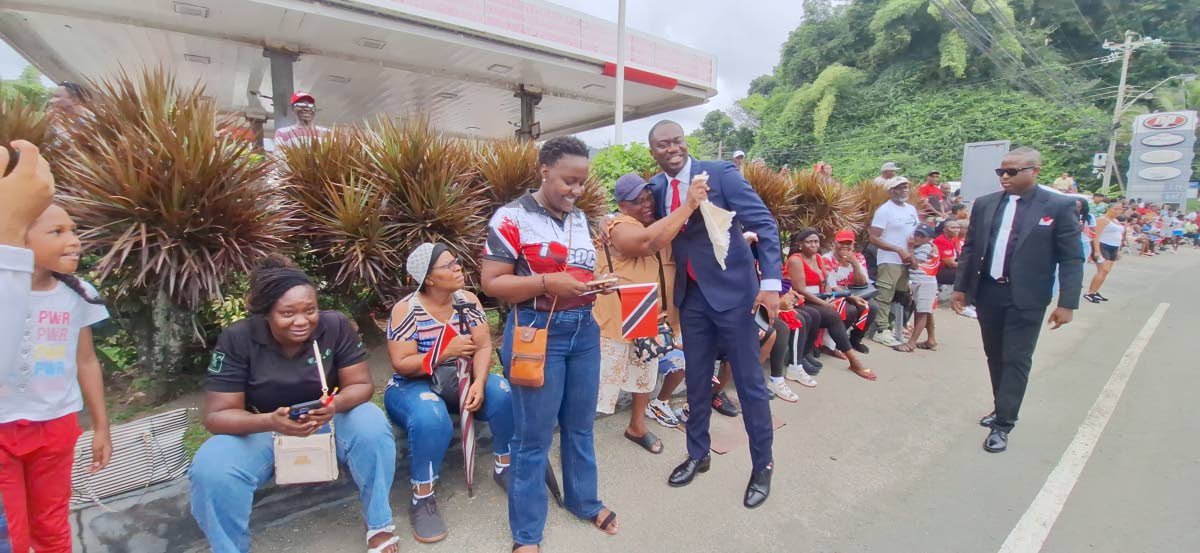
Speaking to reporters during Republic Day celebrations in Roxborough, Augustine said Tobago’s extensive maritime borders make security a constant concern.
“Tobago needs to be included. We are a marine state, an oceanic state, meaning we have a lot more maritime space than we have terrestrial space. That means that we have a challenge with security occasionally,” he said.
While supporting the legislation, Augustine said he does not expect it to be used frequently in Tobago. The bill grants law enforcement expanded powers to designate areas within a district as “closed areas”, allowing for measures such as curfews and restrictions on movement.
“I don’t see it being needed in Tobago very often because our level of criminality continues to be low. The only thing we are experiencing now is a spate of robberies,” he said.
Augustine noted that Tobago experienced a rise in murders between 2023 and 2024, but said strong policing initiatives helped reverse the trend. He argued that the legislation would allow authorities to respond swiftly to emerging threats before they escalate.
Addressing concerns about the possible impact on tourism, Augustine said crime, not the legislation, poses the greater risk to Tobago’s tourism product.
“Crime is a bigger challenge to tourism than the bill is. Everywhere we go, everybody we talk to, they bring up these warnings that the US and UK give about crime in Trinidad and Tobago. I am at pains to explain that it’s not really in Tobago, it’s in Trinidad,” he said.
He added that Tobago continues to suffer reputational damage from crime levels in Trinidad, undermining efforts to market the island as a safe tourism destination.
Meanwhile, the Tobago People’s Party political leader said he was not overly concerned that the legislation does not explicitly require consultation with his office before operations are conducted on the island.
During debate in the House of Representatives, Tobago West MP Joel Sampson proposed amendments requiring mandatory consultation with the Chief Secretary before any special operation is implemented in Tobago.
Although Attorney General John Jeremie acknowledged Sampson’s contribution, he argued that consultation did not need to be written into law, noting that discussions would take place with Augustine given their positive working relationship.
Augustine said that while he would have preferred a formal consultation clause, practical realities make the involvement of the Tobago House of Assembly unavoidable.
“Ideally, it should have been stated in the legislation, but when you look at the practicality of it, there is no way it could be implemented in Tobago without my involvement or the THA because all of the supporting arms are controlled by the THA, including the Tobago Regional Health Authority, ambulances, roads and schools.
“If it is to be successful in Tobago, there is absolutely no way it can happen without the THA or me being consulted,” he said.