The minimum wage of 2027 should be discussed taking into accountAs every year, inflation, productivity, economic growth and, to this, the situation of public finances, variables that will once again occupy the center of the agreement between the Government, businessmen and workers.
The National Union Council requested that these parameters have a central weight in the definition of the new basic income and warned about the effects that, according to the business sector, can generate an increase to move away from those references.
The discussion will come after a year in which The minimum wage increased by 23 percent.up to 1,750,905 pesos, compared to 1,423,500 pesos in 2025. For its fixation, The Government incorporated the concept of living wage developed by the International Labor Organization (ILO). Law 278 of 1996 establishes that they must be considered inflation, the inflation target of the Bank of the Republic, productivity, the contribution of salaries to national income and GDP growth.
The State Council also noted in 2026 that these parameters must be weighed comprehensively and with an explanation of its impact on the final figure. Among the references mentioned are the caused inflation, the inflation target, productivity, the participation of salaries in national income and the growth of the economy.
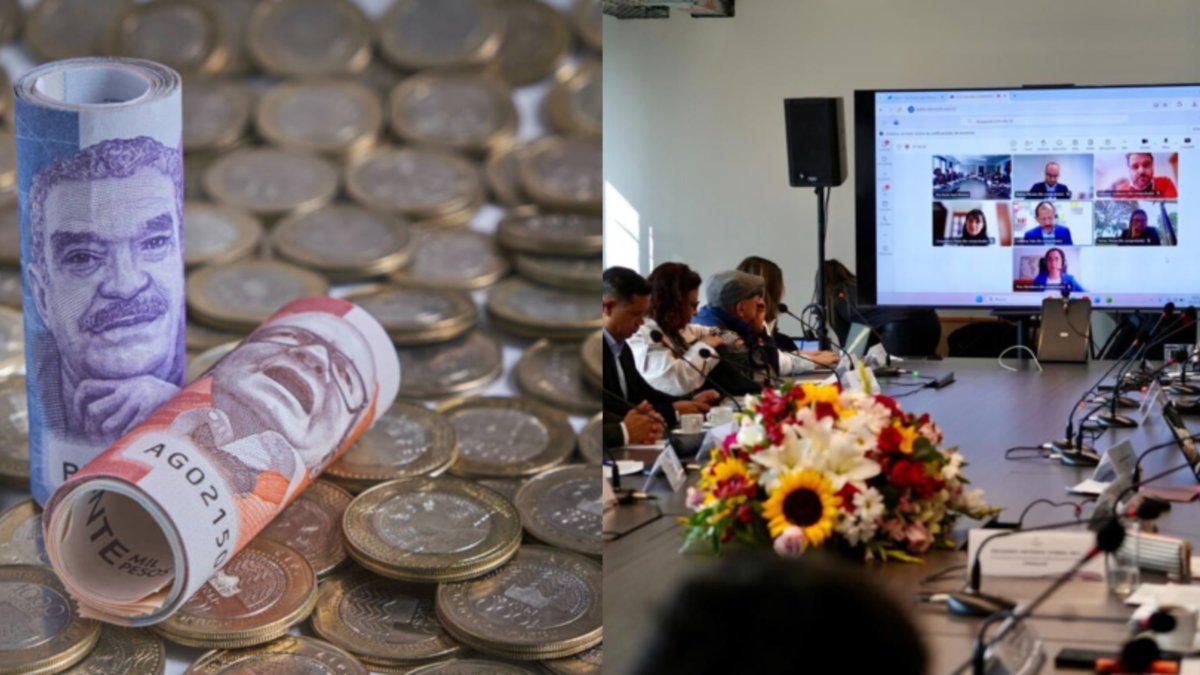
Businessmen and workers must present their positions before seeking an agreement on the increase Photo:Private file
Inflation and productivity are once again the starting point
José Ignacio López, president of Anif, pointed out that inflation and productivity will be the first elements that must be observed. As he explained, Anif’s expectation is that inflation closes 2026 around 6.6 percentwhile by 2027 a reduction in pressures is expected that currently affect prices.
“Faced with the elements for the discussion of the minimum wage, the first thing is the starting point of the technical parameters, which are inflation and productivity. We know we have persistent inflation in Colombia. In fact, our forecast is inflation of 6.6 percent at the end of the year,” López said.
The economist added that also it will be necessary to consider inflation expectations for 2027. His explanation is that some supply shocks could dissipate over the next year and lead to lower inflation.
In productivity There is no definitive figure yet.. López pointed out that The first estimates point to a relatively low resultalthough Anif has not yet finished his calculations and You will have to wait for the official statistics of the Dane.
Luis Fernando Mejía, CEO of Lumen Economic Intelligence, also pointed out that the discussion I should start from those two variables. For the economist, expected inflation and the behavior of labor productivity They must function as a reference to establish the increase of next year.
“The negotiation of the minimum wage must return as an anchor the two fundamental elements: the expected inflation for this year, which will be around 6.8 percentand the growth of labor productivity, which will be announced by DANE in the coming weeks,” Mejía said.
The CEO of Lumen Economic Intelligence added that the effects of an increase that is substantially above those indicators can already be seen in the labor market and in prices.
“The country should not repeat increases scenarios substantially superior to these two criteria, since its consequences are already visible: a lower generation of formal employment and greater inflationary pressures, to the extent that producers pass on part of the increase in costs labor at the prices consumers pay,” he stated.
Productivity behavior becomes important because allows you to see how much it can increase the labor cost without the adjustment being disconnected from the production capacity of the economy. In the discussion of the 2026 minimum wage, the total factor productivity reported for the year to the third quarter of 2025 was 0.91 percentwhile labor productivity per hour worked was 0.57 percent and per person employed recorded -0.32 percent.
Thus, for the 2027 negotiation, the final inflation and productivity data will be known before the decision is made on the new minimum wage and will be part of the technical references that must be considered in the agreement.
The minimum wage for 2026 was 1,750,905 pesos. Photo:Minimum wage
The fiscal front enters directly into the discussion
The other element that the Guild Council put on the table is the state of public finances. According to the business union, The Fiscal Framework initially projected a deficit of 4.5 percent of GDP by 2027, but the restated budget raised that projection to 9.4 percent. With the correction proposed by the Ministry of Finance, the figure would remain at 7.2 percent.
The Union Council indicated that, without this adjustment, net debt could reach 82 percent of GDP in 2030. In its approach, the fiscal situation also has effects on financing conditions, price formation and savings and investment decisions.
That link also appears in the calculations made by the Autonomous Committee of the Fiscal Rule on the increase in the 2026 minimum wage. CARF estimated that the 23 percent increase It would increase the fiscal deficit by at least 5.3 trillion pesos in 2026 and by 8 trillion pesos from 2027, due to effects on different components of public spending.
For the Union Council, one of the points that must be observed is the impact of the minimum wage on pensions and contributions associated with labor income. Because The minimum constitutes the reference for the minimum pension and for different parafiscal obligations, a larger increase can raise the commitments that depend on that value.
Anif has also pointed out the fiscal component among the effects of the 2026 increase, mentioning higher costs related to Colpensiones pensions, annuities and payroll, in addition to effects on the collection of income from legal entities.
Inflation and productivity will be some of the variables that will be on the table. Photo:minimum wage
Employment, exports and prices are also part of the calculation
For López, the discussion should not be limited to the immediate effect that the increase has on workers’ income. The president of Anif pointed out that the 2026 increase produced pressure on prices of services and coincided with a period in which labor formality has shown little progress.
“The increase in the minimum wage had an inflationary effectespecially in the services sector, and that is documented. It had fiscal effects that we are now beginning to understand more clearly,” he stated. Anif had previously noted that the 23 percent increase exceeded inflation and productivity benchmarks and had warned about its possible effects on inflation, employment and informality.
The president of Anif also focused on the agro-export sectors. He explained that These activities face difficulties in transferring the higher costs at their sales prices and which, at the same time, are exposed to the behavior of the exchange rate.
This exchange component was also included by the Union Council in its statement. The union noted that The Colombian peso registers an appreciation of 16.4 percent since the end of May, the largest in Latin America, according to their figures. In their analysis, the greater supply of dollars associated with fiscal imbalances generates conditions that reduce the operating margin of exporters and can affect their ability to sustain the jobs they generate.
The Union Council stated that it will participate in the Commission Permanent Coordination of Salary and Labor Policies and in the monitoring tables related to the effects on the export apparatus.
From the Unitary Central of Workers, Fabio Arias introduced another element into the discussion. The union leader pointed out that the pending adjustment related to the minimum living wage presented by the ILO in 2025 must be taken into account.
This way, The 2027 discussion will have as reference the indicators established in the legislation, but also the data known at the end of 2026 on inflation, productivity, growth, employment, public finances and price behavior. The legal calendar establishes that The Concertation Commission must decide no later than on December 15 and, if there is no agreement, the Government must set the minimum wage for the following year before December 30.
READ ALSO
READ ALSO