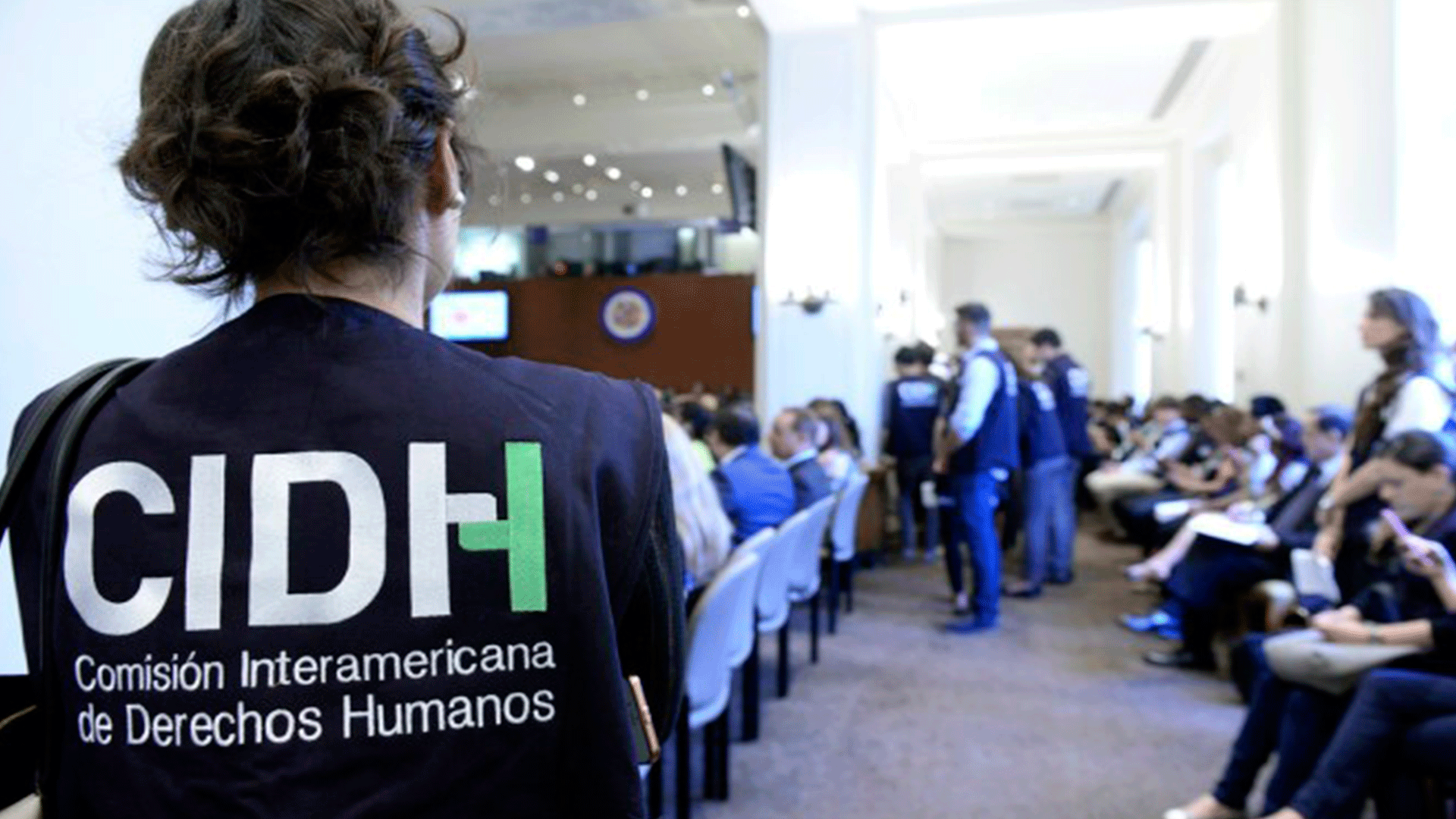
The Inter-American Court of Human Rights (IAC Court) This Monday at the Legislative Palace of Montevideo inaugurated the 195th regular period of sessions, a multilateral work day that will last until Friday and will include public hearings for complaints filed against the States of Venezuela, Chile and Peru.
The jurisdictional agenda of the hemispheric organization includes the oral review of the Navarro López demands and others against Venezuela, as well as the cases presented by the Chilean Afro-descendant Tribal People against Chile, and the Mashco Piro, Yora and Amahuaca Indigenous Peoples against Peru.
The court will also evaluate two hearings to monitor compliance with the sentence linked to cases of forced disappearance registered in Uruguay.
During the installation ceremony, the president of the Inter-American Courtthe Brazilian jurist Rodrigo Mudrovitsch, highlighted the evolution in the application of conventionality control by the judicial powers of the States parties to the American Convention.
“The impact of the sentences is measured by what happens after them. The decisions are being carried out, the States are approving and repealing laws to adapt their domestic law to the Convention, the courts have incorporated inter-American standards into their decision-making culture and control of conventionality has become, 20 years later, a reality,” said Mudrovitsch.
The vice chancellor of Uruguay, Valeria Csukasi, highlighted the importance of decentralizing the court’s activities outside its headquarters in San José, Costa Rica to strengthen citizen protection mechanisms and promote institutional exchange in the Southern Cone.
“A strong regional system requires strong democratic states, independent judiciaries, effective human rights institutions and societies capable of fully exercising their freedoms. The decision to hold sessions away from headquarters constitutes a valuable opportunity to bring the inter-American system closer to national institutions,” said Csukasi.
In terms of supervision, the Inter-American Court will examine the execution of the sentences in the Gelman case—related to the disappearance of María Claudia García Iruretagoyen and the identity theft of her daughter Macarena Gelman—and the case for the disappearances of Luis Eduardo González González and Óscar Tassino Asteazu during the Uruguayan military dictatorship.