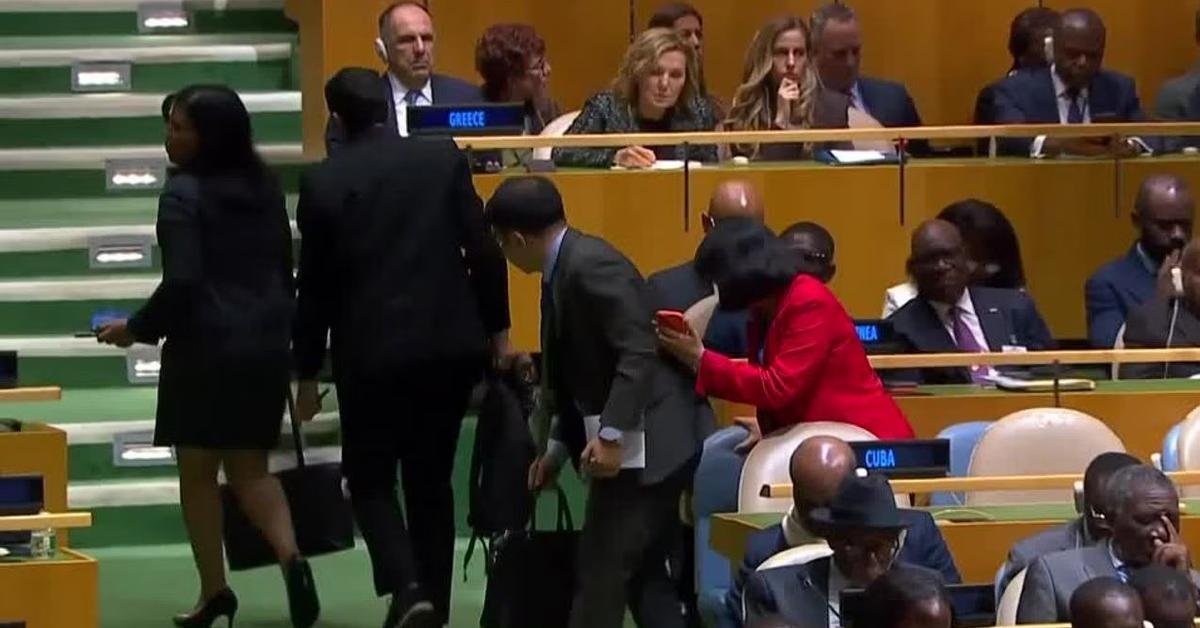
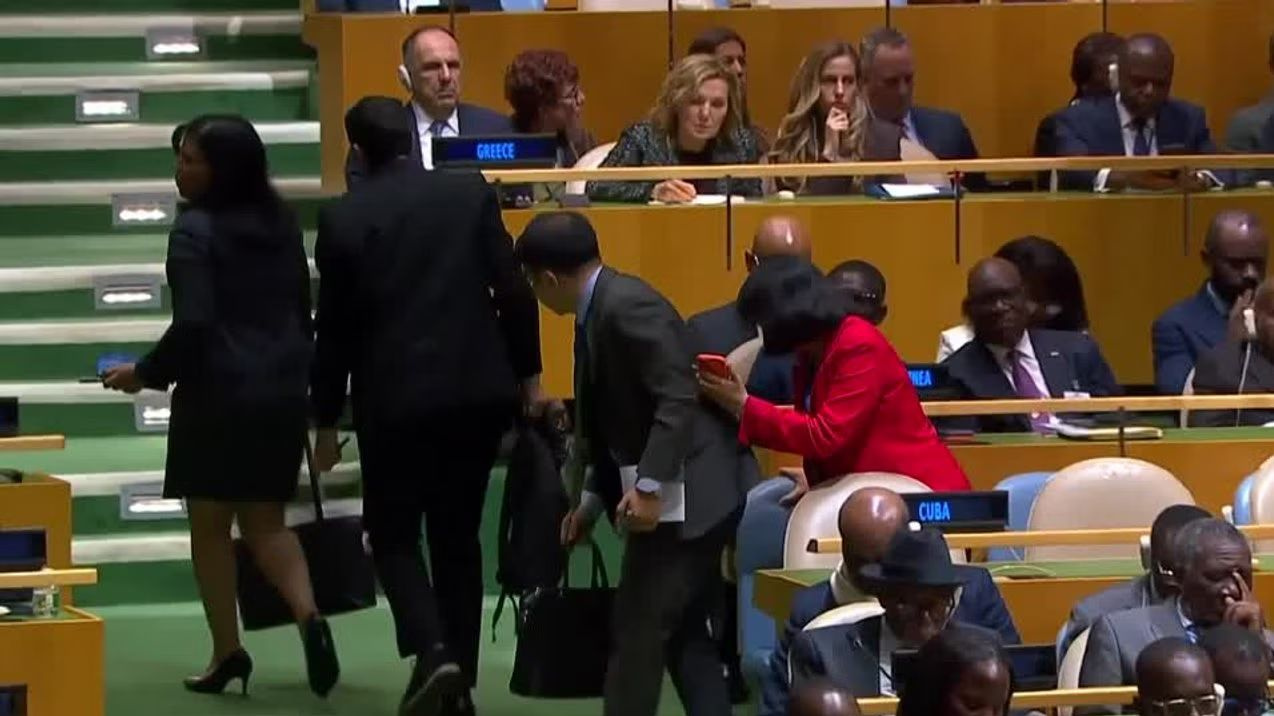
Madrid/“It is a state that has completely failed. It is failing like never before and will end up falling.” US President Donald Trump had not finished speaking these words about Cuba before the UN General Assembly this Tuesday, when the four members of the island’s delegation stood up and left the room.
In his speech, Trump once again boasted about the pressure that Washington exerts on Havana. He affirmed that his Administration “seeks fundamental change” in Cuba and celebrated the role of his Secretary of State, Marco Rubio, in that policy. “He’s very involved in the negotiations with Cuba,” Trump said of Rubio, before adding “we’ll see what happens.”
He also noted that Cuba’s communist regime was under “the greatest pressure it has ever seen.”
“He’s very involved in the negotiations with Cuba,” Trump said of Rubio, before adding “we’ll see what happens.”
The president also accused Havana of having been coordinating for “decades” with communist networks and left-wing groups in the United States, including the Communist Party of that country; the Antifa group, designated by your Administration as a terrorist organization; and the Democratic Socialists of America (DSA), an organization to which New York Mayor Zohran Mamdani belongs.
The accusations coincide with the line defended by the State Department, which in a report published in July He presented Cuba as “the capital of communism of the 21st century” and accused the Havana government of trying to export Marxist ideology and exert political influence throughout the West.
“Communism will never come to the United States, but freedom will come to Cuba,” Trump concluded.
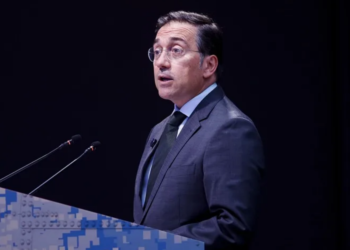
The Cuban Foreign Minister, Bruno Rodríguez, who will speak next Saturday at the UN General Assembly, reacted on social networks, as usual, to Trump’s words, calling his accusations “falsehoods” and “slander.” He insisted that “Cuba is not a threat to the United States or to any country” and that “the economic blockade, including the energy siege, does threaten Cuba and the rest of the nations.” “It is an act of genocide and collective punishment,” he concluded.
“It is a State that has completely failed. It is failing like never before and will end up falling”
One day before Trump’s intervention, during a ministerial meeting of the Community of Latin American and Caribbean States (Celac) in New York, the Cuban foreign minister had accused Washington of using the fight against drug trafficking as a “pretext” to reinforce its military presence in Latin America and the Caribbean and try to impose a new version of the Monroe Doctrine.
The Cuban foreign minister, who did not comment on the multiple accusations and testimonies over time On Cuba’s role in cocaine trafficking authorized in the 1980s by Fidel Castro himself, he pointed out the “regional militarization” of the United States, tariffs and actions aimed at dividing the region’s governments between allies and adversaries, in addition to attempts to weaken integration mechanisms.
Rodríguez also denounced Washington’s measures against Cuba, in particular the “energy fence”, secondary sanctions and threats of military intervention. According to the chancellor, the restrictions make the island’s access to fuel difficult and hinder the arrival of shipping companies and containers, with consequences for the supply of food, medicines and medical devices.
Rodríguez described Washington’s measures as an “act of genocide”, “collective punishment” and a “massive, flagrant and systematic” violation of human rights and international law, and asked Celac to defend the declaration of Latin America and the Caribbean as a “Zone of Peace.”