Municipal officials lack training and support for their work in local communities. The researcher behind the new study calls for quick action by the police and closer contact with the colleagues who have to help them with the tasks.
The municipal officials must be helping to create security in the small residences. But they do not always feel that they have been properly dressed for the tasks. This appears from a study by Ilisimatusarfik about the working conditions of municipal officials.
In the survey’s questionnaire, 28 out of 29 participants answer that they lack courses or training. The wishes range from self-defense and psychological first aid to better knowledge of the legislation and the basic work of the police.
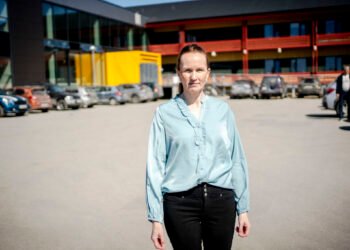
– We see an obvious need to get started with these courses as soon as possible. It only becomes more important that the replacement is so high, says Najaaraq Demant-Poort, who has led the study for Ilisimatusarfik.
Municipal bailiffs are local citizens who perform police duties as a secondary occupation in places without the daily presence of trained police officers. Tasks may include securing crime scenes, making arrests and participating in searches. There are 74 positions as municipal clerk in Greenland, and the vast majority are filled.
Difficult events make an impression
The survey shows great differences in the work from place to place. Some municipal bailiffs mainly have administrative tasks, while others go out several times a month and can sometimes experience violent things.
On the open question “which incidents take up the most time in your work as a municipal bailiff”, it is clear that suicides and deaths take up a lot of space with municipal bailiffs, the researchers say in the report. More than half of the respondents have experienced incidents of murder, suicide or examination of corpses.
Despite the challenges, Najaaraq Demant-Poort emphasizes that many municipal officials are still happy with their role, which is associated with status and a good reputation.
But a consistent message in the survey is that the municipal bailiffs want more contact with others in the police.
– Most people were well aware of the possibility of getting psychological assistance in the police from a Greenlandic-speaking psychologist. Many had also made use of it, for example after a violent experience. It is of course very positive, says Demant-Poort.
What more people are asking for is more daily contact with colleagues who can guide and help with tasks.
The report singles out two of the six police districts for close cooperation and good relations. In four other places, the researchers point to a need to strengthen cooperation between the municipal bailiffs and their colleagues.
Trust is not always enough
Najaaraq Demant-Poort says that many police colleagues and managers have confidence in the abilities of the municipal bailiffs. However, this is not necessarily enough in itself.
After working on hard tasks without immediately talking about it, it results in lack of energy to continue the work.
– From the management’s point of view, it can be thought of as a compliment when they do not interfere with the work. But it is not always that the municipal officials experience it as recognition when they do not hear anything from their management, she says.
The report also points out that the police officers at the smaller stations are themselves under pressure. The researchers therefore also recommend more support for the employees who must ensure the municipal officers’ training, equipment and ongoing contact with the police.
Some of the issues are about missing equipment. It can be police equipment such as a shirt, baton or pepper spray. It can also be more everyday objects:
– In some places we saw that municipal officials themselves have procured things that they needed, for example a printer for administrative work. But it is the organization that has to be on the field here, says Najaaraq Demant-Poort.
Language barriers without fixed procedures
The language is an additional challenge in the collaboration. Typically, the municipal clerk speaks Greenlandic and sometimes has to work together with Danish-speaking police.
The monitoring center in Nuuk and the local municipal bailiffs solve part of the problem, because the municipal bailiffs can get guidance in Greenlandic. But outside of the call centre, the researchers found examples of the translation being solved from time to time by the people who were available.
It is as if my energy, desire to work and motivation increase when I have a conversation with someone with the same job as me.
The report describes how, among others, office staff, reserve officers and family members help translate.
– The language barrier is of course a condition in the police organisation. But it was a surprise to us that there were no procedures for how the parties handle it, says Najaaraq Demant-Poort.
Among other things, she points to the preparation of the visiting police officers:
– We noticed, for example, that the visiting officers did not have much guidance on how to enter a situation where an interpreter is used. Another option is to train the people who already solve interpreting tasks.
Annual replacement of approximately every third
In the five-year period described in the report, the annual turnover among municipal officials was between 30 and 37 percent. This means that a third of the country’s municipal officials leave their position – every year.
Najaaraq Demant-Poort is careful to answer why:
– We describe that there is a general structural challenge for the function of municipal bailiffs, which deals with general evictions from the smaller residences. We have also learned more about what municipal officials find difficult in their work, she says.
– But we don’t have concrete data on how many leave the job for one reason or another. It would require another investigation, where you talk to many more of the former municipal officials, says Najaaraq Demant-Poort.
Sermitsiaq has offered the Greenland Police to comment on the investigation and recommendations in a follow-up article.