Key Takeaways:
- At the 2026 Pacific Islands Forum in Palau, Australia pledged $430 million against drug smuggling (aerial surveillance and police/border training) and the United States $150 million, including $17 million to fight IUU fishing—together $580 million in announced security and infrastructure aid.
- Other partners (Japan, New Zealand, South Korea, Taiwan, the U.S.) committed projects such as a Palau hospital, Tonga fuel storage, and port work in Tonga and the Marshall Islands. Palau and the U.S. will co-chair a first U.S.–Pacific Islands Conference of Police Ministers on maritime security, drugs, cybercrime, and illicit finance.
- IUU fishing is framed as about 20% of global catch and a threat to 200-nm EEZs; China-flagged distant-water vessels are called the leading offenders. U.S. Coast Guard cutter Harriet Lane’s 75-day Operation Blue Pacific patrol and shiprider deals with 12 Pacific states included 42 boardings with Fiji and PNG.
Australia and the United States pledged $580 million in security and infrastructure assistance to Pacific Island Countries, including to counter illegal, unreported and unregulated (IUU) fishing.
Canberra and Washington announced the separate support packages during the Pacific Islands Forum (PIF) leaders’ meetings in Palau in August and September 2026. Australia said it would provide $430 million to combat drug smuggling, including funding for enhanced aerial surveillance and training for police and border officials.
The PIF fosters development, economic and security cooperation among its 18 member countries and territories and its regional and international partners. Other support announced during its recent meetings include commitments from partners such as Japan, New Zealand, the Republic of Korea, Taiwan and the U.S. to build a hospital in Palau; update fuel storage capacity in Tonga; expand or renovate port facilities, including in Tonga and the Marshall Islands; and improve transportation and communication facilities.
The U.S. package of $150 million includes $17 million to combat illegal fishing. It will focus on updating national laws, policies and regulations to align regional IUU fishing objectives, provide certified training for compliance officers, and deploy new monitoring technologies, stated the U.S. State Department.
Palau and the U.S. will cochair the inaugural U.S.-Pacific Islands Conference of Police Ministers to focus on maritime security, drug trafficking, cybercrime and illicit finance, the State Department said.
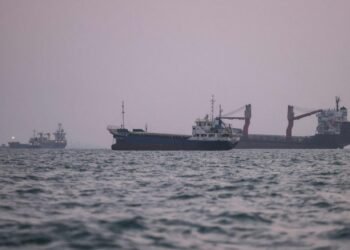
IUU fishing is a significant threat to island nations. International law grants coastal states exclusive rights over natural resources, including fisheries, in their respective 200-nautical-mile exclusive economic zone (EEZ). IUU fishing violates those rights, accounting for an estimated 20% of global catch, according to the U.S.
Vessels flagged to China, which has an estimated 16,000 ships in its distant-water fleet, are the leading perpetrators of IUU fishing, according to the 2025 IUU Fishing Index by Poseidon Aquatic Resource Management and the Global Initiative Against Transnational Organized Crime.
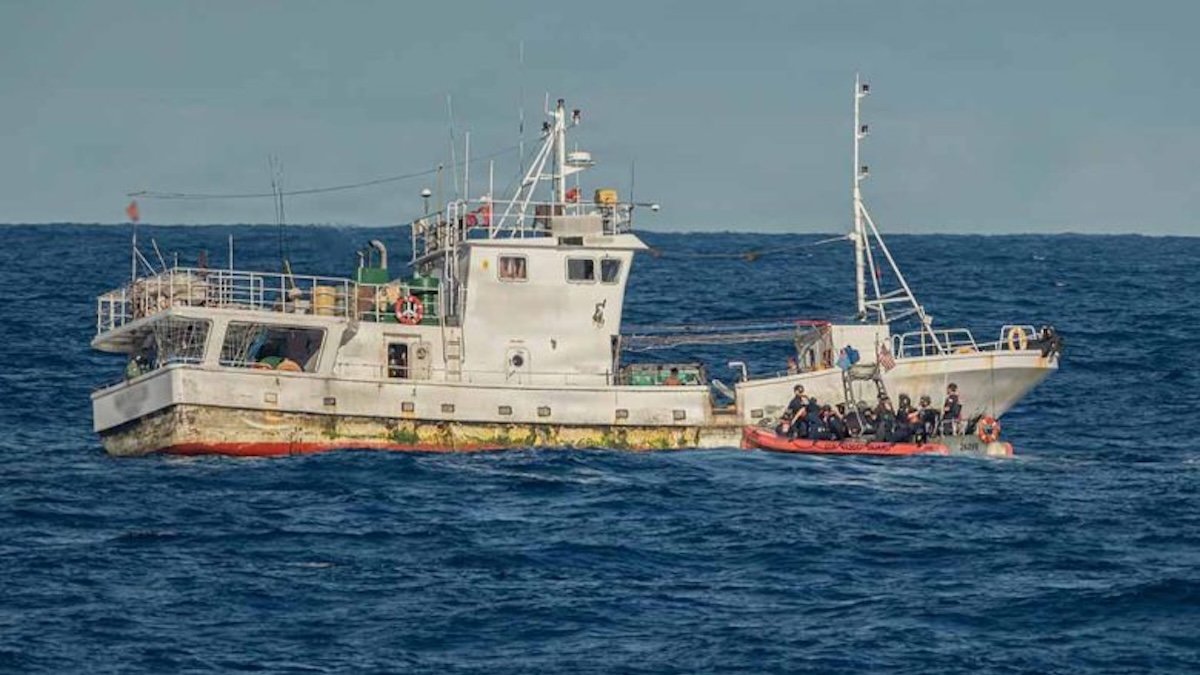
Across the Indo-Pacific, like-minded nations collaborate to counter IUU fishing, including joint patrols by U.S. Coast Guard and partner agencies to promote safety, security, sovereignty and economic prosperity. As part of Operation Blue Pacific, the U.S. Coast Guard cutter Harriet Lane conducted a 75-day patrol in mid-2026 that included Australia, Fiji, Papua New Guinea (PNG) and Solomon Islands. The deployment also included Solomon Islands and the U.S. signing a maritime law enforcement agreement.
Under the bilateral shiprider pacts, each nation’s military personnel and/or maritime law enforcement officers can ride aboard the other’s vessels and enforce laws within their respective waters and EEZs. Shiprider participants include the Cook Islands, Fiji, Kiribati, Marshall Islands, Micronesia, Naoero (formerly known as Nauru), Palau, PNG, Samoa, Tonga, Tuvalu and Vanuatu.
U.S. Coast Guard personnel assisted Fijian and PNG enforcement officers with 42 vessel boardings during Operation Blue Pacific.