The Vanuatu Teachers Union (VTU) has warned that teachers could go on another nationwide strike over the Teaching Service Commission’s (TSC) alleged failure to honour its Memorandum of Conciliation (MOC).
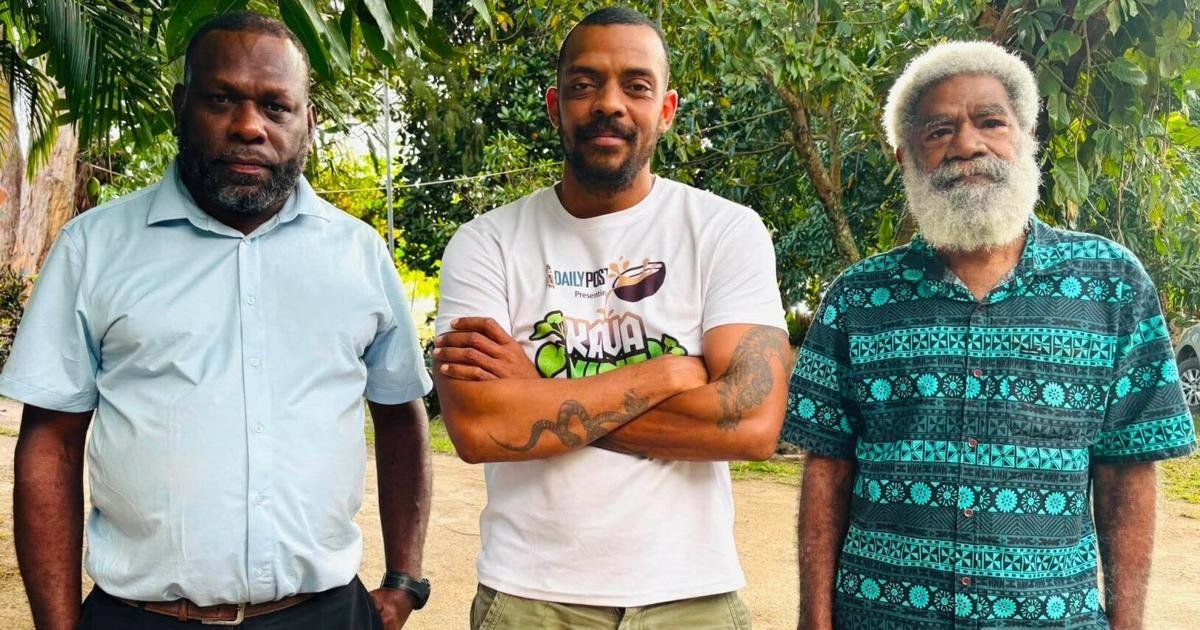
Speaking on the Kava mo Kajap (KmK) podcast hosted by Mavuku Tokona (MT), VTU Industrial Officer George Firiam (GF) and Secretary General Jonathan Yona (JY) explained why the union has continued to push for teachers’ rights and why further industrial action could be considered if the dispute is not resolved.
The discussion also addressed the right to strike, teachers’ salary anomalies and the union’s call for greater organisation among workers across Vanuatu.
MT:George, Jonathan, you have both been very busy over the past two years. You have made many people unhappy, including the Government and parents, particularly because of the teachers’ strike. Why are you here today?
GF:We have started the process of another dispute with the Government. This follows the determination process that began on December 17, 2024. Around that period, Port Vila was also affected by the earthquake crisis.
At that time, more than 600 teachers did not have stable payroll arrangements. This was connected to the suspension of teachers following the previous industrial strike. We continued working to have those teachers reinstated into the teaching service.
The issue has not simply disappeared. There are still concerns that need to be addressed.
Why salary changes matter
MT:Why is this new process important now?
GF:It is important because it involves changes to salaries for workers. With the high cost of living today, workers need to be treated fairly and brought to the same standard.
Teachers are hardworking people. When a group of hundreds of teachers comes together to raise concerns, it is because they are facing real problems.
MT:Many people have criticised teachers and said teachers are not performing well. Yet you have continued to fight for two years. Why?
GF:Teachers are workers, and they deserve to receive what they are entitled to. The union is trying to address issues that affect teachers’ livelihoods and working conditions.
MT:Can you give an example of how salary anomalies affect an individual teacher?
GF:We have been looking at salary determinations dating back to 2006. When we reviewed the records, we found teachers with anomalies that continued through later years.
Some teachers have been working for years but their salaries do not properly reflect their qualifications, experience or entitlements.
In one case, we looked at the annual salary of a teacher and found an amount that was extremely low. It was difficult to understand how someone who had been working as a teacher could have such a salary.
That is why we continue to raise these issues. If someone works for four hours, they should be paid what they are entitled to for those four hours. If they work eight hours, they should receive the appropriate payment for eight hours.
Could there be another strike?
MT:Secretary General, the big question is whether you will have another strike.
JY:It is possible. If the dispute process does not lead to a resolution, another strike could happen.
However, we must follow the legal process. We have given the required notice to the Commissioner of Labour. There is a 30-day notice period, followed by a seven-day conciliation period.
During those seven days, there must be three meetings. The aim is to reach a memorandum of conciliation and settle the dispute.
The process is there for both sides. We will go through it and see whether the issues can be resolved.
MT:Let me play devil’s advocate. The Government could say that Vanuatu has experienced an earthquake, the cost of living is high and the Government itself is facing difficulties. Would those reasons be enough for teachers to hold back?
JY:Whatever teachers decide to do should be considered carefully before industrial action is taken. We need to test the situation and consider the impact on families and the country. But the Government also has responsibilities. Workers face difficulties every day, and when problems continue for a long time, they cannot simply be ignored.
Even when there is a salary determination, there needs to be a budget to implement it. If the Government has made a determination but does not provide the resources to implement it, workers are still affected.
MT:You mentioned that hundreds of teachers have been affected. What is the union seeking?
GF:We want the relevant data to be made available so that the anomalies can be identified and corrected.
We understand that there are teachers who have not received allowances such as remote or transfer allowances. There are also concerns involving teachers with the same qualifications and similar years of service who are not receiving the same entitlements.
The TSC needs to provide the data so it can be properly checked and verified.
MT:What would be the reason for the Government not providing the data?
GF:Confidentiality has been raised as an issue. But we have previously conducted an exercise where information about teachers was reviewed with the involvement of the Government.
During that process, we found shortfalls in salary calculations. The amount identified was more than VT500 million.
The purpose of checking the information is not to create problems. It is to identify where calculations have gone wrong and make sure workers receive what they are owed.
“Why make it so difficult?”
MT:Why does the union believe the process has become so difficult?
GF:That is what we are asking. If the argument is simple — that workers should receive what they are owed — then the process should not be unnecessarily complicated.
We are living in the 21st century, where information can be transferred electronically. We want the data so that we can identify the problems and work towards correcting them.
The important question is also accountability. If mistakes were made in calculations, someone should be able to explain how they happened and why they were not corrected earlier.
MT:You have referred to other sectors. Do you think workers across Vanuatu are facing similar problems?
JY:Yes. These issues are not limited to teachers.
There are workers in different sectors who may experience similar challenges but remain silent because they are afraid to speak up or challenge their employers.
The culture of silence needs to change. Workers need to organise and understand their rights.
MT:What would you say to parents who are frustrated because their children are not attending school during a strike?
JY:We understand that parents are affected. When teachers strike, children cannot attend school and families are disrupted.
But the strike is not simply about teachers. It is also about workers’ rights and the right to organise.
The union believes the right to strike is a human and labour right. Workers need to be able to stand together when negotiations and other processes fail to address their concerns.
We appreciate parents who understand the situation and support teachers, even though they are also affected.
MT:You have spoken about a culture of silence. What do you mean by that?
JY:In many workplaces, when someone raises a concern, they can be labelled as a troublemaker or someone who is simply complaining.
That mentality needs to change.
Workers should be able to raise legitimate concerns about wages, workplace safety, job security, welfare and other employment conditions without being afraid.
If workers remain silent, problems can continue for generations.
MT:What is your message to workers in other sectors?
JY:Workers should organise. They should understand their rights and work together.
This includes workers in different sectors, including farmers and other groups whose livelihoods depend on their work.
When workers organise, they have a stronger voice. They can raise concerns about wages, benefits and working conditions and work towards changes that can benefit people across the country.
MT:Are you hopeful that the Government will honour the new process and work with the VTU to avoid another strike?
JY:We will attempt to work through the process. We have contacted the relevant people and are waiting for responses.
The national executive of the union will meet, and if it decides that industrial action is necessary, the union will take the appropriate steps.
If the process fails and the decision is made to take action, the education system could once again be shut down.
MT:What is your final message?
JY:Workers and families need to understand that the right to organise and the right to strike are important.
Workers should not see these rights as privileges. They are important tools for addressing workplace concerns.
We encourage workers across Vanuatu to organise, work together and speak about issues affecting them.
MT:George, Jonathan, thank you for joining Kava mo Kajap. It has been a pleasure having you on the programme.