AUTUMN COLLECTION IN INATSIS ART
Many points will soon be addressed in Inatsisartut during the upcoming session. What has come of new proposals and which ones were not completed this spring? Read along here.
Soon the 31 will crowd politicians in Inatsisartut together to decide on a number of legislative amendments and resolutions.
September 18 starts the first part of the autumn assembly, where a total of 108 items must be dealt with. Sermitsiaq has read the agenda and compiled an extract of the proposals to be debated in the Inatsisartutsalen.
Fisheries Council
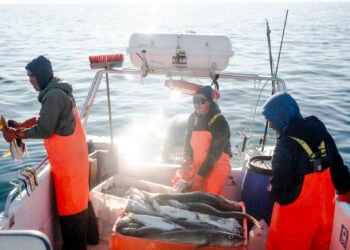
In 2024, Inatsisartut adopted a long-discussed and maligned new fisheries law. It entered into force on 1 January 2025. After a year and a half, it is time for adjustments.
Naalakkersuisoq for fishing, catching, agriculture and self-sufficiency, Peter Borg (D), has submitted a proposal for changes to the Fisheries Act.
The most significant change will be the introduction of a fisheries council and a council for the sustainable development of fisheries.
In the coalition agreement from 2025, it is stated that Naalakkersuisut must set up an independent fisheries council “(..) which must advise Naalakkersuisut in the fisheries area in the same way that the Economic Council advises on the social economy”.
According to the bill, the Fisheries Council must, at the request of Naalakkersuisut, come up with opinions on, among other things, regulation of fishing, determination of catch capacity and quotas, as well as initiatives for more sustainable fishing.
Relevant interest organizations within fishing can be admitted as members.
The Council for Sustainable Development of Fisheries will be tasked with assessing the development of fisheries. They must advise Naalakkersuisut on fisheries matters, including fisheries economic matters.
In addition to the two councils, the bill also includes amendments to the law, for example on the meaning of processing and on the exclusion of companies from fishing with dinghies under six metres.
The item must first be processed on 30 September.
Ban on deepfakes
Artificial intelligence is turning the world upside down with new possibilities for good and bad. Including the ability to fake photos, videos and audio recordings that make it look like someone is saying or doing something they never did – called deepfakes.
Inuit Ataqatigiit wants Greenland to take responsibility for ensuring that artificial intelligence is used in an ethical and responsible manner.
In a proposed Inatsisartut resolution, Pipaluk Lynge (IA) wants Naalakkersuisut to introduce a bill on the regulation of artificial intelligence with a view to banning the production, dissemination and use of harmful deepfakes.
“Inuit Ataqatigiit believes that artificial intelligence must never be used to offend people or undermine trust in our democratic institutions. Harmful deepfakes can be used to violate privacy, commit identity fraud, spread misinformation, influence public debate and undermine trust in society’s institutions,” writes Pipaluk Lynge in the proposal.
The IA wants it to be prohibited to produce, distribute or use harmful deepfakes, including deepfakes that violate privacy, are intended to mislead the public, are used for identity fraud, extortion or other crimes or can otherwise cause significant damage to individuals or societal interests.
The item must first be considered on 15 October.
Increased residence requirement for the right to vote
Naleraq is calling for greater attachment to Greenland before being allowed to vote for the Inatsisart committee.
Today, everyone who is a Danish citizen, has reached the age of 18 and has had permanent residence in Greenland for at least six months prior to the election can vote.
Member of Naleraq, Kuno Fencker, wants the residence requirement raised to five years.
“Greenland is a small society with a population of less than 60,000 people, where even small changes can have a major impact on Inatsisartut’s composition and the country’s political direction. Therefore, there is a weighty democratic consideration in that the right to vote for Inatsisartut is to a greater extent linked to people who have lived with the societal, cultural and political conditions in Greenland over time,” he writes in the proposal.
The proposal shall not change the current rules on the right to vote for persons who temporarily reside outside Greenland, but who retain their right to vote due to a special connection to Greenland.
The item must first be considered on 17 November.
Migration certificate, time zone and data-based registration of Inuit
While 68 new items have been included in the autumn assembly, a total of 36 items were postponed from the spring assembly.
Among them are amendments to the Tourism Actwhich will make it possible for the municipal councils to require foreign tourists to obtain a hiking or access certificate and have travel or rescue insurance in order to gain access to specified routes or destinations. In addition to new rules for hikers, the bill primarily aims to give tourist companies a longer dispensation period to comply with the residence requirements.
The item must be considered 2nd on 6 October.
Two regulars, which will now be debated at their third meeting in their current form, are the proposals from Siumut and Naleraq on to return to the old time zone. The items are 1. considered at the autumn session 2025. 2. consideration started at the spring session this year, but was interrupted shortly after, and the proposals were sent back to the Legislative Committee.
The proposals must 2. be considered again on 7 October.
Last but not least, the chairman of Naleraq, Pele Broberg, will instruct Naalakkersuisut to carry out a data-based registration of the original population in Greenland “Inuit” on the basis of recommendations from EMRIP. The item was 1st considered at the spring meeting, but sent on to 2nd consideration without committee consideration. Naalakkersuisut has suggested that the item be rejected.
The item must be considered 2nd on 7 October.