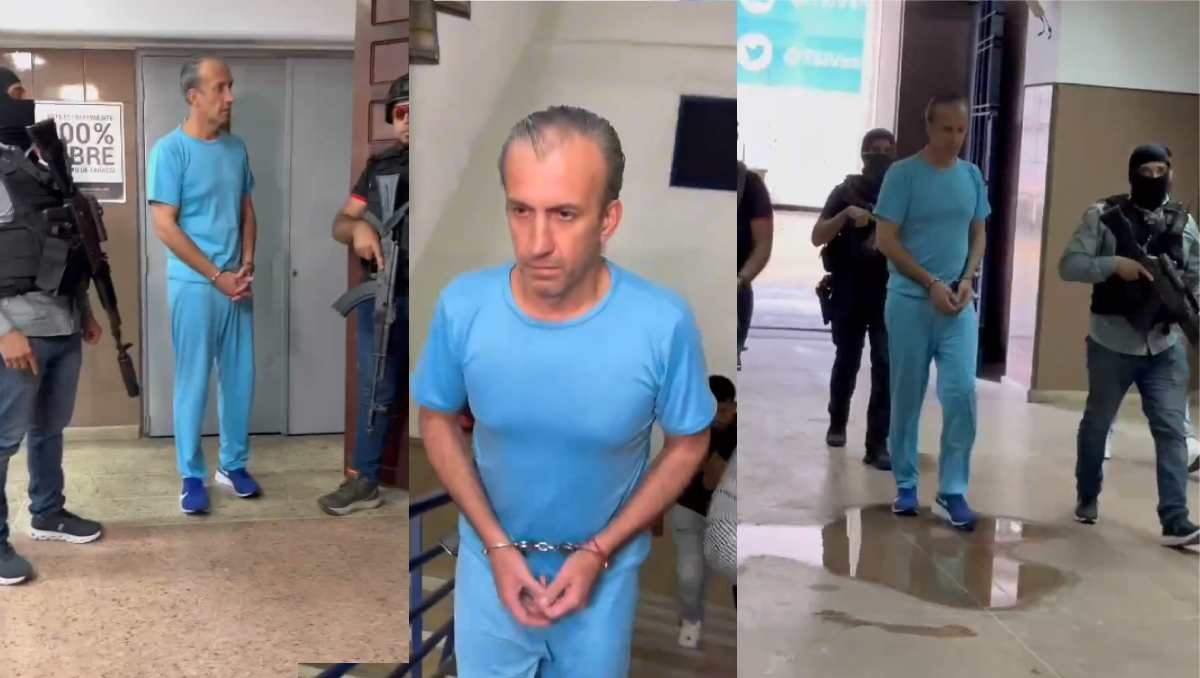
The judicial process of the PDVSA-crypto case entered the reactivation phase this week, three years after the outbreak of the scandal in 2024. As reported in the last few hours, the authorities presented former Oil Minister Tareck El Aissami to court, along with Hugbel Roa and Samark López, among other defendants.
The first hearing was held on the night of Monday, April 20, 2026 in the 4th Trial Court with jurisdiction over crimes of terrorism and corruption, led by Judge Alejandra Romero. The session began around 8:30 pm and lasted until early Tuesday morning. At that time, the magistrate decided to defer the hearing and rescheduled it for Wednesday, April 22 at 11:00 am
Witnesses reported moments of tension inside the room due to the presence of heavily armed officials. Private defense participated actively: at least 48 lawyers were sworn in to represent the more than 60 defendants in the case.
The former minister reappeared in a wheelchair and with visible signs of physical deterioration. Journalists such as César Batiz, director of El Pitazo, confirmed that image during the transfer to the Palace of Justice. Sources close to the process indicated that El Aissami showed obvious health problems after more than two years in detention.
The scandal broke out in 2024, when the Prosecutor’s Office accused El Aissami and his close circle of a corruption network that involved the embezzlement of millionaire funds in the state oil company through operations with crypto assets. The irregularities included irregular contracts, diversion of resources and the participation of officials and businessmen linked to the energy sector.
El Aissami, who held key positions as Minister of Oil and president of PDVSA, faces serious charges related to corruption, appropriation of public assets and other associated crimes. Along with him, figures such as Hugbel Roa (former deputy), Samark López (businessman identified as a financial operator) and several oil industry executives are mentioned. Since his arrest in April 2024, the case remained in relative judicial silence until this reactivation.
In the last 24-48 hours, the focus was on two aspects:
- The opacity of the process: the initial hearing took place without full public access, which generated criticism from civil organizations that demand transparency.
- El Aissami’s physical condition: images and reports about his transfer in a wheelchair dominated conversations on networks and independent media.
- Continuity: the trial resumes this Wednesday, and is expected to move forward with the presentation of evidence and the statements of the accused.
So far, there are no official details about the destination of the allegedly diverted funds or possible implications for other senior officials. Secrecy persists around the file.