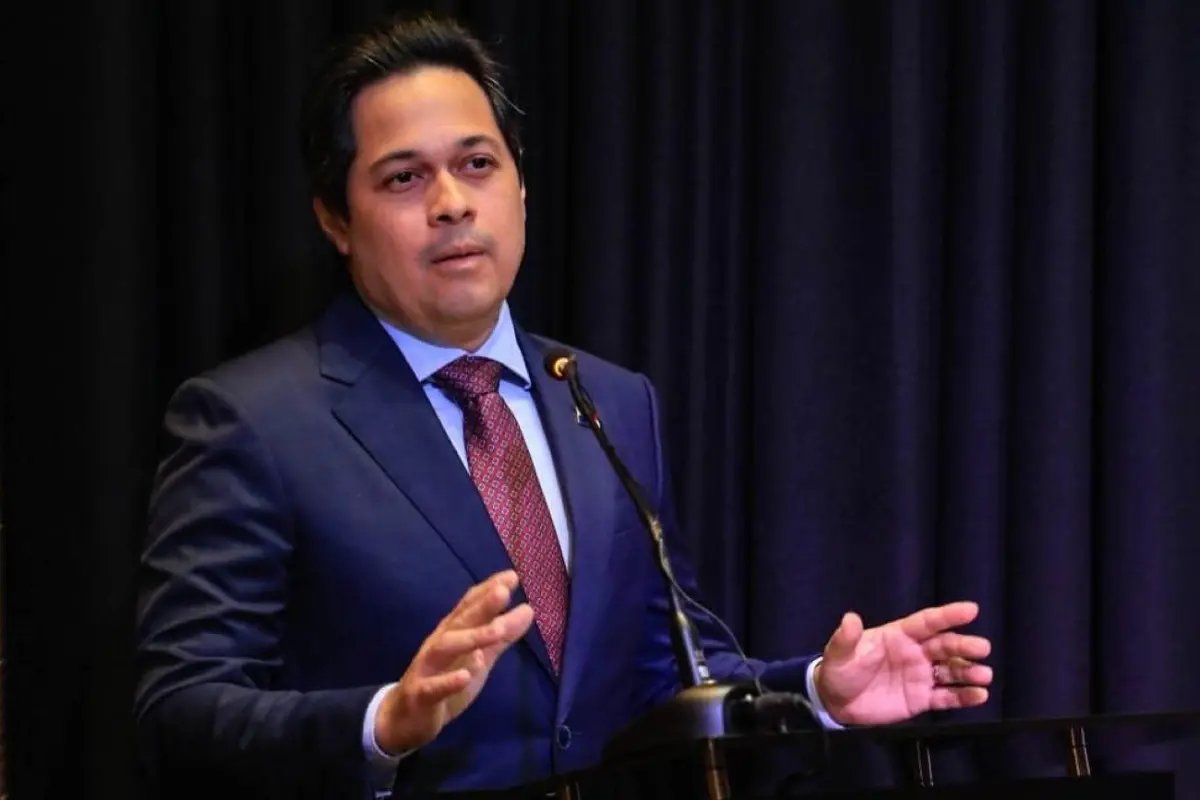
The investigations into the irregular handling of tax credits in the General Directorate of Revenue (DGI) of the Ministry of Economy and Finance reveal a history of early warnings and institutional vulnerabilities. Publio De Gracia Tejadawho served as head of the tax entity between July 2, 2019 and June 30, 2024made public a chronology of events which confirms that the adulterations and modifications of data in the treasury’s internal system were formally detected since 2022.
Through a public statement released this Monday, July 27, on his account instagramDe Gracia pointed out that in 2022 The entity received the first complaints about the alteration of data of taxpayers and designated persons, which motivated the initiation of administrative reviews and reports to the security forces.
However, irregularities escalated the following year. At the beginning of 2023officials from the DGI itself warned about adulterated resolutions for the award of tax incentives. After an internal investigation, the entity filed a criminal complaint with the Public Ministry in April 2023 and notified the injured taxpayer.
The volume of inconsistencies forced extraordinary operational measures to be taken during the final stretch of the last five years. In February 2024faced with an atypical increase in requests for compensation and transfer of tax credits —coupled with warnings from a group of tax professionals—, the central administration ordered the total cessation of these procedures. Since that date, no file could be approved without the direct supervision of the director’s office.
One month later, through Resolution 201-1464 of March 11, 2024the DGI reinforced the regulatory requirements: it conditioned the approval of credits on sworn statements, additional documentation and a supplementary administrative resolution. In addition, the rule ordered a reevaluation of all previously submitted procedures.
Among the cases presented is a dispute over $20.2 million. In May 2024, a court ordered the DGI to recognize said tax credit in favor of a third party. However, the institution considered that the claim was unfounded and damaged state assets, which is why it filed a challenge with the Supreme Court of Justice and the contentious-administrative jurisdiction, a file that has the endorsement of the Administration Attorney’s Office and remains pending ruling.
At the level of external oversight, De Gracia indicated that since 2019 the DGI coordinated investigations of tax crimes jointly with the Criminal Investigation Division of the United States Internal Revenue Service (IRS-CI)an exchange that nourished files in other jurisdictions. Likewise, in 2019, a comprehensive modernization program was launched by $40 millionfinanced by the Inter-American Development Bank (IDB) and driven with the International Monetary Fund (IMF)focused on auditing the system E-Tax and expand electronic billing.
Despite the modernization efforts and the creation of the institutional complaints web channel (Resolution 201-3984 of June 17, 2024), the irregularities detected raise questions about the real scope of tax credit fraud and the effectiveness of computer tools to prevent internal data manipulation.