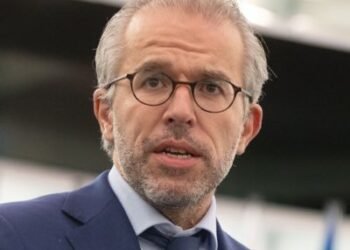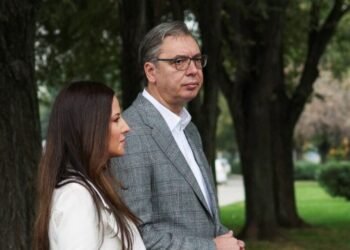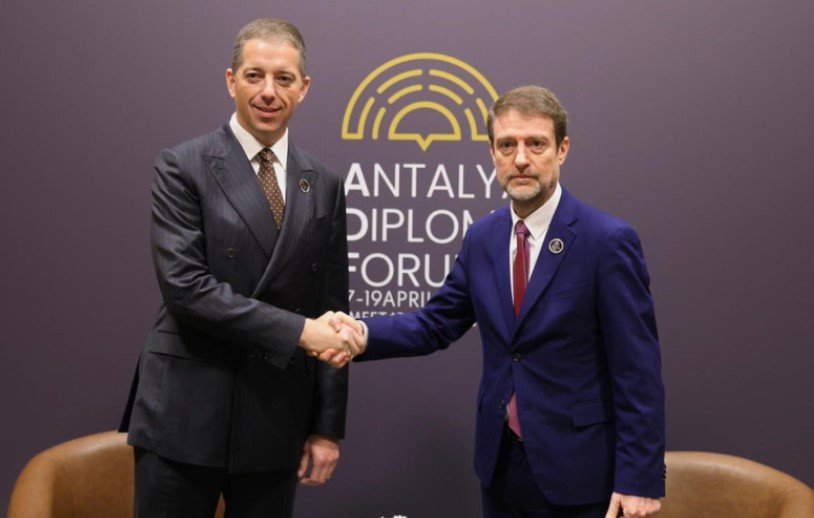
Serbia and Albania have reached an agreement in principle on the opening of consulates in Shkodër and Bujanoc. The news was announced by the Foreign Minister of Serbia, Marko Gjuric, who said that the agreement was reached during the meeting with his Albanian counterpart, Ferit Hoxha.
In an interview for Radio Beograd, Djuric stated that the opening of these consulates will be a step towards strengthening relations between the two countries.
“I am happy about the fact that I had good talks with the new foreign minister of Albania, Ferit Hoxha, with whom we reached an agreement in principle on the opening of the consulates of the two countries in Shkodër and Bujanoc”, said Gjurič.
Speaking about the process of European integration, the Serbian minister said that Serbia has accelerated the implementation of reforms related to the agenda of the European Union, stressing that EU membership remains a national interest of Belgrade.
According to him, most of Serbia’s economic exchanges take place with the countries of the European Union and the region, so, as he said, it is important for Serbia to be part of European decision-making processes.
Djuric also spoke about relations with the Czech Republic, calling it an important partner for Serbia in Central Europe. He said that during his visit to Prague, he held talks with the Czech Foreign Minister, Petr Machenka, who, according to him, stated that the recognition of Kosovo by the previous Czech governments was done under pressure.
As for Kosovo, Gjurič claimed that the government of Prime Minister Albin Kurti is becoming more and more isolated in the international arena.
“The more Kurt’s regime uses violence against Serbs and those who think differently, the more isolated it becomes in the international community. This is in our favor,” he said.
Commenting on the issue of the former General Staff building in Belgrade, the Serbian minister defended the Minister of Culture, Nikola Selakovic, saying that he acted in accordance with the law and in the interest of the state. He described the accusations against him and other officials as a campaign against the state and national interests of Serbia.