
All views and claims expressed in this letter belong solely to the author and have not been independently verified.
In a recent essay about the Dominica I knew in the 1960s and 1970s, some accused me of nostalgia, racism, colonialism, or longing for British rule. Such accusations avoid the argument. It would be more credible, and intellectually honest, if my critics had the courage of their convictions to pen their criticisms of me under their real names instead of masquerading as “Putin,” “Zandoli,” “Ma Popo” or “Labour Power.”
There is nothing reactionary about examining whether Dominica once produced more, maintained stronger community institutions, and demanded greater accountability.
The economic record shows that agriculture was once central. Banana exports reached approximately 54,900 tons in 1969, and before the hurricanes of 1979 and 1980, agriculture accounted for nearly 40 percent of GDP, more than 60 percent of exports, and roughly 35 percent of employment. In 1978, real GDP grew by about 11 percent, supported by agriculture and manufacturing.
The 1960s and 1970s were not a golden age. Poverty, inadequate roads, limited education, and colonial scars remained. But we can condemn colonialism while acknowledging the virtues of our parents and grandparents. We can celebrate modern progress while asking why fertile land lies idle, food imports remain high, industries have disappeared, young people leave, and citizenship has become so lucrative.
From Production to the Sale of Citizenship
Dominica has moved from an economy based on what people grew, made, built, taught, and exported toward one increasingly dependent on selling citizenship.
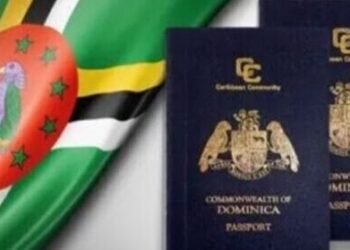
CBI revenue is not literally most of national income, but the dependence is extraordinary. The IMF reported approximately EC$670.5 million in CBI receipts in 2024, equal to about 34.7 percent of GDP.
CBI can support development if used transparently for infrastructure, education, agriculture, industry and climate resilience. The danger comes when it substitutes for development.
A passport cannot plant dasheen, manufacture furniture, produce food, teach mathematics, maintain the electrical grid or create a culture of productivity. Money can finance these things, but only competent institutions and skilled citizens can build them.
The IMF has urged greater transparency and accountability regarding CBI flows, investments and escrow accounts. These gaps do not prove wrongdoing, but they make the case for more transparency.
The public deserves to know how much was received, where it went, what commissions were paid, what projects were financed, who owns the resulting assets, and what independent audits verify the figures.
These are not opposition questions. They are citizenship questions.
The Bitter Irony of Accountability
The historical case for reparatory justice arising from slavery and colonialism deserves serious consideration. But it is embarrassing that independent Caribbean nations must now be pressured by Britain, Europe and the United States about transparency, security and accountability in selling our own citizenship.
Britain removed visa-free access for Dominican citizens in 2023, citing security concerns. We fought for self-government. We must therefore govern ourselves well.
Independence means protecting the national patrimony, defending the public purse and planning beyond the next election.
The answer to colonialism cannot be incompetence. The answer to exploitation cannot be self-exploitation.
Not by Social Media Alone
Government cannot bear all the blame. Dominica also faces a crisis of active citizenship.
We have become expert commentators. Facebook produces revolutions, WhatsApp produces experts, and YouTube provides a parliament where everyone speaks and nobody implements.
Social media can expose wrongdoing and connect communities. But Facebook is not a civic organization. WhatsApp is not a development plan. A thousand likes are not a scholarship, and sharing a post is not sharing one’s time, expertise or resources.
A republic cannot be rebuilt by spectators.
Citizenship Is a Duty
Dominica once possessed a culture of participation. Teachers, farmers, nurses, civil servants and young people joined organizations. Villagers maintained fields, supported schools and helped one another. Credit unions and cooperatives built collective strength.
We need to recover that spirit.
Instead of asking, “What can I get?” we should ask, “What can I build?”
Instead of asking who will help children, we should ask what time we can give to tutoring. Instead of demanding better leadership, we should serve on boards, associations, cooperatives, schools, and community organizations. That is civic engagement.
We desperately need more civic engagement at home and among Dominicans overseas. Coming to Dominica for a fete is not enough and is a dereliction of duty, considering the parlous state of community development efforts or cooperative spirit of Koudmen that built the most unselfish and caring aspects of our national culture
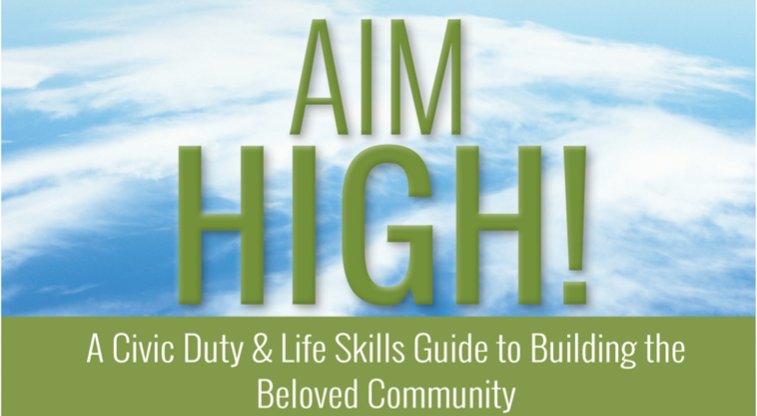
It is for that reason our law office published “Aim High – A Civic Leadership Guide” in 2025. We distribute that civic book free of charge as a public service.
It is a successor to the Dominica Cadet Corps- Civic Leadership Handbook we produced in 2005 as a gift to the Dominica Cadet Corps. I share both with our community here.
The Disease of Selfishness
Perhaps the greatest enemy of development is selfishness.
It is easy to criticize Dominica from abroad. It is harder to organize scholarships, mentor students, invest in productive enterprises, support farmers, finance libraries, provide professional expertise or return home to teach.
Our education, success, and access create obligations.
A lawyer should strengthen the rule of law. An engineer should help build. A doctor should heal. A teacher should teach. An entrepreneur should create opportunity.
Otherwise, success becomes personal decoration.
We Must Produce Again
Dominica must return to production by applying modern science to its natural advantages.
Agriculture should include drones, irrigation, greenhouses, hydroponics, processing, cold storage, cooperatives and climate-resilient crops.
Manufacturing can include agro-processing, essential oils, furniture, specialty foods, digital fabrication and renewable-energy equipment.
Education must connect to production. Students should encounter agriculture, engineering, coding, entrepreneurship, civics and financial literacy. Technical education deserves equal dignity.
Our efforts through the Rebuild Dominica University of Maryland Eastern Shore Partnership with Dominica State College, formalized by a memorandum of understanding, demonstrated what purposeful collaboration can achieve. That partnership brought food-preservation scientists Dr. Nando of Kenya and Dr. Patel of India to the Dominica Grammar School Home Economics Center, with the assistance of Principal Alicia Christian, née Abraham. There, they taught local farmers the techniques of mango-segment canning.
The Mafala breadfruit project, undertaken with Dr. Julius Garvey, likewise helped many farmers develop an enhanced breadfruit product. One farmer, Adrien Augustus Bannis, went further by packaging dried breadfruit chips in attractive, professional packets comparable in quality and presentation to products made in the United States or anywhere else in the world.
These examples show that Dominica does not lack talent, creativity or productive potential. What we need is sustained cooperation, investment, technical knowledge and the will to move from ideas to implementation.
We should also follow the path of the late Dr. Clayton Shillingford, president of the diaspora-initiated and funded Dominica Academy of Arts and Sciences. Over fifteen years of operation, that organization raised approximately EC$14 million in cash and in-kind contributions for Dominica.
We salute the many lawyers, engineers, professionals, working men and women who gathered in Brooklyn, New York, on December 7, 2001, to organize the first Dominica Diaspora in the Development Process Symposium. They know who they are. Twenty-five years later, many are now in their fifties and sixties, with some entering their seventies and retirement. We salute you for your wisdom and trust that your sacrifice to unite and build will inspire others to rise above caustic criticism and commit themselves to community development and civic engagement.
Our little republic must not descend into chaos and crime because too few people are willing to leave the spectators’ gallery and offer noble service to the island we love. Great nations were built by great people who showed themselves noble and brave by committing themselves to the common good.
No one is coming to save us. We can do it if we try. Let us do it.
Neither Government Worship Nor Hatred
A government, opposition, or political party is not the nation. The people are the nation.
Support government when it is right and oppose it when it is wrong. Judge every party independently. Democracy dies when loyalty becomes more important than truth, and development suffers when citizens are excluded for political reasons.
Dominica is too small to waste half its people whenever power changes hands.
From Commentary to Commitment
After posting, what will we do?
Will we mentor young people, revive cooperatives, donate professional time, organize health missions, tutor children, finance apprenticeships, restore libraries and playing fields, study the budget, demand audited accounts, defend constitutional rights, plant, manufacture, teach, build and serve?
These are the questions upon which Dominica’s future depends.
A Republic of Builders
I do not want to return Dominica to the 1960s. I want to combine the best of that era—community spirit, discipline, agricultural knowledge and cooperation—with modern science, technology and global competence.
Citizenship must mean more than possessing a passport. It must mean stewardship, responsibility, courage and generosity.
No government, investor, CBI programme or social-media platform can create such citizens. They must arise from families, schools, churches, civic organizations, professional associations, sporting clubs, cooperatives, villages and individual consciences.
Dominica will not be rebuilt by nostalgia or slogans, and certainly not by social media alone.
It will be rebuilt when we organize, invest in young people, demand transparency, restore productive enterprise and accept the duty of free citizenship: to leave our country better than we found it.
That is the Dominica worth remembering, fighting for, and building together.
Sincerely yours,
Gabriel J. Christian, Esquire
See the documentary by Maurison & Kathy Thomas of Moka Productions of the Dominica Diaspora Development Summit of December 7, 2001 here :