Donald Trump’s Administration deported more than 3,122 Nicaraguans in the first 15 weeks of 2026, a figure that quintuples the 600 Nicaraguans expelled in the same period of 2025 and shows an exponential increase in deportations from the United States.
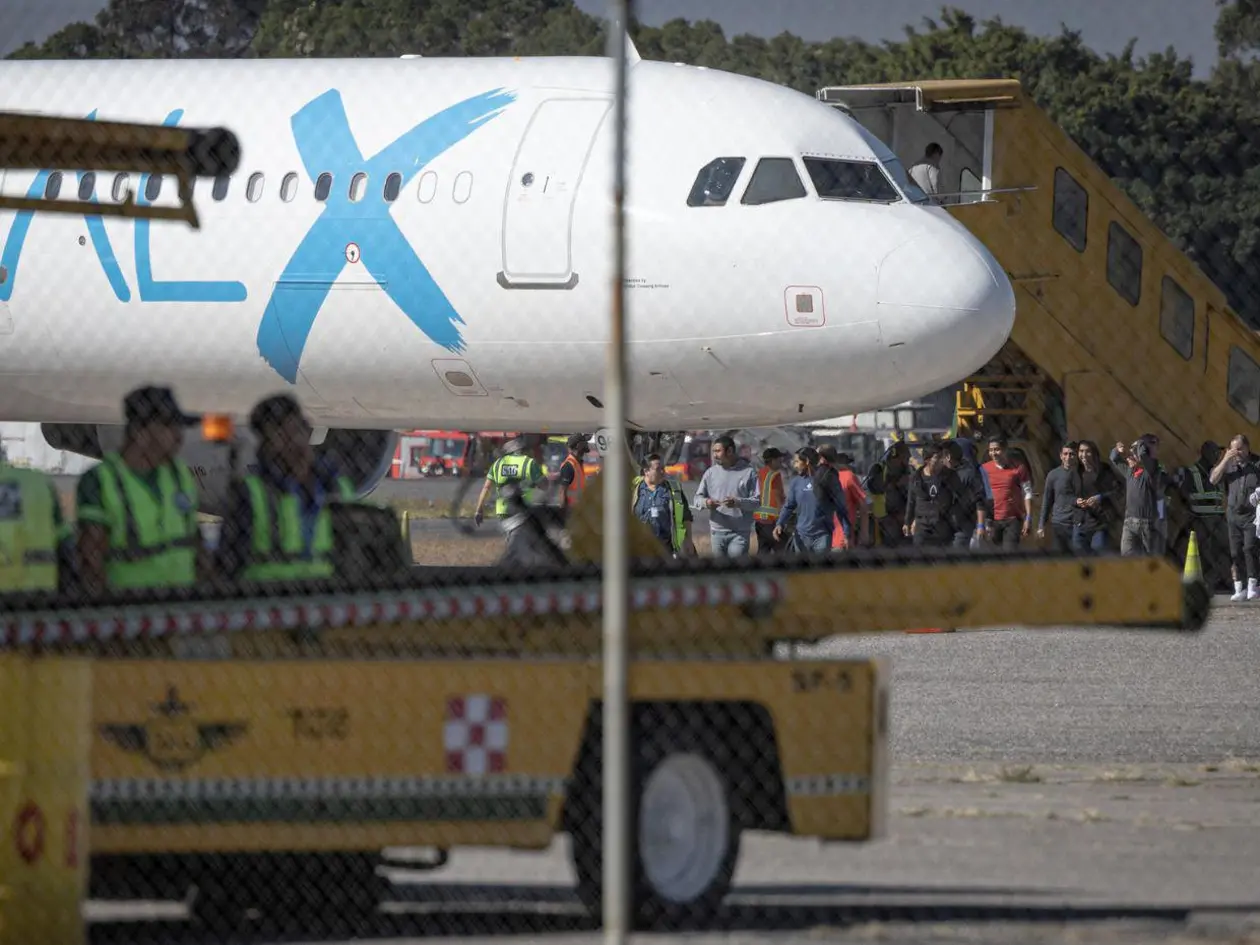
The Nicaraguans were sent to the Augusto C. Sandino International Airport aboard 26 flights, reported the NGO Human Right First that monitors the flights of the United States Immigration and Customs Enforcement Service (ICE). Before Trump, Nicaragua received two monthly flights with deportees, but under this new administration it receives two weekly: on Thursdays and Saturdays.
Thus, in just 15 months of Trump’s second term, who promised a policy of mass deportations, 93 flights have arrived in Nicaragua with 10,714 migrants expelled from the United States. If the pace of flights observed in this first quarter continues, it is estimated that by the end of 2026 the record of 7,592 deportees from 2025 will be surpassed.
Flights increased from September 2025
The number of flights with deportees has increased substantially since September 2025, when the arrival of ten ICE flights was recorded. In these they transported more than 1,000 compatriots. Since then, a monthly rhythm of between ten and eight flights has been maintained.
In 2026, ten flights were recorded in January and eight in February and March, respectively. The aircraft continue to arrive in Managua without the dictatorship of Daniel Ortega and Rosario Murillo providing details about them, the information that is known is through US sources shared with the independent press.
The dictatorship remains silent publicly, but in practice it executes a plan of control and surveillance towards the deportees, as demonstrated CONFIDENTIAL in the report Rosario Murillo orders “extreme surveillance” of Nicaraguans deported from the United States.
“They send us to find out if they are actually Nicaraguans, if they are registered, and all the information available about these people,” said a public official from the Civil Registry in the report.
The deportees are taken through charter flights operated by the Global X airline and on the ground they are delivered to the Ministry of the Interior (MINT). This ministry is in charge of transferring them directly to their homes, even if they are from remote areas.
“The Police came to visit my house to ask me why I have been receiving money from the United States,” said a Nicaraguan deported in 2025.
Nicas arrested in Florida and California
Since 2025, US Immigration authorities have detained 7,889 Nicaraguans, according to an analysis by CONFIDENTIAL based on figures recovered from Deportation Data Projectwhich compiles arrest, detention and deportation information provided by the US Government following freedom of information lawsuits against ICE.
The portal reveals that in 2025, some 6,665 Nicaraguans were detained by ICE and so far in 2026, another 1,224 have been added. Of these, 20% of detained Nicaraguans are detained awaiting deportation in Florida. Meanwhile, 15% are in California and 13% in Texas.
Other States with a population of Nicaraguans detained, but in smaller numbers, are: Wisconsin (453 nationals), Georgia (436), Indiana (338) and Tennessee (217).
Nicas deported to third countries
The United States Government has also deported by land more than 694 Nicaraguans to Mexicorevealed the Government of that country to the Institute for Women in Migration (IMUMI) after a request for transparency. This institute carries out, together with Refugees International, independent monitoring of those deported to Mexico of other nationalities.
According to reports, Cuban and Venezuelan deportees are usually released on the street, but are left without immigration documentation. Meanwhile, Guatemalans, Hondurans and Salvadorans They are usually deported by bus to their countries of origin. No information is available about Nicaraguans.
There is other Nicaraguans who are being deported to Honduras as happened with the released prisoner, Juan Barillla, who is one of the 222 political prisoners banished to the United States. However, there is no data on how many there are.
As reported by Barilla, in Honduras he was welcomed by the United Nations High Commissioner for Refugees (UNHCR) under a temporary protection program that includes accommodation, food and immigration procedures for a period of three months.