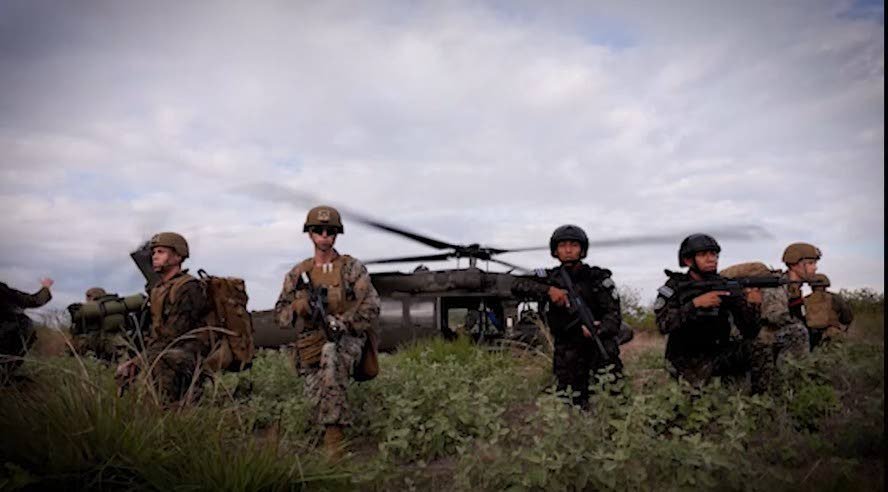
The United States’ newly launched Joint Task Force Western Hemisphere (JTF-WHEM) “action arm” will synchronise military operations with trusted allies and partners—including Trinidad and Tobago—against drug cartels and other transnational criminal organisations.
US sources confirmed yesterday that the T&T Defence Force will be part of the purpose-built task force.
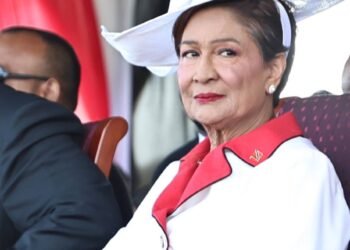
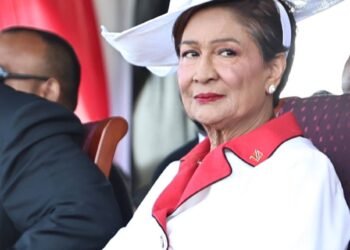
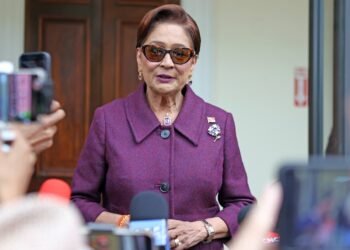
But Prime Minister Kamla Persad-Bissessar was mum on the initiative, which some US and hemispheric stakeholders believe could assist in furthering regional and hemispheric security.
The US Southern Command (Southcom) on Monday activated the task force, which will operate with the 18-nation Americas Counter Cartel Coalition (A3C) “Shield of the Americas” launched by US President Donald Trump in March in Florida. Persad-Bissessar was among leaders at the March launch.
The A3C aims to strengthen intelligence sharing and co-ordinating regional operations against organised crime and drug cartels.
Southcom Commander General Francis L. Donovan, who directed the activation of JTF-WHEM, stated that the task force is Southcom’s “… action arm for confronting threats across the hemisphere … It strengthens our ability to work alongside trusted allies and partners, synchronise military capabilities and apply sustained pressure against the networks that threaten our collective security …”
Master Gunnery Sgt Michael Cifuentes told Guardian Media, “This organisation is purpose-built with tailored forces which will take the fight to the enemy.”
Persad-Bissessar didn’t reply to Guardian Media queries on how the unit may assist T&T, when or if the initiative was discussed in her recent talks with US officials.
Homeland Security Roger Alexander and Defence Minister Wayne Sturge didn’t reply to queries on the initiative.
While several other Government officials didn’t deny that the development could hold positives for T&T’s efforts to improve security, one senior minister lamented, “Gail, T&T media is not interested in printing positive news with regards to this country.”
Southcom said the JTF-WHEM will be led by Marine Corps Major General Kevin Jarrard, who recently commanded US military support for the US State Department-led disaster relief operations following the devastating June 24 earthquakes in Venezuela.
Southcom said the task force is structured to maintain sustained pressure on drug-trafficking networks and other groups that undermine regional security and is also expected “to improve coordination with allied governments, accelerate decision-making and increase the tempo of multinational operations against criminal organisations operating regionally.”
As Southcom’s operational headquarters for executing missions across the region, it said the JTF-WHEM will integrate intelligence, surveillance and reconnaissance, operational planning and multinational coordination “to increase pressure on nefarious organisations operating throughout the Western Hemisphere.”
Significantly, it said the JTF-WHEM will become the new military headquarters to coordinate operations against drug cartels and other transnational criminal organisations across this area, replacing the Joint Task Force Southern Spear (JTFSS) established in 2025.
The JTFSS had coordinated military operations with Latin America and Caribbean partners. T&T supported this effort, in which the US used kinetic strikes to destroy alleged narco-traffickers traversing Caribbean waters.
According to Southcom, the JTF-WHEM is geared to provide “unified command and control at the tactical and operational levels, integrating military capabilities with the 18 partner nations of the Americas Counter Cartel Coalition to increase operational effectiveness against threats that undermine regional security and impact the US and partner nations.”
Southcom said work will include co-ordinating humanitarian assistance and disaster response operations when needed.
Experts back partnership
The activation of the task force drew support from security experts, who say closer cooperation with the US could strengthen the country’s fight against transnational crime. However, they cautioned that the partnership must not come at the expense of regional unity.
Former national security minister Gary Griffith described the unit as a long-overdue opportunity to enhance the country’s security capabilities. He said the initiative was an attempt “to work good against bad,” with intelligence sharing expected to improve efforts to tackle drug trafficking, human trafficking and the illegal movement of firearms throughout the Caribbean.
Griffith said, “With the US having the capacity with the type of assets that they have, it is of value for T&T to work hand in hand with the US in such an operation,” he said.
He added that participating in multinational exercises would strengthen the Defence Force’s training, improve its understanding of advanced technology and increase its experience in conducting international joint operations.
“As I said, this is long overdue,” Griffith said.
Regional security expert Dr Garvin Heerah also supported T&T’s participation, saying transnational organised crime had evolved beyond the capacity of any one nation to confront alone.
He said stronger intelligence sharing, joint training exercises and coordinated operations offered clear advantages in addressing drug trafficking and the flow of illegal firearms throughout the region.
However, Heerah stressed that any participation must remain firmly grounded in T&T’s national interests.
He also warned that involvement in the US-led alliance should not undermine the country’s longstanding relationships within Caricom or create unnecessary tensions among regional neighbours.
“The objective should be to strengthen our security while preserving regional unity,” Heerah said.
He added that the partnership should deliver tangible strategic, operational and technological benefits for T&T and, ultimately, the wider Caribbean.
International relations expert Dr Anthony Gonzales said it was too early to determine how effective the new arrangement would be without knowing the full details.
He said the Government appeared to be seeking US assistance in confronting organised crime and transnational criminal networks.
“I think the Government is seeking to get American assistance in the security area,” Gonzales said.
He added that the administration appeared to believe external support was necessary to combat organised crime and transnational cartels, with the United States providing assistance through the new security framework.