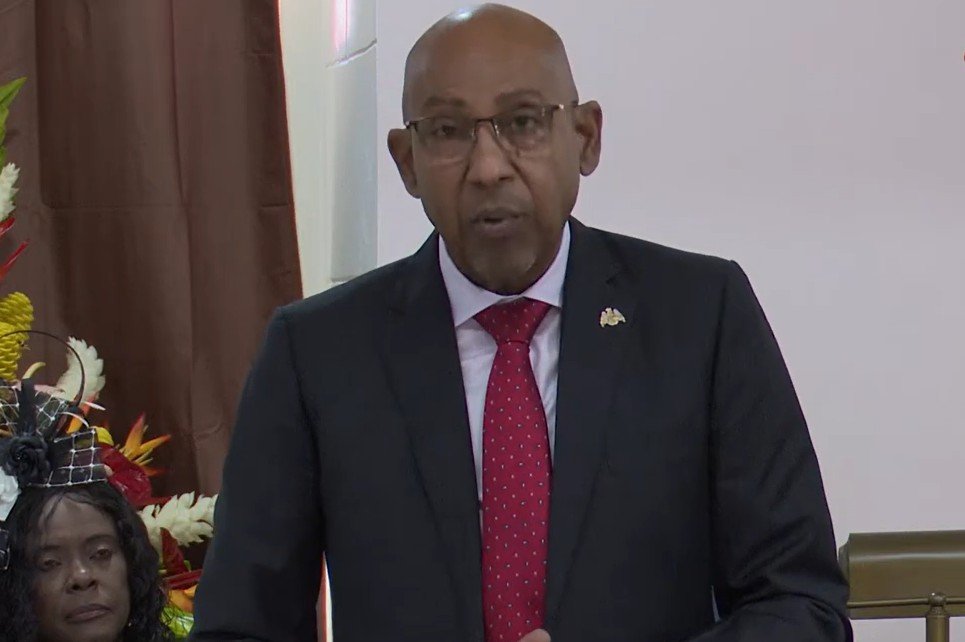

Finance Minister Dr. Irving McIntyre has announced what he described as the largest personal income tax reduction in Dominica’s history, unveiling an across-the-board 10% flat income tax rate while presenting a national budget of EC$1,125,225,495 for the 2026-2027 fiscal year in Parliament on Tuesday.
The measure, which will take effect on January 1, 2027, will replace the current three-tier personal income tax system of 15%, 25% and 35% with a single flat rate of 10%. Individuals earning $30,000 or less annually will continue to pay no personal income tax.
Presenting the budget, McIntyre said the reform builds on a long-standing commitment by the Dominica Labour Party administration to reduce the tax burden on working people and allow them to retain more of their earnings.
He noted that when the government assumed office in 2000, the country’s income tax structure consisted of rates of 20%, 30% and 40%, while the tax-free threshold stood at just $12,000.
According to the finance minister, following Dominica’s economic recovery and the successful completion of the country’s International Monetary Fund (IMF)-supported programme, the government began implementing significant tax relief measures from 2009. Those reforms reduced income tax rates to 15%, 25% and 35%, while increasing the tax-free threshold first to $25,000 and later to $30,000.
McIntyre also highlighted other tax concessions introduced over the years, including increased mortgage interest deductions, deductions for student loans, and allowances for home and medical insurance. He said these measures have eased the tax burden on workers and removed thousands of Dominicans from the income tax net, enabling families to keep a greater share of their income.
“Today, despite a global environment marked by economic uncertainty, this government will again provide relief to further empower the hardworking people of Dominica,” McIntyre told Parliament.
Describing the new policy as “the most significant income tax relief ever granted to the people of Dominica,” the minister acknowledged that the reduction represents a financial sacrifice by the government but said it would deliver meaningful benefits while making the tax system simpler and fairer.
He explained that the reform will directly reduce the income tax burden for all working residents whose annual income exceeds the $30,000 personal allowance, while preserving the tax-free status of those earning at or below that threshold.
To illustrate the impact of the measure, McIntyre provided several examples.
A worker earning $4,000 per month, or $48,000 annually, will retain an additional $75 each month, amounting to $900 per year.
Someone earning $5,000 per month, or $60,000 annually, with only the personal allowance and no additional deductions, will see monthly income tax fall from $458 to $250, resulting in savings of $208 per month, or approximately $2,500 annually.
Meanwhile, a person earning $84,000 per year will retain about $541.67 more each month, translating to annual savings of roughly $6,500.
The finance minister also pointed to the benefits for households with multiple income earners. He said a family with two people each earning $4,000 per month could retain an additional $150 every month, or $1,800 annually, before taking advantage of any other applicable deductions.
McIntyre said families would be free to use the additional disposable income according to their priorities, whether for household expenses, mortgage payments, health insurance, debt reduction, savings, investment in small businesses, or further education.
He said the tax reform underscores the government’s continued commitment to strengthening household finances while supporting economic growth through increased disposable income for working Dominicans.