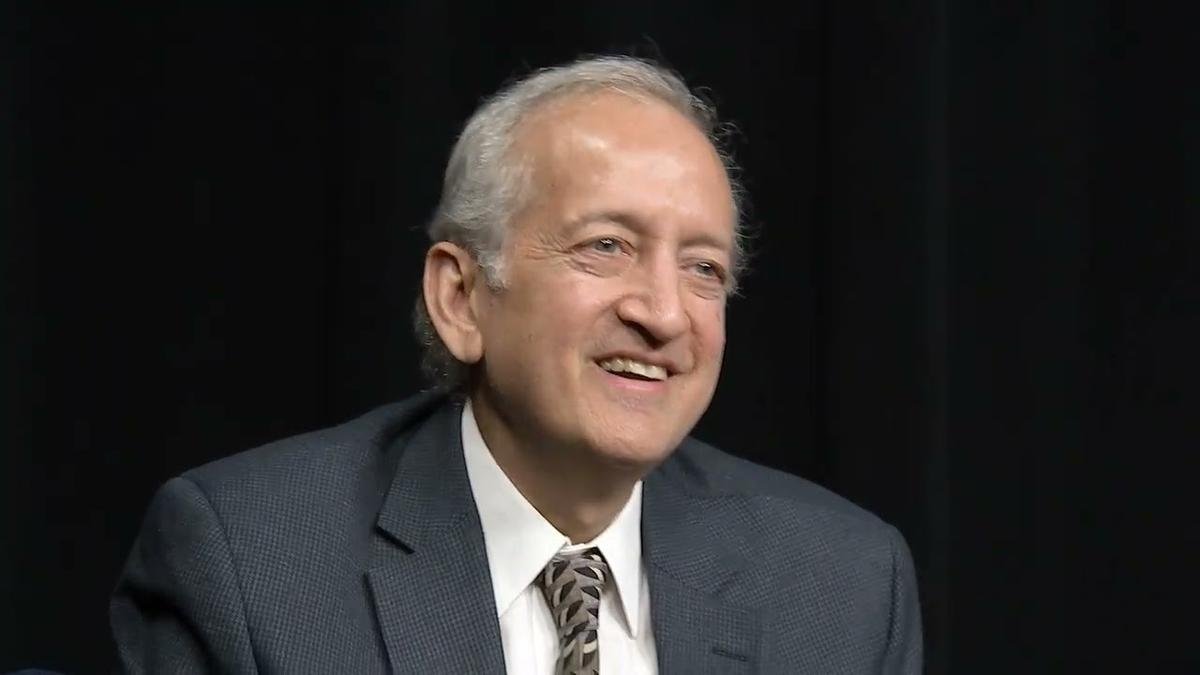

Jainendra K. Jain.
| Photo Credit: Special arrangement
India does not lack respected homes for theoretical physics research. Asked why it needs another, Jainendra K. Jain — founding director of the Lodha Theoretical Physics Institute (LTPI) — answers by describing what the place will not do. It will be “smaller” than the Tata Institute of Fundamental Research (TIFR) , narrower in scope than IISc (Indian Institute of Science) or ICTS (International Centre for Theoretical Sciences) and, funded entirely by private money, spared much of the bureaucracy that comes with the state.
“These other institutes are fantastic,” Jain says of TIFR, ICTS, IISc and Allahabad’s HRI (Harish Chandra Research Institute). “We can all be very proud of them.” What will set LTPI apart, he argues, is focus and freedom. Where TIFR spreads across biology, chemistry, even climate science, LTPI will do one thing — theoretical physics — and stay small: a steady state of about 10 to 12 full-time faculty, some 40 postdoctoral researchers and a rotating cast of visitors.
The larger difference, he said in an interview, is that private capital lets the institute sidestep the approvals that decelerate public science in India. Making a faculty offer at a government-funded institute can take a year of clearances; at LTPI, he says, a couple of colleagues who agree on a candidate can simply extend one. “There will be no caps on travel or group size, no teaching load, no committee paperwork” — frictions that, he says, can leave a professor barely “five minutes a day” for research.
Published – July 30, 2026 09:15 am IST