He changed from a mathematical technical division to engineering and created the informatics branch
father-in-law
Expressiveness
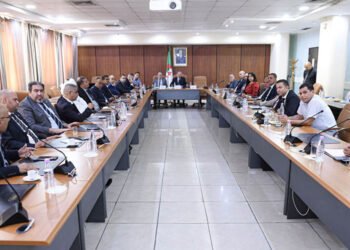
What emerged from the recently held national symposium of the Ministry of National Education regarding the reform of secondary education cannot be considered merely an organizational amendment or a limited pedagogical review, but rather a structural shift in the philosophy of building this stage.
Accordingly, it was decided to include serious amendments, the most prominent of which is the change in the naming of some divisions, as well as the creation of a new division, namely “Informatics”, in response to an urgent national need represented in preparing competencies capable of keeping pace with the digital economy, artificial intelligence and cybersecurity in the future.
In the details, “Al-Shorouk” sources highlighted that it was decided to reorganize secondary education according to the divisional system, where the “Mathematical Technical” division will have a change in name to become “Engineering Division,” and then four specializations will branch out from it, namely (civil, electrical, mechanical, and engineering methods), which will allow the student and even the guardian to know the distinction between it and the mathematics division.
In addition, it was agreed to create the “Informatics Division,” starting from the 2027-2028 academic year, which will establish a new phase in which the Algerian school will move from the logic of general training to the logic of gradual specialization, in line with the digital, economic, and scientific transformations that the world is witnessing.
These new decisions come within the framework of continuing the implementation of educational reforms, the fruits of which have begun to appear on the ground, as well as in response to an urgent national need represented in preparing competencies capable of keeping pace with the digital economy, artificial intelligence, cybersecurity, data analysis and programming, which are fields that have today become among the most important drivers of sustainable development and economic competitiveness, our sources explain.
As for the decision to cancel the “common trunk” system in the first year of secondary school, the same sources explained that despite the importance of the procedure in principle, multiple considerations must be taken into account, most notably the new guidance standards.
Ben Omer: The success of educational reform depends on a number of objective conditions
Regarding the matter, Omer Ben Odeh, an educational expert, warned in a statement to “Al-Shorouk” that the success of this educational reform remains dependent on the provision of a set of objective conditions, because major operations are not measured only by the quality of decisions, but rather by the system’s ability to embody them on the ground according to an integrated vision, the responsibility of which is shared by various sectors and institutions, and experts and specialists in the field participate in building them.
At the forefront of these requirements, the educational expert suggested the necessity of preparing modern curricula, based on the competency approach, and a balance between theoretical and applied knowledge, in addition to integrating programming into “robotics” and artificial intelligence, with the importance of ethical use of technology and including it within gradual educational paths that take into account the age and cognitive characteristics of the learners.
From this standpoint, our interlocutor called for the necessity of reviewing the system of initial and continuing training for professors, by opening new university specializations to prepare professors of the Informatics Division, in addition to organizing training and qualification programs for the benefit of current professors, in a way that ensures that they possess the official and pedagogical competencies and qualifications necessary to teach the specialty, in accordance with the latest educational practices, and above all providing adequate pedagogical supervision, in order for the success of educational reform.
Creating a “digital structure” in secondary schools to improve the educational environment
In the same context, Omer Ben Odeh proposed to those in charge of the Ministry to provide an integrated digital infrastructure within high schools, including modern computer laboratories, advanced information equipment, high-flow connectivity to the Internet, digital educational platforms, and interactive display means, because the quality of digital education is closely linked to the quality of the educational environment.
Therefore, this transformation will also impose a reconsideration of the distribution of human and financial resources, through the creation of new financial positions for the benefit of computer science professors, engineers, technicians and equipment maintenance personnel, in addition to developing a national plan to equip educational institutions according to unified standards, taking into account the principle of equal opportunities between the various states of the country, Bin Odeh adds.
On the other hand, our speaker stressed that reform must coincide with a review of the “school guidance” system, so that directing students towards different subjects is based on real inclinations, abilities, and competencies, and not on success rates only, in a way that achieves harmony between the learner’s personal project and the needs of national development.
In addition to strengthening the partnership between the Ministry of National Education, the Ministry of Higher Education and Scientific Research, the Ministry of Knowledge Economy and economic institutions, with the aim of ensuring the continuity of the training path, and linking secondary education with university training and the future needs of the labor market.
In conclusion, the educational expert pointed out that the reform of secondary education represents a strategic investment in human capital, and reflects the state’s will to build a modern school, capable of graduating generations possessing scientific, digital and innovative competence, thus strengthening Algeria’s position in the knowledge economy, and making the school a real lever for sustainable national development.