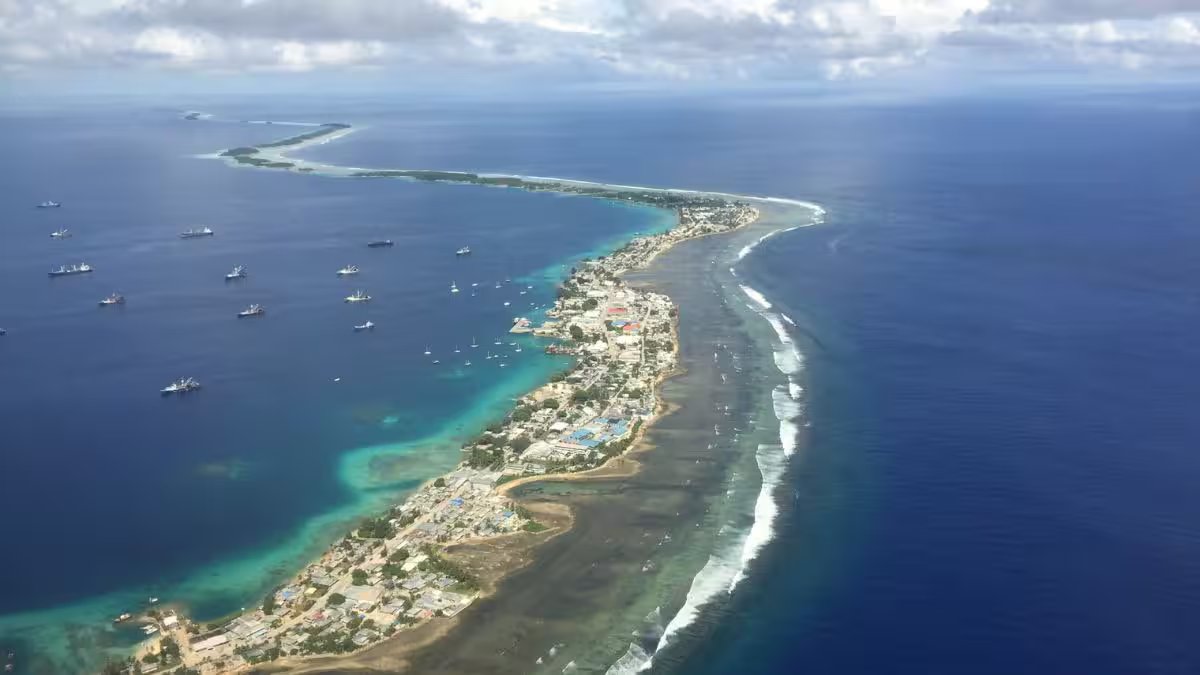
Situated as a narrow coral ribbon between the vast Pacific Ocean and a calm central lagoon, Majuro Atoll serves as the vibrant capital of the Republic of the Marshall Islands. Composed of 64 tiny islets, some sections of this island capital measure a mere 150 meters wide.
With an average elevation of just two meters above sea level, thousands of residents have no high ground to retreat to when ocean swells strike.
A joint study published by the World Bank and Lund University paints a stark picture of the
climate crisis unfolding across the atoll. Advanced modelling predicts that standard climate projections could put 96 per cent of Majuro at risk of frequent, devastating floods.
Furthermore, up to 40 per cent of all existing buildings and infrastructure could face permanent submersion or severe flood damage as global sea levels continue to surge.
In the direct path of rising tides
Because the capital’s layout is constrained to such a slim strip of land, vital public facilities are concentrated in high-risk zones.
Essential services including primary schools, regional hospitals, emergency centres, and government offices sit directly in the inundation path. When severe high tides hit, saltwater routinely spills into neighbourhood streets, compromising public sanitation, disrupting energy grids, and threatening the fundamental institutions that keep the nation functioning.
Accelerating coastal sand and sediment loss
The threat extends far beyond
rising water levels alone. Researchers discovered a direct relationship between escalating wind speeds and the rate of coastal erosion. Calculations reveal that a 10 per cent increase in wind velocity yields a 25 per cent surge in sediment transport away from fragile shorelines.
As fierce ocean winds strip away protective sandy beaches, aggressive waves batter unprotected land directly, eroding shoreline defences that have shielded communities for centuries.
Local human interventions further compound pre-existing natural climatic risks. To safeguard individual homes, residents often build uncoordinated seawalls that deflect incoming wave energy onto nearby unprotected properties. Additionally, widespread lagoon dredging for construction removes crucial sand and coral barriers. This combination of dredging and haphazard seawall construction severely weakens the atoll’s natural buffer system against extreme tidal events.
The risk of cultural loss
Engineers and policy advisors recommend several urgent adaptation strategies to protect the vulnerable capital. Recommendations include installing engineered seawalls, planting native coastal vegetation to stabilise shifting soil, and undertaking large-scale land elevation or reclamation projects.
However, experts caution that if extreme climate projections materialise, physical defences may prove insufficient, raising the painful possibility of forced displacement and the loss of ancient Marshallese seafaring and cultural traditions.