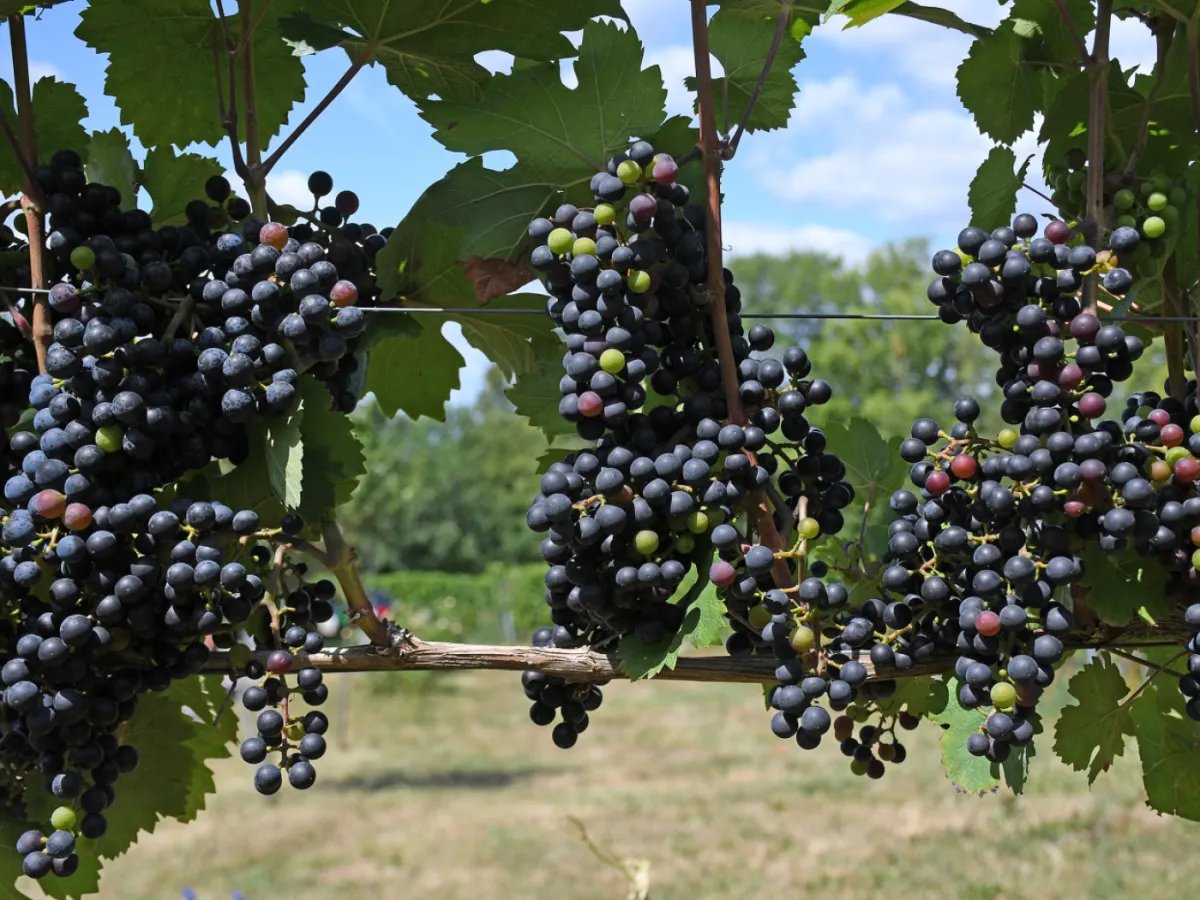

Drought and heat could bring forward the grape harvest in the canton of Lucerne
Keystone-SDA
The ongoing drought and heat are causing grapes to ripen earlier. Lucerne’s wine-growing commissioner, Nicole Theiler, therefore expects this year’s grape harvest to begin “a few days to two weeks” earlier than in an average year.
Whether the grape harvest will actually begin earlier depends on the weather in August and September, Theiler told the Swiss News Agency Keystone-SDA. The viticulture commissioner is the expert on winegrowing in Central Switzerland. “Warm weather speeds up the development of the vines.”
It is “still too early” to make a forecast regarding the quality and quantity of the 2026 vintage. However, initial trends are becoming apparent, says the Willisau-based expert. “Provided there are no major weather extremes between now and the harvest, there is a very good chance of a high-quality vintage.”
The dry and warm conditions also reduce the risk of fungal disease, according to Theiler. At the same time, she expects the dry conditions to result in smaller berries and therefore a lower yield. “The extent of the losses will depend, among other things, on the location and the vines’ water supply.”
More

More
How wine and cheese help shape Swiss politics
The warm and dry summer is ideal for the vines, provided there is sufficient water in the soil, says Theiler. The dry conditions also reduce the risk of downy mildew, a plant disease that occurs mainly in damp, cool weather.
Young vines, on the other hand, are more sensitive: if they lack water, their growth is stunted and, in extreme cases, individual plants could die, she explains.
In general, however, vines are “more drought-tolerant” than arable crops or forage crops. Why? “Their root system enables them to draw water from deeper layers.”
+ Climate change ‘shifting Europe’s wine-growing regions’
‘New opportunities’
In canton Lucerne, more than half of the vineyard area is planted with fungus-resistant grape varieties, known as Piwis. No other canton in Switzerland has a higher proportion. These varieties are “coping very well” with the heat and drought, says Theiler.
The current weather conditions are also having a positive effect on classic grape varieties such as Pinot Noir and Chardonnay. However, late-ripening varieties such as Merlot, Blaufränkisch and Cabernet Sauvignon have benefited most in the region.
“The changing climatic conditions are opening up new opportunities for viticulture in Central Switzerland,” says Theiler.
The Müller-Thurgau variety could be more sensitive, particularly in dry locations. Sauvignon Blanc, too, can lose some of its freshness and typical aromas in hot conditions, she says. However, it is not only the grape variety that is decisive, but also the site, the soil composition, the soil’s water-retention capacity and the age of the vines.
Join the debate:
+ How we produce English news
Translated from German, reviewed by an English Department journalist.