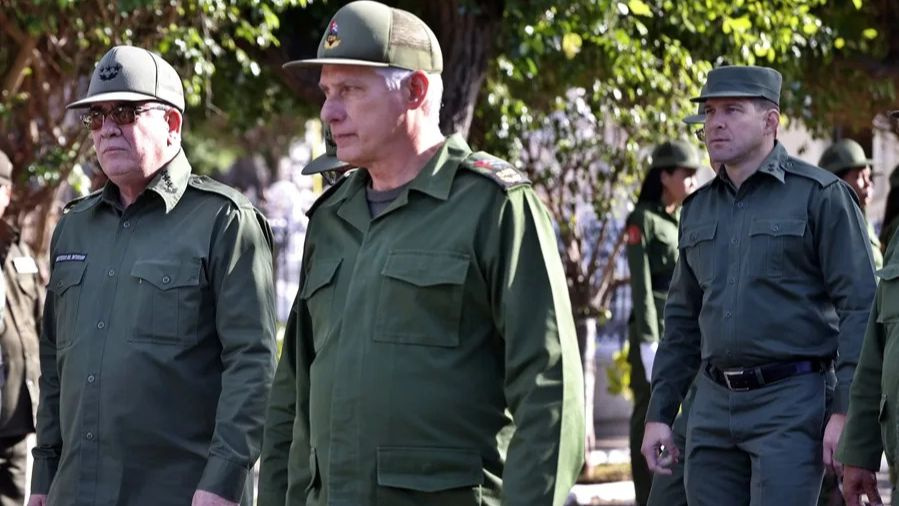
Madrid/It is true that power in Cuba is no longer as concentrated as before, that command has fragmented and that the country seems to have gone from absolute verticalism to a kind of choral administration of the disaster. Today more operators, more layers, more intermediaries and more sector elites are visible than in the years of classic loyalty. But it does not follow from this that power has ceased to be concentrated. Management has been fragmented, but what is not completely fragmented is command. And that command, even today, continues to refer to a single name and its inner circle, Raul Castro.
The Cuban regime no longer functions as it did in the years when the bearded man monopolized the discourse and turned every government problem into an extension of his personal will. That model, for biological and historical reasons, was exhausted. In its place, another architecture appeared, less charismatic and more bureaucratic. But opacity does not mean distribution of power. That today the administrators of the apparatus, the reliable technocrats, the military-businessmen, the guardians and the ideological commissars have a greater presence in public affairs does not mean that they all weigh equally or that they collectively decide the strategic course of the system.
This nuance allows us to correct the illusion of assuming that true power is liquefied by simple wear and tear. Sometimes the opposite happens. The disappearance of the founding leadership opens space for new, more discreet concentrations. In Cuba, authority no longer needs to appear as frequently as before to maintain its monopoly on power.
Raúl Castro unquestionably determines when to set limits, order successions or bless high-risk contacts
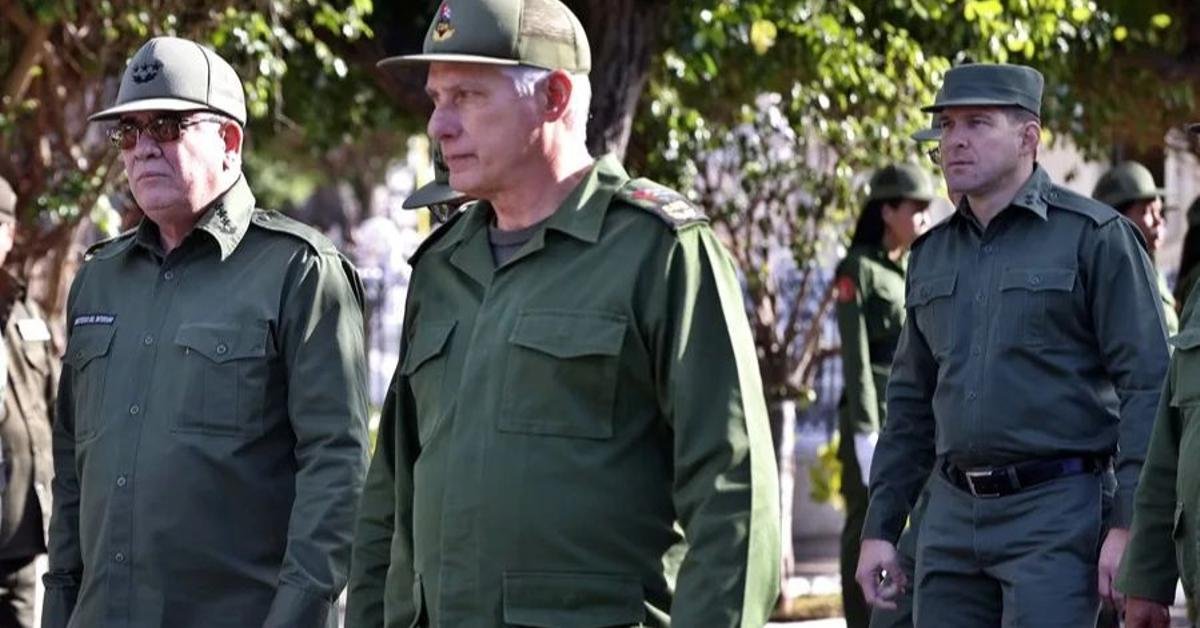
Last March, in the midst of negotiations with the United States, Miguel Díaz-Canel was quick to emphasize that the talks were being led by him –with an almost anxious emphasis on that “for me”–, in addition to Raúl Castro and other officials. The inflection of his voice gave away more than it clarified. It seemed to respond to the increasingly widespread perception that it performs an almost decorative function without fully occupying the center of power. His formal positions – president of the Republic and first secretary of the Communist Party – are not enough to dispel that suspicion. Even less so when, in those same decisive moments, the presence of Raúl Guillermo Rodríguez Castro, Raúl’s grandson and escort, reminded that the truly sensitive areas of command continue to orbit around the old core of trust, and that it is not necessary to hold any position to represent the true command.
In fact, when you look at where Raúl Castro appears, he always appears in the decisive place. He unquestionably determines when to set limits, order successions or bless high-risk contacts. It was he and no one else who elected Díaz-Canel in all his positions and who has allowed him to remain there. It was also he who proposed indefinitely postponing the Party congress scheduled for 2026, and then the Central Committee approved the proposal unanimously. Calling that “collective leadership” requires a fairly generous imagination.
And yet, that is precisely the formula that Díaz-Canel repeats. On April 12, in the interview with NBCsaid that the leadership of the Revolution was not “personalized in one person” and affirmed “we have a collective leadership”, with unity, cohesion, revolutionary discipline and hundreds of people in a position to hold responsibilities and decide collectively.
In Cuba there is collective administration, yes, but in the sense in which an apparatus distributes functions, not in the sense in which it distributes final command. Collegiality serves to distribute responsibilities, so that several cadres bear the weight of the deterioration and so that no one seems essential on the surface. But when the issue touches on the security of the regime, the relationship with Washington or the architecture of the succession, the system does not refer to a horizontal collective; It once again gravitates towards the intimate center where family, security and historical trust come together.
Outside the family, all those who occupy these positions of micropower do so precariously. They can disappear with the snap of a finger.
During the thaw with Obama, the key actor was Alejandro Castro Espínson of Raúl, then linked to the national security apparatus. And now, all eyes point to Raúl Guillermo, known as The Crab. That is, when Washington wants to know who to talk to so that a conversation is not just protocol, it ends up touching the orbit of the Castro family and its most trusted links.
The same happens within the country. There are, of course, the administrators of the apparatus, Díaz-Canel, Roberto Morales Ojeda, Manuel Marrero, governors, ministers and secretaries of the Party. There are the reliable technocrats, promoted to manage critical areas without touching the logic of command. There are the military businessmen, heirs of the economic power concentrated for years in Gaesa and in the environment of the deceased López-Calleja, son of Raúl Castro and father of El Cangrejo.
But, outside the family, all those who occupy these positions of micropower do so precariously. They can disappear with the snap of a finger. The list of officers, cadres and technocrats erased from the political map is too extensive for this space, but it is enough to review it to notice inevitable patterns. No matter how high an administrator has risen within the system, nothing protects him from a devastating fall. There are the cases of Arnaldo Ochoa, José Abrantes and the brothers of the Guard, but also, on another scale and at another time, those of Carlos Lage, Felipe Pérez Roque or Alejandro Gil.
Nobody is certain that Donald Trump will drastically end Castroism
The supposed “unity” within the plots of power is also not true. In the digital-propagandistic sphere, the irreconcilable differences between Iroel Sánchez and Abel Prieto were well known. The internal struggles to eliminate competitors, gain ground of influence or guarantee exclusive sponsorships have always been intense. Today the dispute over the story is not only cultural; It is also about surveillance, defamation, alliance mobilization and fear management.
Cuban power no longer has the simple form of single-person command of other decades. But when Fidel Castro died, everyone was clear about who his heir was. Now new concentrations have been born, several groups that manage parcels of the system, while a reduced nucleus retains the ability to organize the essentials. The big question is what will happen when Raúl Castro physically disappears.
Nobody is certain that Donald Trump will drastically end Castroism. But even surviving its threats, the regime does not seem capable of sustaining itself indefinitely. If social pressure and external pressure continue, it will be difficult for anyone to show all the credentials to proclaim themselves as the legitimate heir to dictatorial power. And that moment, inevitably, approaches full speed.