Monday, May 4, 2026
    The GeoStrategic Consensus
    No Result
    View All Result
    • Login
    • HOME
    • AMERICAS
      • Argentina
      • Brazil
      • Canada
      • Chile
      • Colombia
      • Costa Rica
      • Cuba
      • Dominican Republic
      • Ecuador
      • El Salvador
      • Greenland
      • Guatemala
      • Honduras
      • Mexico
      • Nicaragua
      • Panama
      • Paraguay
      • Peru
      • United States
      • Uruguay
      • Venezuela
    • ASIA-PACIFIC
      • Australia
      • Brunei Darussalam
      • Cambodia
      • China
      • Federated States of Micronesia
      • Fiji
      • Indonesia
      • Japan
      • Kiribati
      • Laos
      • Malaysia
      • Marshall Islands
      • Mongolia
      • Myanmar
      • Nauru
      • New Zealand
      • North Korea
      • Palau
      • Papua New Guinea
      • Philippines
      • Samoa
      • Singapore
      • Solomon Islands
      • South Korea
      • Taiwan
      • Thailand
      • Timor-Leste
      • Tonga
      • Tuvalu
      • Vanuatu
      • Vietnam
    • CARICOM
      • CARICOM – Non-English
        • Haiti
        • Suriname
      • CARICOM Associates
        • Anguilla
        • Bermuda
        • British-Virgin-Islands
        • Cayman-Islands
        • Curacao
        • Turks-and-Caicos
      • CARICOM English
        • Antigua and Barbuda
        • Barbados
        • Belize
        • Dominica
        • Grenada
        • Guyana
        • Jamaica
        • Montserrat
        • Saint Kitts and Nevis
        • Saint Lucia
        • Saint Vincent and the Grenadines
        • The Bahamas
        • Trinidad and Tobago
    • EURASIA
      • Armenia
      • Azerbaijan
      • Balarus
      • Georgia
      • Kazakhstan
      • Kyrgyzstan
      • Moldova
      • Russia
      • Tajikistan
      • Turkmenistan
      • Ukraine
      • Uzbekistan
    • EUROPE
      • Albania
      • Andorra
      • Austria
      • Bosnia and Herzegovina
      • Bulgaria
      • Croatia
      • Cyprus
      • Czech Republic
      • Denmark
      • Estonia
      • Finland
      • France
      • Germany
      • Greece
      • Holy See
      • Hungary
      • Iceland
      • Ireland
      • Italy
      • Kosovo
      • Latvia
      • Liechtenstein
      • Lithuania
      • Luxembourg
      • Malta
      • Monaco
      • Montenegro
      • Netherlands
      • North Macedonia
      • Norway
      • Poland
      • Portugal
      • Romania
      • San Marino
      • Serbia
      • Slovakia
      • Slovenia
      • Spain
      • Sweden
      • Switzerland
      • United Kingdom
    • MIDDLE EAST AND NORTH AFRICA
      • Algeria
      • Bahrain
      • Egypt
      • Iran
      • Iraq
      • Israel
      • Jordan
      • Kuwait
      • Lebanon
      • Lybia
      • Morocco
      • Oman
      • Palestinian Territories
      • Qatar
      • Saudi Arabia
      • Syria
      • Tunisia
      • Turkey
      • United Arab Emirates
      • Western Sahara
      • Yemen
    • SOUTH ASIA
      • Afghanistan
      • Bangladesh
      • Bhutan
      • India
      • Maldives
      • Nepal
      • Pakistan
      • Sri Lanka
    • SUB-SAHARAN AFRICA
      • Angola
      • Benin
      • Botswana
      • Burkina Faso
      • Burundi
      • Cabo Verde
      • Cameroon
      • Central African Republic
      • Chad
      • Comoros
      • Cote d’Ivoire
      • Democratic Republic of the Congo
      • Djibouti
      • Equatorial Guinea
      • Eritrea
      • Eswatini
      • Ethiopia
      • Gabon
      • Gambia
      • Ghana
      • Guinea
      • Guinea Bissau
      • Kenya
      • Lesotho
      • Liberia
      • Madagascar
      • Malawi
      • Mali
      • Mauritania
      • Mauritius
      • Mozambique
      • Namibia
      • Niger
      • Nigeria
      • Republic of the Congo
      • Rwanda
      • Sao Tome and Principe
      • Senegal
      • Seychelles
      • Sierra Leone
      • Somalia
      • South Africa
      • South Sudan
      • Sudan
      • Tanzania
      • Togo
      • Uganda
      • Zambia
      • Zimbabwe
    • HOME
    • AMERICAS
      • Argentina
      • Brazil
      • Canada
      • Chile
      • Colombia
      • Costa Rica
      • Cuba
      • Dominican Republic
      • Ecuador
      • El Salvador
      • Greenland
      • Guatemala
      • Honduras
      • Mexico
      • Nicaragua
      • Panama
      • Paraguay
      • Peru
      • United States
      • Uruguay
      • Venezuela
    • ASIA-PACIFIC
      • Australia
      • Brunei Darussalam
      • Cambodia
      • China
      • Federated States of Micronesia
      • Fiji
      • Indonesia
      • Japan
      • Kiribati
      • Laos
      • Malaysia
      • Marshall Islands
      • Mongolia
      • Myanmar
      • Nauru
      • New Zealand
      • North Korea
      • Palau
      • Papua New Guinea
      • Philippines
      • Samoa
      • Singapore
      • Solomon Islands
      • South Korea
      • Taiwan
      • Thailand
      • Timor-Leste
      • Tonga
      • Tuvalu
      • Vanuatu
      • Vietnam
    • CARICOM
      • CARICOM – Non-English
        • Haiti
        • Suriname
      • CARICOM Associates
        • Anguilla
        • Bermuda
        • British-Virgin-Islands
        • Cayman-Islands
        • Curacao
        • Turks-and-Caicos
      • CARICOM English
        • Antigua and Barbuda
        • Barbados
        • Belize
        • Dominica
        • Grenada
        • Guyana
        • Jamaica
        • Montserrat
        • Saint Kitts and Nevis
        • Saint Lucia
        • Saint Vincent and the Grenadines
        • The Bahamas
        • Trinidad and Tobago
    • EURASIA
      • Armenia
      • Azerbaijan
      • Balarus
      • Georgia
      • Kazakhstan
      • Kyrgyzstan
      • Moldova
      • Russia
      • Tajikistan
      • Turkmenistan
      • Ukraine
      • Uzbekistan
    • EUROPE
      • Albania
      • Andorra
      • Austria
      • Bosnia and Herzegovina
      • Bulgaria
      • Croatia
      • Cyprus
      • Czech Republic
      • Denmark
      • Estonia
      • Finland
      • France
      • Germany
      • Greece
      • Holy See
      • Hungary
      • Iceland
      • Ireland
      • Italy
      • Kosovo
      • Latvia
      • Liechtenstein
      • Lithuania
      • Luxembourg
      • Malta
      • Monaco
      • Montenegro
      • Netherlands
      • North Macedonia
      • Norway
      • Poland
      • Portugal
      • Romania
      • San Marino
      • Serbia
      • Slovakia
      • Slovenia
      • Spain
      • Sweden
      • Switzerland
      • United Kingdom
    • MIDDLE EAST AND NORTH AFRICA
      • Algeria
      • Bahrain
      • Egypt
      • Iran
      • Iraq
      • Israel
      • Jordan
      • Kuwait
      • Lebanon
      • Lybia
      • Morocco
      • Oman
      • Palestinian Territories
      • Qatar
      • Saudi Arabia
      • Syria
      • Tunisia
      • Turkey
      • United Arab Emirates
      • Western Sahara
      • Yemen
    • SOUTH ASIA
      • Afghanistan
      • Bangladesh
      • Bhutan
      • India
      • Maldives
      • Nepal
      • Pakistan
      • Sri Lanka
    • SUB-SAHARAN AFRICA
      • Angola
      • Benin
      • Botswana
      • Burkina Faso
      • Burundi
      • Cabo Verde
      • Cameroon
      • Central African Republic
      • Chad
      • Comoros
      • Cote d’Ivoire
      • Democratic Republic of the Congo
      • Djibouti
      • Equatorial Guinea
      • Eritrea
      • Eswatini
      • Ethiopia
      • Gabon
      • Gambia
      • Ghana
      • Guinea
      • Guinea Bissau
      • Kenya
      • Lesotho
      • Liberia
      • Madagascar
      • Malawi
      • Mali
      • Mauritania
      • Mauritius
      • Mozambique
      • Namibia
      • Niger
      • Nigeria
      • Republic of the Congo
      • Rwanda
      • Sao Tome and Principe
      • Senegal
      • Seychelles
      • Sierra Leone
      • Somalia
      • South Africa
      • South Sudan
      • Sudan
      • Tanzania
      • Togo
      • Uganda
      • Zambia
      • Zimbabwe
    No Result
    View All Result
    Agentially
    No Result
    View All Result
    Home ASIA-PACIFIC Australia

    Forget Ozempic: How a ubiquitous molecule could help treat obesity and heart disease

    The Analyst by The Analyst
    April 23, 2026
    in Australia
    Forget Ozempic: How a ubiquitous molecule could help treat obesity and heart disease


    Angus Dalton

    April 24, 2026 — 5:00am

    READ ALSO

    Snowy 2.0: Water torrents gush through tunnel amid project challenges

    Lebanon attacks: UN warns of health crisis amid ongoing Israel-Hezbollah conflict

    You have reached your maximum number of saved items.

    Remove items from your saved list to add more.

    Save this article for later

    Add articles to your saved list and come back to them anytime.

    Key points

    • Ubiquitin is an abundant molecule which tags other proteins for destruction
    • Scientists have discovered a raft of brand-new roles for the molecule
    • Ubiquitin could be used to directly control sugar in the body
    • That could lead to therapies targeting obesity, diabetes and rare genetic diseases
    • They made the discovery using a new technique they invented over four years

    A game-changing discovery by Australian researchers into one of life’s most critical and abundant molecules could lead to treatments that regulate the body’s sugar more directly than drugs such as Ozempic.

    The molecule, ubiquitin, was so named because it is ubiquitous. It’s a tiny protein scientists have harnessed to attack cancer cells, and now it’s in the spotlight as a future avenue for treating obesity, diabetes and heart disease.

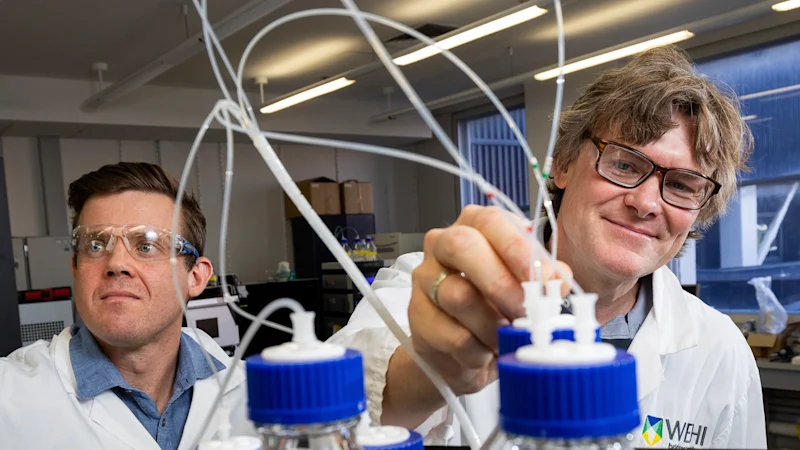
    Dr Simon Cobbold (left) and Professor David Komander at WEHI have added a new layer of knowledge to how our body regulates sugar.Paul Jeffer

    The research throws the door open to a raft of new-to-science biological actions powered by the underestimated molecule, which is rife in every complex organism from humans to yeast.

    Ubiquitin is also called “the kiss of death”. It attaches itself as a tiny tag to damaged or unwanted proteins, signalling to the cell it’s time to destroy that protein.

    What scientists couldn’t see, until now, was that the molecule may act on substances other than protein. That’s the part which could re-write biology textbooks, Professor David Komander, a researcher at Melbourne’s WEHI research institute said.

    “It is so important that I know I will be working on this for the rest of my career. I’ve never said this before for any other discoveries,” he said of the new finding.

    “We’ve known about ubiquitin as a tag for proteins for decades. But I’m still overwhelmed myself about what we have missed.”

    A world-first detection tool

    Scientists can image cellular proteins in great detail, but had no way to properly see or study ubiquitin’s interaction with other molecules such as sugars, fats or DNA.

    Acting on a make-or-break hunch, Komander’s colleagues, Dr Simon Cobbold and PhD student Marco Jochem, spent four years inventing a way to reveal the action.

    The team borrowed an enzyme from bacteria that cleaves through ubiquitin, slicing it from whatever the molecule is attached to, but leaving a tiny fragment stuck to its target.

    “This discovery is clearly much bigger than us here in our labs.”

    Professor David Komander

    To that remaining fragment, the scientists attached a peptide chain, which they could easily track.

    The method, dubbed NoPro-clipping, allowed the researchers to repurpose advanced protein imaging technology to see if ubiquitin was interacting with other molecules.

    It was a massive gamble. They’d either find nothing, or rewrite our knowledge of cellular life.

    It was the latter. The tool began to reveal an unchartered realm of biological action. “That doesn’t happen very often in a scientific career, where every experiment you do turns to gold,” Cobbold said.

    More direct than Ozempic

    The researchers’ first big find, reported on Thursday in Nature, was that ubiquitin directly attaches to glycogen, a crucial sugar molecule which keeps our hearts beating and brains whirring.

    “Glycogen regulation is one of the most fundamental processes that happens in our bodies every day, every night, because it is keeping our blood glucose in check,” Komander said. Glycogen is sugar stored in the liver and muscles, and it’s rapidly broken down into glucose to fuel the body when needed.

    In Komander’s study, ubiquitin seemed to modify glycogen within the livers of mice and human muscle tissue. When mice fasted, their glycogen stores decreased, and the ubiquitin “tags” increased, suggesting ubiquitin regulates the body’s sugar.

    This image shows human liver cells treated with a drug that induces ubiquitin to attach to glucose. The bright white speckles appear where glycogen and ubiquitin overlap, indicating that glycogen has been tagged with ubiquitin inside the cells.WEHI

    “That is something that nobody else could have observed before because nobody had the technique to look at it,” Komander said. If ubiquitin really does help regulate blood sugar, that adds to half a century of knowledge about how metabolism works, and may lead to a way to directly attack excess glycogen.

    Too much glycogen drives obesity, diabetes, liver and heart disease. Drugs such as Ozempic affect glycogen indirectly by suppressing the hormone glucagon, which triggers the breakdown of glycogen into useable sugar. The ability to directly control glycogen levels instead would be powerful.

    “Ozempic is an interesting example – clearly regulating metabolism can have so many beneficial effects,” Komander said. His team is also focused on addressing difficult-to-treat diseases where people are unable to store glycogen properly.

    A global call to arms

    There have been previous claims that ubiquitin can act on sugars, but the new paper offers the first “quite conclusive evidence”, according to cell biology expert Professor Sharad Kumar from Adelaide University.

    “This is a significant finding, and it will be exciting to see the physiological and genetic data that follow to fully understand the implications,” Kumar, who wasn’t involved with the study, said.

    The WEHI research team (left to right) Professor David Komander, Marco Jochem and Dr Simon Cobbold.Paul Jeffers

    Many more studies are needed before the discovery could translate into a clinically useful treatment.

    Ubiquitin has already been harnessed to destroy cancer-related proteins in new oncology treatments. The new study opens a whole new field of action, and its authors hope other global scientists will jump on board to help uncover ubiquitin’s secrets. The molecule could latch on to viruses and bacteria, for example, and sound a cellular alarm for invading diseases.

    “What is beautiful is that we are really providing the first glimpse at a completely empty canvas,” Komander said. “This discovery is clearly much bigger than us here in our labs in Melbourne.”

    The Examine newsletter explains and analyses science with a rigorous focus on the evidence. Sign up to get it each week.

    You have reached your maximum number of saved items.

    Remove items from your saved list to add more.

    Angus DaltonAngus Dalton is the science reporter for The Sydney Morning Herald.Connect via X or email.

    From our partners


    Source link

    Related Posts

    Snowy 2.0: Water torrents gush through tunnel amid project challenges
    Australia

    Snowy 2.0: Water torrents gush through tunnel amid project challenges

    May 4, 2026
    Lebanon attacks: UN warns of health crisis amid ongoing Israel-Hezbollah conflict
    Australia

    Lebanon attacks: UN warns of health crisis amid ongoing Israel-Hezbollah conflict

    May 4, 2026
    NRL: How Brisbane Broncos coach Michael Maguire defied his critics to become ‘one of the best signings’
    Australia

    NRL: How Brisbane Broncos coach Michael Maguire defied his critics to become ‘one of the best signings’

    May 3, 2026
    Best TV shows to stream in May 2026. What’s on Netflix, Disney, Amazon Prime and more
    Australia

    Best TV shows to stream in May 2026. What’s on Netflix, Disney, Amazon Prime and more

    May 3, 2026
    Warriors vs Eels: Parramatta’s woes continue as Ryley Smith injured in defeat to Warriors
    Australia

    Warriors vs Eels: Parramatta’s woes continue as Ryley Smith injured in defeat to Warriors

    May 3, 2026
    Elizabeth St crowds clearly showed our shared values
    Australia

    Elizabeth St crowds clearly showed our shared values

    May 3, 2026
    Next Post
    Stars and Stripes ombudsman Jacqueline Smith said the Pentagon fired her

    Stars and Stripes ombudsman Jacqueline Smith said the Pentagon fired her

    POPULAR NEWS

    Justin Bieber fans flood Coachella festival for headlining show – Entertainment

    Justin Bieber fans flood Coachella festival for headlining show – Entertainment

    April 20, 2026

    Over 600 flee homes as Army, NPA clash in Negros Occidental

    April 21, 2026

    Ex-DPWH exec recalls P800-M ‘delivery’ to Zaldy Co 

    April 20, 2026

    Former PM Paluckas suspends party membership, to waive immunity over criminal probe

    April 24, 2026
    Pres. Ali challenges CARICOM to transform into health research powerhouse

    Pres. Ali challenges CARICOM to transform into health research powerhouse

    April 23, 2026

    EDITOR'S PICK

    Everyday Cruelty | The Lighthouse

    Everyday Cruelty | The Lighthouse

    April 7, 2026
    REVIEW — Oil and Gas Ministry is a bit of a dangling thing – the True Time

    REVIEW — Oil and Gas Ministry is a bit of a dangling thing – the True Time

    April 15, 2026
    Tomatoes: Morocco is changing its model with the rise of value-added varieties

    Tomatoes: Morocco is changing its model with the rise of value-added varieties

    April 28, 2026
    Profitable dough

    Profitable dough

    April 21, 2026

    Recent Posts

    • Ariadna Montiel rules out the use of Welfare registers by Morena
    • The United States dominates AI with thousands of data centers, but its chips are manufactured in Taiwan
    • Invertech Copán capta socios con permiso solo para Internet
    • Marisa Caichiolo: “It is extremely important that the calls are absolutely transparent”

      © 2026 Agentially - Navigating shifting sovereignties and global risk .

      Welcome Back!

      Login to your account below

      Forgotten Password?

      Retrieve your password

      Please enter your username or email address to reset your password.

      Log In
      No Result
      View All Result

        © 2026 Agentially - Navigating shifting sovereignties and global risk .

        This website uses cookies. By continuing to use this website you are giving consent to cookies being used. Visit our Privacy and Cookie Policy.