A sweeping reform of secondary and advanced examinations has triggered calls for oversight, as representatives of teachers and parents warned that replacing coursework with a new timed paper could widen achievement gaps and fail to address longstanding flaws in the system.
The Caribbean Examinations Council (CXC) said last week it would replace school-based assessments (SBAs) with a new examination paper — paper 032 — for most non-practical Caribbean Secondary Education Certificate (CSEC) and Caribbean Advanced Proficiency Examination (CAPE) subjects.
Under the new format, candidates will receive their assessment topics several months before the examination and complete the final written exercise under invigilated conditions using notes prepared in advance.
The move was prompted largely by the growing impact of artificial intelligence (AI) on coursework and was aimed at strengthening academic integrity while preserving the credibility of Caribbean qualifications, CXC said.
The Barbados Union of Teachers (BUT) said it recognised that the reform followed extensive regional consultation and reflected legitimate concerns surrounding AI.
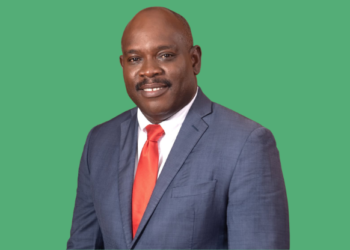
“There can be little doubt that AI has fundamentally changed the educational landscape,” general secretary Gilbert Carmichael said in a statement. “It has presented educators, examination bodies and policymakers with the difficult task of preserving the credibility of qualifications while embracing technological advancement.”
The union said CXC deserved credit for confronting the issue and safeguarding the international standing of Caribbean qualifications.
But Carmichael noted that the true measure of the reform would be whether it served students equitably:
“For decades, the SBA has provided students with opportunities to demonstrate research skills, independent inquiry, creativity, collaboration, time management and sustained academic growth over an extended period.
“It has also allowed teachers to observe students’ development, provide formative feedback, and support learners through varying stages of the research process. These are valuable educational experiences that should not be dismissed lightly.”
While describing elements of the new Paper 032 assessment as positive, including giving students topics in advance, additional writing time and allowing prepared notes, the union warned that not every student would benefit equally.
Carmichael said stronger students, particularly those with well-developed analytical and writing skills, were likely to adapt successfully to the revised format.
But he expressed concern that students who previously relied on the guidance and feedback embedded in the SBA process could struggle to produce work of a similar standard under examination conditions.
“There is therefore a genuine concern that the new assessment model may inadvertently widen the achievement gap between high-performing students and those requiring additional academic support.”
The union said the changes would require schools to place greater emphasis on teaching research methodology, critical thinking, note-making, source evaluation and evidence-based writing long before students entered the examination room.
It also urged CXC to ensure teachers receive adequate professional development, specimen papers, detailed marking schemes and training resources to support a successful transition.
The union further argued that the discussion should extend beyond AI as a threat.
“Instead of positioning AI exclusively as a threat, education systems must equip students to use these technologies ethically, responsibly and critically,” Carmichael said, adding that future graduates would need to understand how to use artificial intelligence while demonstrating independent thought, sound judgement and academic honesty.
The union also called on CXC to closely monitor student performance across territories, school types and ability levels to determine whether the revised assessment achieves its objectives without creating unintended disadvantages.
While the teachers’ union accepted the rationale behind the reform, parent advocate Paula-Anne Moore, spokesperson and coordinator of the Group of Concerned Parents of Barbados/Caribbean Coalition, said attributing the changes primarily to AI ignored problems that had existed within the SBA system for years.
“The integrity of the SBAs was an issue long before AI,” Moore said. “Blaming AI use (and framing it as abuse by a majority of students) is an incomplete, if not disingenuous premise, and is unfair and disrespectful to the students who honestly played by the rules.”
Moore said reports of students receiving outside assistance with SBAs, reusing work completed by relatives or previous candidates, and other forms of abuse predated artificial intelligence. She questioned what safeguards CXC had in place to detect those issues and how widespread the abuse had been before AI emerged.
She also questioned what became of CXC’s commitment to 100 per cent moderation of SBAs following the examination grading controversy in 2020 and suggested the removal of SBAs from most subjects may also reflect operational challenges within the regional body’s own systems.
Among the concerns she raised were reports of students receiving ungraded or unexpected SBA marks because coursework was not successfully transmitted to CXC, leading her to question whether the examination body’s systems had the capacity to manage SBAs effectively across all subjects.
Moore further questioned whether students who relied on SBAs to improve their overall grades would now be placed at a disadvantage and whether CAPE students who have already completed their first year would have sufficient time to adjust to a different assessment format during their second year.
She also rejected CXC’s assertion — backed by the BUT — that the reform followed “extensive” consultation.
“If you ask key education stakeholders, parents and students particularly, there was little meaningful engagement with us prior to the announcement of this change.”
Moore called on CXC to publish a comprehensive list of the subjects affected by the reform, warning that limited information could create unnecessary uncertainty among students, parents and teachers.
She also argued that any discussion about examination integrity should include broader concerns about examination quality, governance and accountability.
“Our children deserve better communication,” Moore declared. “The CARICOM taxpayer is entitled to better accountability from entities which enjoy our funds, tax-free status and many other privileges.”
(SM)