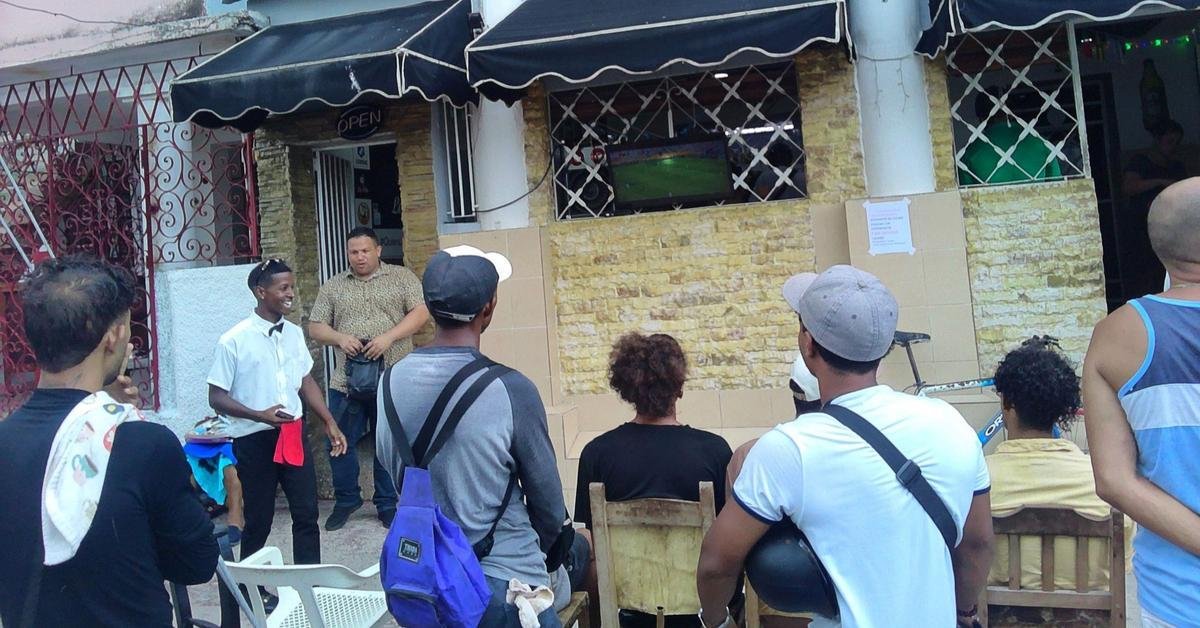
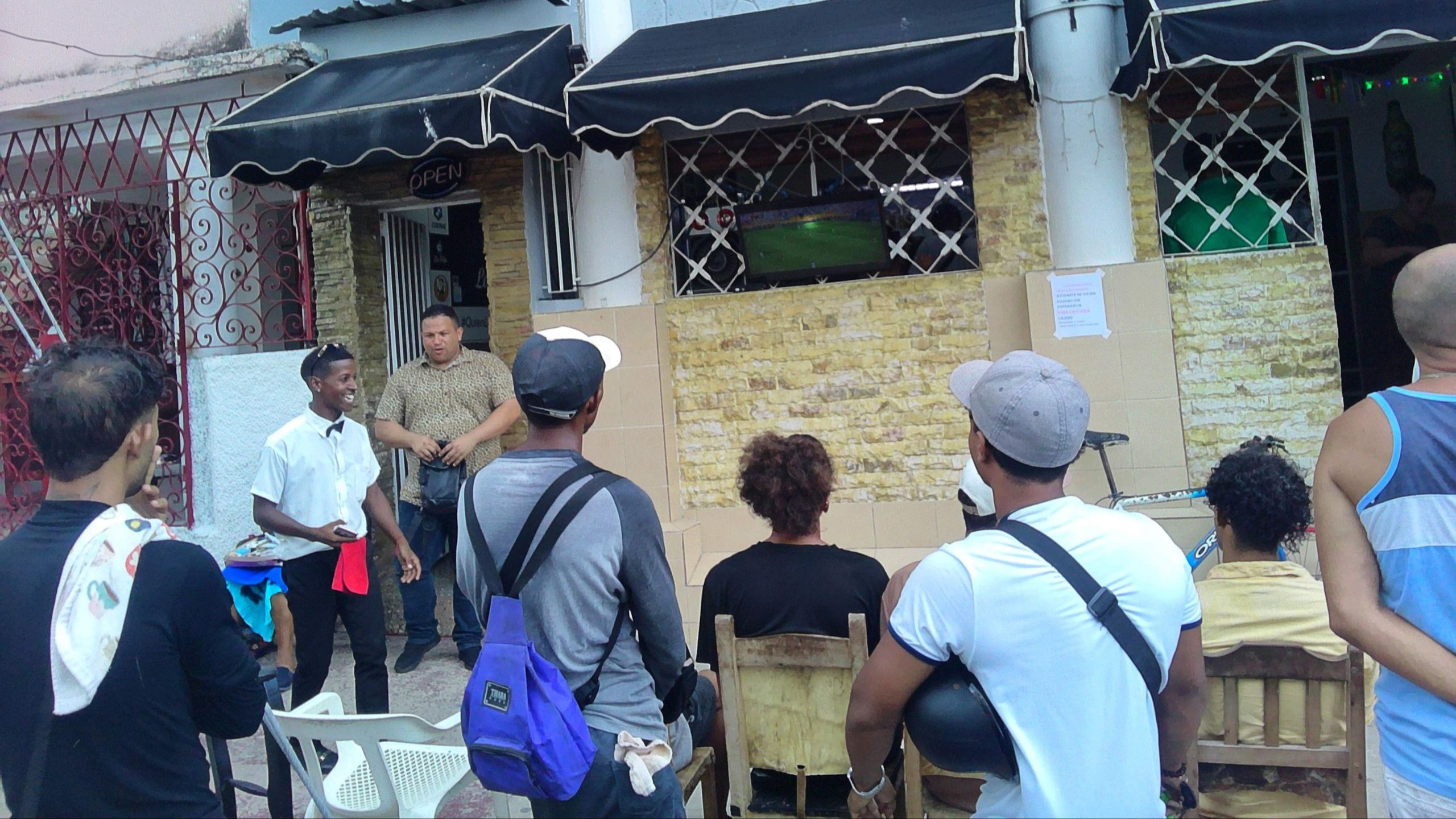
Havana/There are people who have come with their chair and everything. Since long before the opening whistle, several dozen neighbors have been settling in front of La Fela, a paladar located on the corner of Nuestra Señora de Regla and Calzada de Luyanó. The restaurant has put a television out on the sidewalk so that anyone can follow the World Cup final between Argentina and Spain. Some arrive with a stool; others remain standing, looking for a space from which to see the screen. The sidewalk has become a makeshift bleacher.
After so many days of blackouts, football has ended up being much more than a sport, it has become a hope of having a few hours of power.
“Will they let us watch the World Cup?” a resident of Cerro asked this morning when electricity returned to his building after almost 30 hours without service. The phrase had no exaggeration at all. In a city where the electricity supply depends more and more on luck than on a predictable schedule, no one dares to take for granted that a game will be able to be seen in full.
During the last few days, much of Havana has suffered power outages that have melted refrigerators, emptied water tanks and turned the nights into an exercise in resistance against the heat. In many neighborhoods, the conversation no longer begins by asking about health or work, but rather by asking how many hours of electricity there were in each area.
The conversations mix football predictions with comments about blackouts. No one seems able to separate one thing from the other.
Perhaps that is why the scene in front of La Fela has something of a collective celebration.
Screams come from around the restaurant every time the ball approaches the area. An employee dressed in a white shirt and tie smiles as he discusses a move with customers. A spectator still holds his motorcycle helmet under his arm, as if he had braked as soon as he saw that the television was on. The conversations mix football predictions with comments about blackouts. No one seems able to separate one thing from the other.
A few blocks away, in another cafeteria called El Turbo, the game also brings together a small audience. The television hangs next to a fan that spins without much enthusiasm and some old vinyl plates decorate the wall. Several bottles of soda and beer rest on the bar while eyes remain focused on the screen. For ninety minutes, the ball will manage to displace the megawatts, the broken thermoelectric plants and the fuel that does not arrive from the center of the conversation.
Football has the ability to suspend, even for a moment, the harshest routine.
Some neighbors watch from the street, unable to consume anything due to the high prices that inflation has brought, but reluctant to miss the final.
But just look around to remember where you are. The tables occupy part of the sidewalk because the interior space is suffocating due to the heat. Some neighbors watch from the street, unable to consume anything due to the high prices that inflation has brought, but reluctant to miss the final. Others appear, ask the marker and continue on their way before the current goes out again.
In Havana this Sunday, the World Cup final does not just pit Argentina and Spain against each other. It also plays against the energy crisis. And, at least for a few hours, hundreds of Cubans seem determined to beat fatigue, heat and uncertainty with the only energy that does not yet depend on the National Electric System: that of getting together to share a game.