Crude oil is hovering near $80 per barrel for the fourth consecutive session, extending a rally that has reversed roughly a third of this spring’s ceasefire-driven decline — and the market’s next move depends almost entirely on whether President Donald Trump turns a rhetorical threat into a military reality by seizing Kharg Island, the coral outcrop off Iran’s Gulf coast that processes nearly nine of every ten barrels the Islamic Republic exports. With the fifth wave of U.S. airstrikes targeting Iranian missile sites along the Strait of Hormuz already underway, and the Section 122 import surcharge set to expire by operation of law on July 24 — eight days from now — importers and energy consumers face compounding pressure from two simultaneous policy crises that are rarely covered in the same breath.
The short answer to what changed this week: a ceasefire that never found solid legal footing has collapsed completely, a naval blockade has been reinstated, insurance costs have surged back to five percent of hull value, and the mechanism that was supposed to keep the June 17 memorandum of understanding alive — a safe-passage framework for commercial vessels — turned out to have a structural technical flaw that made its breakdown near-inevitable.
A Ceasefire Signed in Versailles, Undone by a Dark-Ship Problem
The June 17 MOU between Washington and Tehran was always built on contested ground. The accord called for a halt to military operations on all fronts and committed Iran to its “best efforts” for safe passage of commercial vessels through the Strait of Hormuz — with no transit fees for an initial 60-day period. Trump heralded it as Iran’s “unconditional surrender.” The ambiguity in that “best efforts” clause, over whether Iran retained authority over passage through the strait’s shipping lanes, was apparent from the first week.
But the deeper flaw was technical, not diplomatic. The Strait of Hormuz’s shipping lanes run primarily through Omani territorial waters, governed by international maritime law and the United Nations Convention on the Law of the Sea (UNCLOS). For the MOU’s safe-passage guarantee to function in practice, someone needed to be able to distinguish protected commercial vessels from non-protected ones in real time. The system that does that is the Automatic Identification System — a VHF radio-based transponder that broadcasts a ship’s identity, position, course, and speed, mandatory under international maritime conventions for commercial vessels over 300 gross tons.
The conflict destroyed the conditions AIS depends on. As Iranian attacks on commercial vessels accelerated in late June and early July, operators began disabling their transponders — going “dark” — to reduce their targeting profile. Iran’s Islamic Revolutionary Guard Corps then struck vessels that were transiting with their transponders turned off, as confirmed by U.S. Central Command. The MOU’s safe-passage clause could not be enforced for vessels it could not identify. The framework collapsed not because Iran stopped pretending to honor it, but because the conflict itself created the incentive structure that made the tracking protocol unworkable.
The Ceasefire Timeline: From Ankara to Blockade Reinstatement
The MOU began unraveling within days of being signed. Iran launched a drone strike against a ship in the strait just over a week after the June 17 signing — an act Washington interpreted as a ceasefire violation that prompted a contained round of retaliatory strikes. The two sides traded interpretations of the MOU’s Hormuz language: Iran insisted it retained some authority over passage; the U.S. argued the pact paved the way for an open waterway by the end of 60 days.
The final break came on July 8. At the NATO summit in Ankara, Trump declared the ceasefire “over,” called Iranian leaders “scum” and “sick people,” and authorized a second consecutive night of U.S. airstrikes. That same night, U.S. Central Command struck 90 targets inside Iran. On July 13, Iran struck two UAE-flagged tankers in Omani territorial waters, killing one crew member. On July 14, U.S. Central Command announced via social media at 4 p.m. ET that it was reinstating the naval blockade of Iranian ports and coastal areas. On the same day, Trump abandoned his earlier demand that ships pay a 20% fee on their cargo to cross Hormuz under U.S. military protection — the International Maritime Organization had ruled such mandatory tolls illegal, and the shipping industry had opposed the measure — saying Gulf states would invest in the U.S. as repayment instead.
What the U.S. has reimposed is technically a Maritime Interdiction Operation, not a formal naval blockade under international law — a distinction that matters for UNCLOS compliance and for how neutral nations respond to it. Vessels departing from or destined for Iranian ports are being intercepted and diverted; the shipping lanes themselves remain nominally open for non-Iranian trade.
Kharg Island: Capture Takes Hours, Holding It Takes Something Else
The single variable markets are pricing most acutely right now is not the airstrikes themselves — it is what Trump has publicly said could come next.
“We attacked Kharg Island last night. We knocked out a piece. I said: ‘Don’t touch the oil, because maybe we’ll take over Kharg Island’ — and we may take over Kharg Island, and there’s not a thing they can do about it,” Trump told reporters this week.
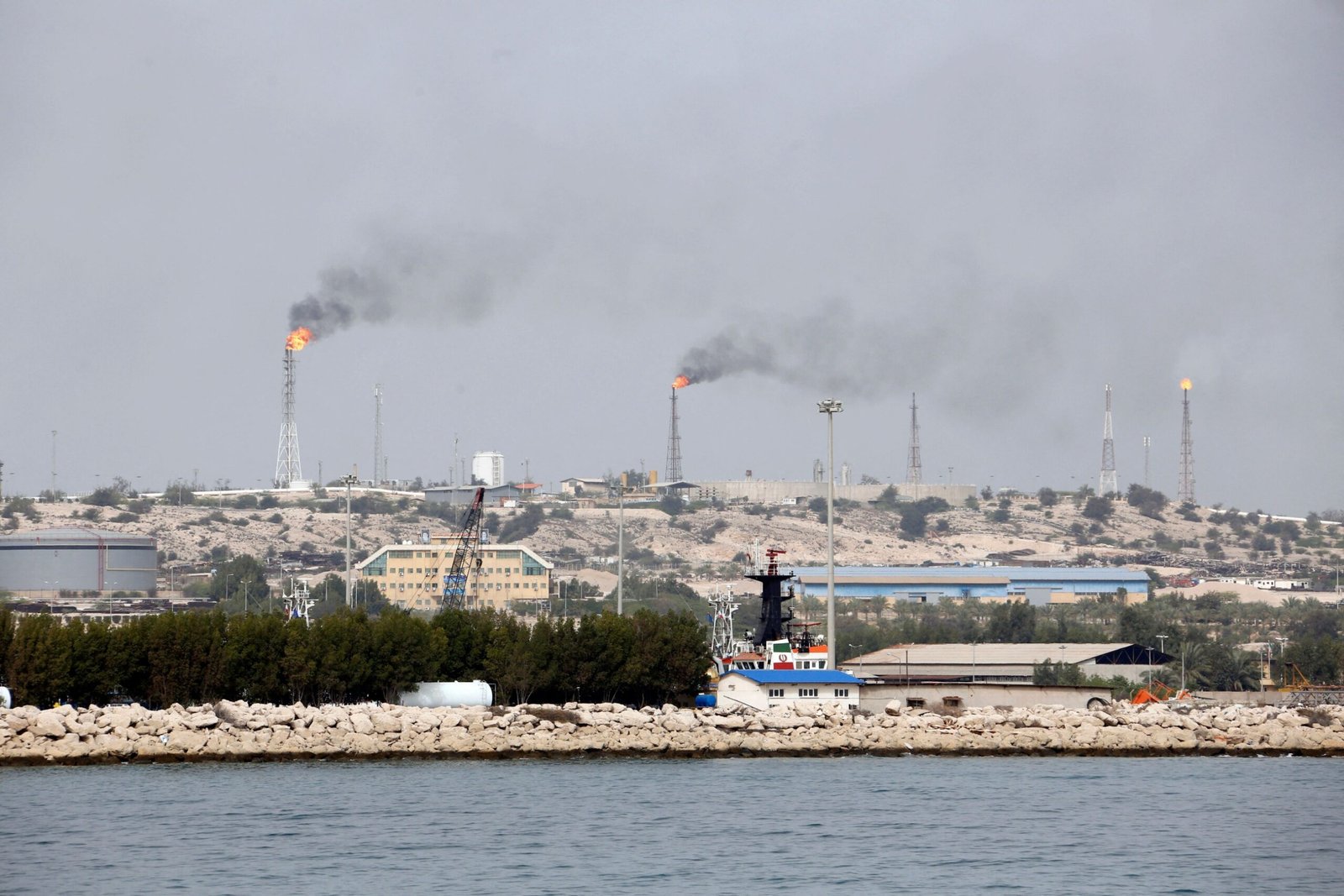
Kharg is a small coral island in the northern Persian Gulf, located 16 to 20 miles off Iran’s Gulf coast. It handles approximately 90 percent of Iran’s crude oil exports and has a loading capacity of roughly 7 million barrels per day, connected by pipeline to Iran’s largest oil and gas fields.
A senior White House official said Trump “has made no decisions on Kharg Island,” but added the situation “could change” if the effort to clear the strait drags on. “The president is not going to wait around and let the Iranians dictate the pace of the conflict,” the official told reporters.
Military analysts who have studied the question say the seizure itself — an amphibious assault on an eight-square-mile island with no natural defensive perimeter — could be completed in hours. The harder problem begins the moment U.S. forces are on the ground. Located within the operational envelope of Iranian ballistic missiles, cruise missiles, drones, and shore-based anti-ship weapons deployed along the nearby Gulf coast, Kharg would become a fixed target for a country with a well-documented asymmetric anti-access strategy that has invested heavily in precisely the weapons needed to make a fixed coastal position costly to hold. Former national security official Robert Harward, who has analyzed the military options, noted that once American forces were on Kharg, the primary danger would shift from conventional naval combat to sustained missile and drone attacks launched from the Iranian mainland — a qualitatively different military problem.
The U.S. has struck military targets on Kharg Island before — in March 2026, CENTCOM destroyed more than 90 military sites on the island, including storage facilities for IRGC naval mines and anti-ship missiles, while deliberately avoiding the oil infrastructure. Trump framed that restraint at the time as strategic optionality: hitting the oil, he said, could have significant consequences for the global economy. That optionality is now being reconsidered.
Tankers Turning Back: What the Insurance Market Is Saying
The human cost of the renewed fighting is already visible in shipping data and seafarer casualty records.
Iran’s shuttle run attacks on tankers — a practice that had rapidly expanded in recent months as one of the primary methods for moving crude out of the Persian Gulf — killed at least two seafarers in attacks earlier this week and forced at least four oil tankers to reverse course and abandon planned Strait transits. According to Kpler shipping data, Strait traffic fell to just 25 ships on a single day this week, down from a peak of 49 ships on July 7. Before the February 28 conflict began, roughly 110 ships a day transited the vital waterway.
The financial toll compounds the human one. The cost of war-risk insurance coverage for vessels transiting the Strait has climbed back to approximately 5 percent of a ship’s value — roughly five times the levels seen in the earliest days of the Iran conflict, and an enormous multiple of the fractions of a percentage point that characterized normal pre-war pricing. At that rate, insuring a $100 million oil tanker for a single Hormuz transit costs approximately $5 million. Neil Roberts, head of marine and aviation at the Lloyd’s Market Association, noted that rates softened when the June MOU was signed but moved sharply higher after three vessels were attacked in a single week. Marcus Baker, global head of marine at Marsh, the world’s largest insurance broker, said rates have risen to between 2 and 6 percent of vessel value from a fraction of a percent in pre-conflict conditions.
Estimates from Howden Re and Jefferies put cumulative industry losses from vessel strikes since the conflict began at up to $1.75 billion before cargo losses are included, based on an average ship value of $250 million. Named vessels that have sustained damage include the Honduran-flagged Nova, struck by two drones and set ablaze in the Strait, the U.S.-flagged Stena Imperative, and the Marshall Islands-flagged MKD Vyom, where a crew member was killed in early March.
What Iran’s Targeting of Dark Ships Means for the MOU’s Legal Architecture
The phrase “supertankers transiting Hormuz with their transponders turned off” — CENTCOM’s description of the vessels Iran attacked on July 13 — deserves more attention than it has received.
AIS transponders are mandatory on commercial vessels under the SOLAS requirements for AIS, for ships over 300 gross tons. They are not encrypted and not tamper-proof. Turning one off is operationally simple and legally ambiguous: in high-conflict zones, operators face a genuine tradeoff between the visibility AIS provides to other ships (collision avoidance) and the visibility it provides to adversaries (targeting). When Iran attacks tankers regardless of AIS status — hitting both identified and dark vessels — the incentive to go dark becomes overwhelming.
The MOU’s safe-passage framework never addressed this tradeoff. It required Iran to use “best efforts” for safe passage of commercial vessels but contained no mechanism for verifying vessel identity or for distinguishing which vessels Iran had agreed to protect. The result was a legal architecture that depended on a tracking system whose reliability the conflict itself progressively destroyed. When Iran’s IRGC struck two UAE tankers in Omani territorial waters on July 13, it did so in a zone where shipping lanes run outside Iranian territorial control — and it did so anyway. The MOU was already effectively dead at that point; the public declaration came the next morning.
How Does the Strait of Hormuz Actually Control Your Fuel Bill?
The Strait of Hormuz, located between Oman and Iran, is the sole maritime gateway from the Persian Gulf to global markets. At its narrowest, it is 21 miles wide. The shipping lanes are two miles in each direction, separated by a two-mile median. Every barrel of crude oil produced in Saudi Arabia, Iraq, Kuwait, Qatar, and the UAE that moves by sea must pass through those four combined miles of water — or not move at all.
In 2024, oil flow through the Strait averaged 20 million barrels per day, equivalent to approximately 20 percent of global petroleum liquids consumption. Approximately one-fifth of global liquefied natural gas trade also transited the strait in 2024, primarily from Qatar. There are no practical alternatives for most of this volume — the Saudi East-West pipeline offers a partial land bypass, and Iran itself has limited overland options, but the volumes involved are far larger than any alternative route can absorb.
Every dollar added to the price of Brent crude flows through to jet fuel, diesel, petrochemicals, and the energy costs embedded across global manufacturing and logistics. Gasoline futures are up more than 14 percent over the past month. Heating oil is up more than 24 percent. The IEA has characterized the 2026 disruption as the largest supply shock in the history of the global oil market.
The current rally — bringing WTI from the mid-$70s after the June ceasefire back toward $80 — has reversed roughly a third of the second-quarter decline that followed the MOU signing. A Kharg Island seizure, should it occur, would cut off the overwhelming majority of Iran’s remaining crude export capacity and would likely trigger a severe Iranian response across the region, pushing prices well beyond the $80 range that markets are pricing today.
Section 122 Expires in Eight Days — and the Replacement Is Not Settled
The oil market disruption does not arrive in isolation. Eight days from now — on July 24, 2026 — the Section 122 import surcharge expires by operation of law at 12:01 a.m. ET.
Section 122 of the Trade Act of 1974 authorizes the President to impose a temporary import surcharge of up to 15 percent ad valorem for a maximum of 150 days to address fundamental international payments problems. The Trump administration invoked it on February 24, 2026 — four days after the Supreme Court struck down the IEEPA tariffs in a 6-to-3 ruling in Learning Resources, Inc. v. Trump — imposing a 10 percent global surcharge on virtually all imports. The statute’s 150-day hard limit means the authority cannot be extended by presidential proclamation. Only Congress can authorize continuation, and no extension legislation is advancing.
The realistic post-July 24 scenario for importers is not a simple rate reduction. The U.S. Trade Representative published proposed Section 301 tariffs covering 60 countries on June 2, with a July 20 completion deadline. The administration launched Section 301 investigations in March 2026 targeting 16 economies for excess manufacturing capacity. Section 232 rates may extend into new product categories. A U.S. Trade Court has already ruled Proclamation 11012 unlawful; the Federal Circuit stayed that ruling pending the government’s appeal; duties continue to be collected.
For a procurement officer or importer modeling Q3 cost exposure, the simultaneous arrival of war-risk freight surcharges on Asia-to-Europe and Middle East routes — driven by Hormuz conflict — and tariff-regime uncertainty at the Section 122 sunset represents compounding pressure that the energy price alone does not capture. The July 24 deadline is fixed. What replaces the surcharge is not.
What Comes Next: Kharg, a Second Ceasefire, or Something Worse
The trajectory of the conflict now hinges on two variables: whether Trump authorizes a Kharg Island operation, and whether the economic pressure of rising gasoline prices — the same pressure that originally pulled Trump to the negotiating table in June — proves sufficient to force a second ceasefire attempt.
The collapse of the June memorandum of understanding has clarified Iran’s core strategic priority: retaining some form of authority over Hormuz passage, which Tehran views as leverage over any final nuclear and sanctions settlement. But with both sides locked in an accelerating cycle of attacks and retaliations, the question of whether a lasting deal remains achievable or whether the logic of military escalation has achieved its own momentum will determine whether crude’s current rally toward $80 continues — or whether a supply shock far larger than anything the market has yet priced is still ahead.
Frequently Asked Questions
Why did the June ceasefire really fail — and was it preventable?
The MOU’s collapse had both a political dimension and a technical one. Politically, Iran and the U.S. never agreed on what “safe passage” through Hormuz meant — whether Iran retained residual authority over who could transit the strait. Technically, the safe-passage clause depended on the Automatic Identification System (AIS), the transponder protocol that allows vessels to identify themselves, remaining functional as a tracking mechanism. As Iranian attacks on identified tankers accelerated, commercial operators began disabling their transponders — going “dark” — to reduce their targeting risk. Iran then attacked dark-ship supertankers, which it classified as “rogue vessels.” The MOU contained no mechanism to resolve this identification gap. The technical failure made the ceasefire’s collapse structurally near-inevitable even if both sides had acted in good faith on the political terms.
What would a U.S. seizure of Kharg Island actually do to oil prices?
Kharg Island processes approximately 90 percent of Iran’s crude oil exports. A physical seizure would effectively cut off Iran’s primary revenue source — immediately removing the production capacity Iran has been able to sell through shadow channels and under the now-terminated General License X authorization. The supply shock would be severe. During the peak of the original Hormuz closure in March–April 2026, Brent crude reached $118 per barrel. A Kharg Island seizure analysis by policy experts warns that seizure without a simultaneous deal to resume global supply would almost certainly push prices well above that level. Military analysts caution that holding the island against sustained Iranian missile and drone attack from the nearby Gulf coast would be costly in ways that a seizure itself would not be — turning Kharg from an economic asset into a sustained military commitment.
What happens to import costs when Section 122 expires on July 24?
The 10 percent global import surcharge under Section 122 of the Trade Act of 1974 expires on July 24, 2026, the 150th day after it took effect — a hard statutory limit the President cannot extend unilaterally. What replaces it is not settled: the most likely successor involves the Section 301 replacement timeline, with 12.5 percent tariffs proposed on 46 countries, and a July 20 completion deadline set by the U.S. Trade Representative. For importers in countries not covered by Section 301, effective rates could fall. For those in covered countries, rates could rise or stay roughly flat. USMCA-origin goods from Canada and Mexico are exempt from both regimes. Sunset, succession, and ongoing litigation over Proclamation 11012’s legality are three separate clocks — only one of them stops on July 24.
How does the Hormuz crisis affect electricity and data center costs, not just gas prices?
Natural gas, which is closely tied to LNG exports transiting Hormuz, is the primary fuel for electricity generation in many markets. Approximately one-fifth of global LNG trade transited Hormuz in 2024, primarily from Qatar. When Hormuz is disrupted, the LNG price surge tightens LNG delivery to Europe and Asia, which drives up electricity generation costs — costs that are directly passed through to energy-intensive facilities including data centers. Global data center electricity demand is projected to rise approximately 27 percent in 2026. For technology companies and any enterprise with significant data infrastructure, the Hormuz conflict is not an abstract energy market event; it is a direct input cost driver for computing infrastructure.