Because students are unable to comprehend two languages at a young age
father-in-law
Expressiveness
The discussions surrounding the review of primary school curricula are no longer merely postponed pedagogical recommendations, but rather have taken on an official and serious character that reflects a real desire to bring about a “pedagogical revolution” that is in line with the interest of the student.
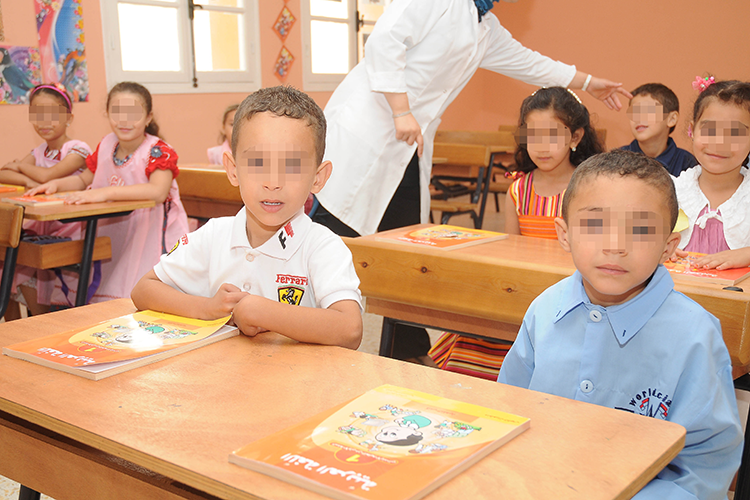
In this regard, it was decided to adopt teaching only one foreign language in the third year of primary education, which is English, in exchange for dispensing with the French language subject, after it became clear in the field that a student at this young age cannot comprehend two foreign languages at the same level.
In detail, Al-Shorouk sources highlighted that this trend, supported by official indicators circulated recently, does not stem from arbitrary, ill-considered considerations, but rather is based primarily on reports drawn from the national symposium and solid scientific arguments based on studying the child’s cognitive and psychological abilities in the early stages of his academic life.
Hence, the central argument on which this new approach was built is “the child’s absorptive capacity” at the age of eight (the third year of primary school), as reports confirm that forcing the student at this early age stage to absorb two foreign languages at once (French and English), in parallel with his mother tongue (Arabic), in which he has not yet established his written and grammatical abilities, often leads to completely opposite results that limit his creative and academic abilities in the school years. Next, as our sources explain.
Bilingual trauma at an early age
On this basis, our sources pointed out that it has become clear on the field, and through the numerous field experiences of professors and their constant and continuous contact with students, that the student, over time, may experience what is known conventionally as negative “linguistic interference,” which may cause him to suffer from mental disintegration, as he becomes more vulnerable to falling into many linguistic problems such as “linguistic glut,” where he finds himself not distinguishing between the grammar and pronunciation of two languages that share the same Latin letters and mixing them up, which It has a negative impact on his understanding of basic scientific subjects such as mathematics and science, and thus he loses his natural passion for the educational process.
Bet on one language to accommodate multilingualism
From this standpoint, the same sources highlighted that the student is in dire need to focus and build a “solid and stable base” in one foreign language first (the strongest assumption is English), before opening up to other foreign languages in subsequent educational stages (middle and secondary), where his mental structure has matured sufficiently and prepared to absorb multilingualism without “disoriented interference,” which is the pedagogical strategy expected to be adopted by the guardianship in the future.
In the same context, the same sources emphasized that this trend towards restricting the primary stage to one foreign language, which is English, as it is a basic and living global language, in exchange for the displacement of the French language, is dictated by an integrated scientific reality imposed by the requirements of the modern era, and this vision can be summarized in two fundamental points.
This is related, firstly, to the flexibility of the linguistic structure, as modern linguistic studies agree that the grammar of the English language in its early stages is more flexible and smooth for comprehension compared to the deep grammatical and morphological complexities of the French language, which makes it easier for the child to pick it up without excessive mental stress.
English is an essential choice for opening up to modern technologies
In addition, the same sources stressed that this option is also clearly in line with the strategic direction aimed at popularizing the English language subject as a basic basis for openness to the rest of the sciences, precise technologies, and artificial intelligence, which are areas that the “Shakespeare” language absolutely dominates on the global level.
“Pedagogical Audacity” is the roadmap for the next generation
In conclusion, it seems that the school is entering a stage of “pedagogical boldness,” where the student’s cognitive and psychological interest is the sole and decisive criterion in drawing the “road map” for the next generation. Once this trend is officially embodied on the ground, the educational system will witness a radical change that will rearrange priorities in favor of quality education and its modernization, away from cognitive dispersion.
It should be noted that the Minister of National Education, Mohamed Saghir Saadawi, had addressed, at the beginning of last April, the issue of teaching foreign languages in the primary education stage as a basis for the intermediate and secondary levels. He emphasized, in his response to questions from representatives of the National People’s Assembly, that students in the third grades of primary school receiving two foreign languages at the same time represents a challenge because of the similarity in letters and the origins of words.
The Minister indicated at the time that specialized studies recommend starting with only one language, then including the second language in the fourth or fifth year after the students have acquired the basics, especially since the current academic program, after the recent reforms based on the directives of the President of the Republic, Abdelmadjid Tebboune, respects international standards and provides space for cultural and sports activities in addition to the academic subjects.
It is noteworthy that, for the first time in the history of education, it was decided to include the English language subject in the third primary sections under the title of the 2022/2023 academic year, which was later demarcated by a presidential decision for the next academic year 2023/2024, with support for the decision to open a specialty as a primary teaching professor of the English language in higher schools, in order to end the “employment crisis” in the medium and long term.
During that period of time, voices rose calling for the abolition of the French language subject, and the retention of one subject, which is the English language, in order to avoid confusing the minds of the students, and thus, raise their comprehension rate on the one hand, and on the other hand, to embody a sovereign policy, which is getting rid of the colonial legacy.
The public authorities are seeking to reduce the French language in the educational scene, in favor of strengthening and supporting the Arabic language subject, and adopting English as the first foreign language in the stages of basic and university education, especially after a decision was taken to ban the teaching of French curricula in private educational institutions, as well as the inclusion of English at the third level of primary school.