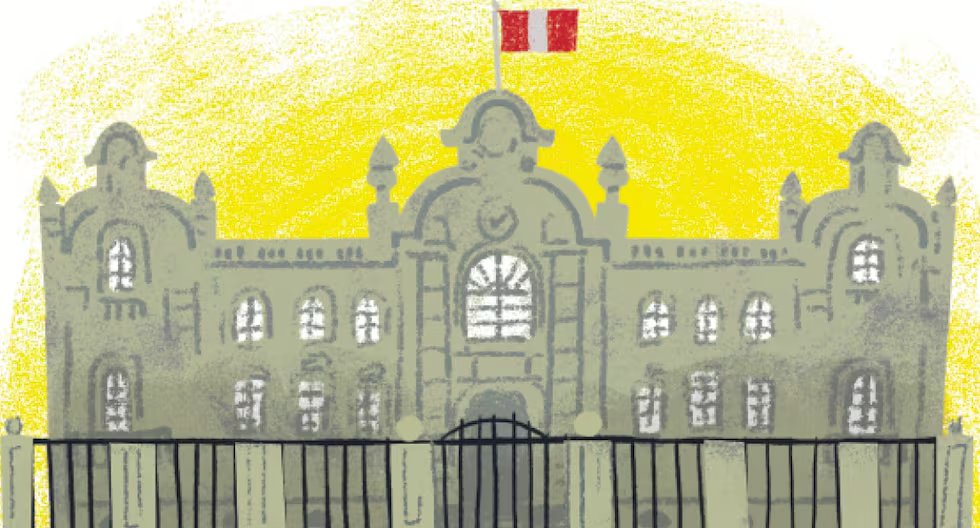

The country is heading towards its fifth democratic transfer. Certainly, it is not just any transition: it occurs after a lengthy electoral process with unusual setbacks. However, what can be its impact at this juncture?
These words could point to the answer: “Suffrage, the panacea of liberal democracy, did not work in this country or it worked intermittently or it worked poorly. Or, at times, it had conflicting results. In the institutions that were established through it, characteristics of a disease emerged that time did not cure but rather made it grow.”
Don’t they sound familiar in times when the country returns to bicameralism in search of the stability lost in the recent decade? “The Executive Branch frequently oscillated between abuse and impotence. The Legislative Branch, increasingly characterized, in recent times, by the mediocrity of its members, with few exceptions, accentuated its desire to interfere in public administration and to approve empirical laws or laws motivated by minuscule and impure interests or inclined to accentuate the imbalance in the treasury.” Nota bene: a supplementary credit has just been approved.
Let us continue: “The budget of the Republic was prepared, at least in the last 15 years of constitutional life, hastily, at the table of parliamentary commissions, without an organic plan, under the obsession of meeting personal, local or partisan demands.”
Obviously, this had an impact on the civil service. “The bureaucracy was left, to a large extent, at the mercy of political contingencies; along with arbitrary appointments there were also unjust postponements (…). In short, the Peruvian State was and continued to be an empirical State.”
The passages referred to correspond to the end of “Chance in history and its limits”, an unavoidable set of essays by Jorge Basadre published in 1971 (Penguin-RH, 2021). At that time, the country was celebrating 150 years of republican life and just under three years of Velasquista dictatorship.
Today, 55 years after its publication, these pages shine without losing an iota of relevance and topicality. The fact is sad: it projects the image of a country that plows in the desert, apparently incapable of learning from its repeated disasters. In short, a story of few lights and many shadows.
Recently, these lights have illuminated the path of the national economy, whose projections continue to be promisingly positive. The shadows, meanwhile, loom over politics, accustomed, today, to mediocrity and indolence, concluding what, without a doubt, will be remembered as the lost decade.
On the brink of a new political cycle, Basadre’s words challenge with renewed validity the incoming political leadership that will assume the reins of the State. Will he have enough vision to guide the country to that long-delayed promise?
*El Comercio opens its pages to the exchange of ideas and reflections. In this plural framework, the Diario does not necessarily agree with the opinions of the columnists who sign them, although it always respects them.