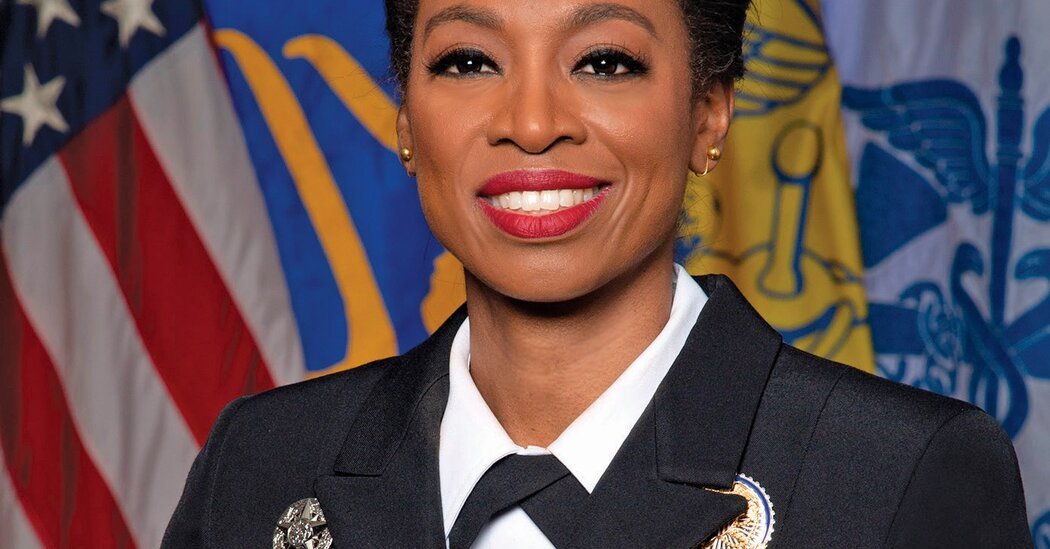
Dr. Erica Schwartz, President Trump’s third nominee in less than two years to lead the Centers for Disease Control and Prevention, is scheduled to face questioning from the Senate health committee on Wednesday, a crucial step in her confirmation process.
Dr. Schwartz, a deputy surgeon general during the first Trump administration, has publicly supported childhood vaccines and is viewed as a qualified mainstream choice for the agency’s director. The committee is expected to approve her candidacy and send it to the full Senate for confirmation.
The committee’s chairman, Senator Bill Cassidy, Republican of Louisiana and a physician, has called her “very impressive.” Wednesday’s hearing will be Mr. Cassidy’s first with a health official since May, when he lost his bid for re-election.
If confirmed, Dr. Schwartz would lead an agency that has been in the cross hairs of Health Secretary Robert F. Kennedy Jr.’s efforts to upend longstanding federal guidance on vaccines. During his tenure, the agency has lost about a third of its staff to layoffs and resignations, including scientists who had worked there for decades; has endured a shooting at its headquarters in Atlanta; and is now grappling with a series of high-profile infectious disease outbreaks.
But it is unclear whether Dr. Schwartz would have full autonomy to make decisions. In a series of congressional hearings in April, Mr. Kennedy told lawmakers he supported Dr. Schwartz’s nomination, but he refused to say he would accept all of her decisions on vaccines, declaring, “I’m not going to make that kind of commitment.”
Many public health experts were concerned by his statement.
“If R.F.K. Jr. still can exert power over her, then it’s only a matter of time before she’s asked to do something that’s wrong,” said Dr. Amesh Adalja, a fellow at the Infectious Diseases Society of America.
Susan Monarez, the C.D.C.’s previous permanent director, was confirmed by the Senate a year ago. But about a month later, Mr. Kennedy fired her over her refusal to accept the recommendations of his handpicked panel of vaccine advisers.
Dr. Schwartz, a retired rear admiral in the Commissioned Corps of the United States Public Health Service, has openly supported the role of vaccines in prevention. She has also praised ideas central to Mr. Kennedy’s agenda, including the importance of healthy diet and exercise in combating chronic diseases.
With the midterm elections looming, the White House has recently sought to refocus Mr. Kennedy on less controversial topics such as healthy eating. Dr. Schwartz is “likely to have an easier course than Susan Monarez, and is less likely to be meddled with,” Dr. Adalja predicted.
The Senate health committee on Wednesday is also scheduled to question Sean Kaufman, the Trump administration’s nominee for assistant secretary for preparedness and response, a role that includes oversight of emergency measures during public health crises.
Mr. Kaufman’s candidacy is less assured. He has argued against mandates for Covid vaccines and against the use of hepatitis B vaccine in newborns, putting him at direct odds with Mr. Cassidy, who has championed the shot.
The White House withdrew its first nominee for C.D.C. director, Dr. Dave Weldon, a Republican and former congressman, last year when it became apparent that his anti-vaccine views would not pass muster with the Senate.
In April, Mr. Trump withdrew his nomination of Casey Means, his pick for surgeon general, whose confirmation was stalled over her views on vaccines. His second nominee for the role, Dr. Nicole B. Saphier, a radiologist, has praised vaccines as lifesaving but has not yet been scheduled to appear before the Senate for confirmation.