Vanuatu says it plans to pursue legal options under international law after failing to reach an agreement with France over the Pacific sovereignty of two uninhabited volcanic islands which remain in dispute after two days of intense negotiations in Paris.
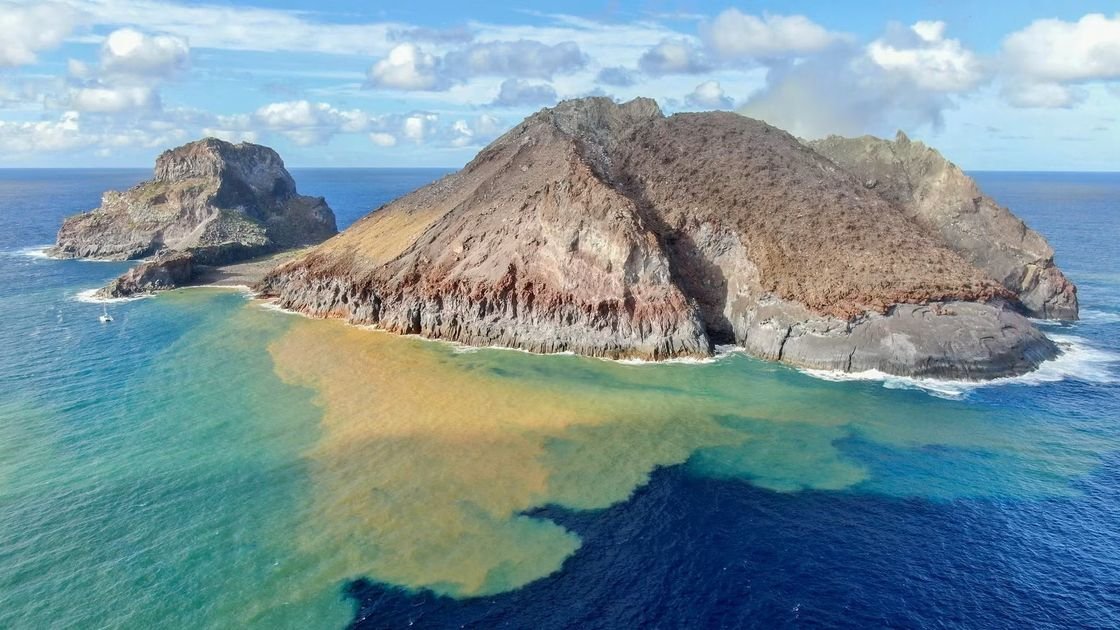
The crux of the diplomatic row is primarily over the proximity of Matthew and Hunter Islands.
Vanuatu claims the islands as a part of its Tafea province, citing historical and customary ties with the Indigenous people on Vanuatu’s Aneityum Island.
However France continues to administer both Matthew and Hunter Islands as part of its control of New Caledonia, where its Indigenous Kanaky people are fighting for their own independence from French rule.
But Vanuatu, which was once a colony of both the United Kingdom and France through the Anglo-French condominium, has always claimed ownership of the islands since Vanuatu became independent in 1980.
The islands are around 280 kilometres from Vanuatu, but 450 kilometres from Grand Terre, the main island of New Caledonia.
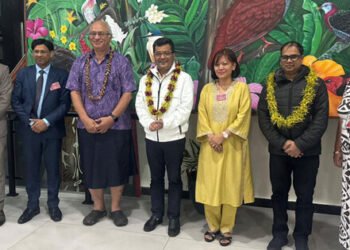
Deputy Prime Minister Johnny Koanapo, who led Vanuatu’s delegation to Paris, confirmed last week’s bilateral negotiations had reached an impasse, with both nations maintaining opposing positions over ownership of the islands and their permanent maritime boundary.
He said Vanuatu remained firm that Matthew and Hunter Islands have always belonged to the Indigenous peoples of Vanuatu, adding that no agreement on maritime boundary delimitation could be reached until the issue of sovereignty was first resolved.
“Our position on sovereignty remains unchanged,” Mr Koanapo said during a press conference on his return to Vanuatu.
“Matthew and Hunter have always belonged – and will always belong – to the people of the Republic of Vanuatu.”
Mr Koanapo described the two rounds of negotiations, held in Port Vila in November last year and Paris last week, as “difficult but respectful”.
He said both sides exchanged extensive views throughout the talks, however their positions on sovereignty remained too far apart to reach consensus.
“We (both) conducted the negotiations in a meaningful, respectful, professional and diplomatic way, but we firmly conveyed Vanuatu’s position,” Mr Koanapo said.
Mr Koanapo told reporters Vanuatu also rejected France’s proposal to just conclude a maritime boundary agreement first while the sovereignty — the purpose of the talks — remained unresolved.
Under the United Nations Convention on the Law of the Sea, sovereignty over islands can affect maritime entitlements.
This could potentially include the Exclusive Economic Zone and its continental shelf, depending on the island’s legal status under Article 121 of that UN convention.
Vanuatu may then have exclusive rights on fisheries, offshore minerals, seabed resources, oil and/or possible gas and marine scientific research from the claim.
Mr Koanapo added Vanuatu could never accept arrangements that treated France, a long-time colonising power in the Pacific some 16,500 kilometres away, as having full authority over Matthew and Hunter Islands.
France did submit a proposal suggesting joint management of the islands and allowing Vanuatu access, however, Mr Koanapo confirmed that arrangement was firmly rejected.
“I told them, ‘I will allow access to you instead of you allowing access to us’,” Mr Koanapo said.
“It doesn’t work that way.”
Mr Koanapo pointed out Vanuatu’s claim over Matthew and Hunter Islands pre-dates past colonial agreements.
For Vanuatu, the claim is also about completing its former New Hebrides territory as a part of fully decolonising foreign rule.
He also criticised the historical agreement between France and Britain over the islands, saying it was reached without consulting the Indigenous people of Vanuatu.
“France came and changed these boundaries together with the British without consulting any of our people,” Mr Koanapo said.
“To us, what France did was an insult to Vanuatu.”
Mr Koanapo said Vanuatu’s struggle for recognition of its sovereignty over Matthew and Hunter Islands would continue until the nation’s rightful ownership was fully acknowledged.
“Our journey to full independence will not be complete until Vanuatu’s rightful ownership of the (Hunter and Matthew) islands is fully recognised,” he said.
Mr Koanapo said that Vanuatu is determined to pursue other international mechanisms that are available under international law.
That is set to include the International Court of Justice or possibly the Permanent Court of Arbitration after bilateral negotiations are said to have been fully exhausted.
Mr Koanapo said Vanuatu had respected the diplomatic process and believed it had fulfilled its obligation to negotiate in good faith before considering legal action.
But he also questioned the absence of New Caledonian representatives during the negotiations, saying discussions on sovereignty and maritime boundaries should include the Indigenous Kanaky people of New Caledonia due to their geographical and cultural links to the disputed area.
According to Mr Koanapo’s version of events, French officials acknowledged New Caledonia should have been represented, but they said recent provincial elections prevented their participation.
Despite the lack of agreement, Mr Koanapo insisted negotiations were not a failure.
He praised French President Emmanuel Macron for agreeing to direct negotiations between the two governments, endorsing him as the first head of France to support formal talks on the issue.
Mr Koanapo called on all Ni-Vanuatuans to remain united in supporting the government’s efforts to secure international recognition of Vanuatu’s sovereignty over Matthew and Hunter Islands.
“I ask all our people to stop complaining and pray for our country,” he said.