A world reference at only 33 years old
In coordination with the INCN, in February of this year, Jesús Martín-Fernández, Spanish neurosurgeon who leads the Wake Up Cognitive Oncological Neurosurgery Unit of the Canary Islands (UNCOG)arrived for the first time in Lima to lead five brain tumor operations with awake patientsusing an innovative methodology that he and his team developed called multimodal cognitive mapping in three steps.

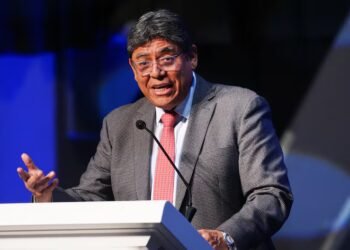
The Spanish neurosurgeon Jesús Martín-Fernández, only 33 years old, leads the Wake Up Cognitive Oncological Neurosurgery Unit of the Canary Islands. He has been in more than 20 countries carrying out the methodology that he and his team developed. (Photos: Lenin Tadeo)
/ LENIN TADEO
During his stay in the country, together with his team and national INCN specialists, he treated people with “giant tumors that have somehow been classified as inoperable or as a risk of major consequences for daily life”told The Commerce the expert “That is, remaining without speaking, without moving or without recognizing emotions; deciding in social contexts what to do,” he said.
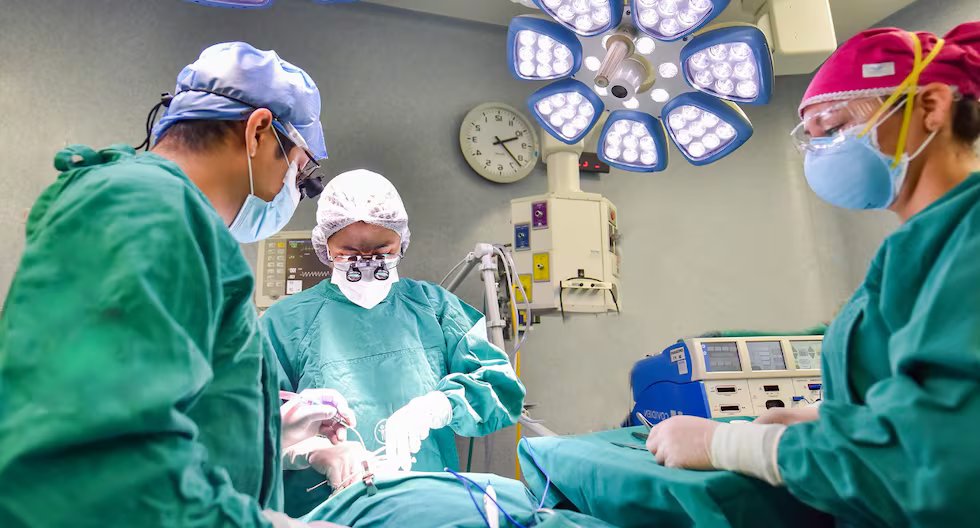
The three-step multimodal cognitive mapping technique consists, first, of identify areas of the brain around the tumor that cannot be touched because they are related to critical functions for emotion, language, tension, memory, movement. The lesion is then resected while the patient is subjected to movement and language exercises, and a test based on artificial intelligence. In this way, it is monitored in real time that no critical area is being affected.
And finally, “the white matter tracts are preserved, which are like the cables that are illuminating all those lights in the cortex, which need to be constantly in synchronization,” explained the expert. “This way we make a more complete approach and the person returns to their normal life in every sense in a few weeks”he asserted.

With the three-step multimodal cognitive mapping technique, experts identify critical areas for emotion, language, tension, memory, and movement. (Photos: Lenin Tadeo)
/ LENIN TADEO
At 33 years old, the Spanish neurosurgeon is also the president of the World Society of Neurosurgery Wake Up and is considered an international reference in open brain surgery for brain tumors. His work has taken him to more than 20 countries performing these types of procedures.
The paradigm is changing to also focus on emotion, attention and memory
The Commerce He was present in the fifth operation that Martín-Fernández carried out with the INCN team. It was a tumor located in the left frontal part of the brain, a critical area linked to language. However, the specialists went one step further, also mapping the critical points of everything that has to do with emotion, attention and memory.
“The main risks are, therefore, being left without the process of empathy or putting oneself in the other’s place, without language, without movement.. (…) But we do this technique just so that none of that happens and everything turns out well,” said Martín-Fernández.

Specialists from the National Institute of Neurological Sciences of Peru participated in the five brain operations with awake patients. (Photos: Lenin Tadeo)
/ LENIN TADEO
Although one brain operation with the patient awake It may sound dangerous, it is an important tool in neurosurgery, which has been performed in Peru for several years now.
“By performing awake surgery, we can definitely check each of the patient’s functions. Sensory motor functions, language, cognitive areas, executive functions and even the emotional areas of each patient. And if the patient was not awake, it would be more difficult to locate those exact areas,” Carlos Vásquez Pérez, Head of the Department of Neurosurgery at the INCN, who participated with Martín-Fernández in the five operations, explained to this newspaper.

As part of the innovative methodology, the patient was subjected to movement and language exercises, and a test based on artificial intelligence. (Photos: El Comercio)
/ video
That’s why, now the paradigm is changing, also focusing on preserving the patient’s emotions. “We also have to get involved in this, in this awake patient technique, mapping cognition, so that the patient is more functional in the emotional part, in what he expresses or feels,” added Yelimer Caucha Morales, a neurosurgeon at the INCN who was also part of these operations.
Along these lines, Luis Saavedra Ramírez, director of the INCN, maintained that Before, specialists focused only on preserving the motor and language part. “But currently we know that there is a series of functions that are very important so that the person can develop in their routine life and in their family life. This is the idea,” he stressed.
A mother’s wish not to forget her first daughter
That desire to continue being yourself, to remember who you love, motivated Cinthia to undergo this innovative technique. She was the first patient operated on by Martín-Fernández’s team in the country.
“I am 31 years old and have a baby girl who is one year and five months old and I have left her with her father for now.”the patient told this newspaper. She had a large brain tumor, more than 100 cubic meters.
“In one or another hospital they told me that it (the tumor) was big. They told me I was going to lose my memory, my motor activities, I was going to become quadriplegic.”.
Cinthia said that her main fear was losing her memory, losing knowledge of her daughter, more than anything.. “It was difficult for me to have my daughter. (…) Every day I learn from her. She is one year old and in that year I began to learn how to be a mother,” she narrated.
Both its operation and that of the other four scheduled patients concluded with extensive tumor resections and preservation of essential functions. Some patients may present temporary difficulties in the first few days, but will undergo periodic evaluations.

All five brain operations concluded with extensive tumor resections and preservation of essential functions. (Photos: Lenin Tadeo)
/ LENIN TADEO
“These are patients who needed surgical intervention. And when this modality or joint work occurs with other centers, in this case in the UNCOG of Spainthey have received it in a good way because it is an opportunity to have all this support from professional specialists in each of the areas. So, I think it has been a great opportunity for patients to share experiences between both centers. I think it has been a great job,” said Vásquez Pérez.
“We have been doing altruistic work for the rest of the world for more than three years. I feel that my life mission is that. And it is not that one comes to operate and that’s it, and that others see what he does, but to share and do the immersion so that later in the future they can reproduce it without us being there. We already have experience to be able to share and let others share their experience and build on that,” concluded Martín-Fernández.