Business confidence took a turn in June. After two months in pessimistic territory, companies’ expectations about the Peruvian economy for the next three months were once again in the optimistic range; reflecting a change in the mood of the private sector after the electoral process and a macroeconomic environment that is beginning to show more favorable signs.
According to the Central Reserve Bank (BCR), the three-month economic expectations indicator rose from 44.6 points in May to 55.5 points in June, while the 12-month expectation rose from 55.9 to 68.6 points. In total, 16 of the 18 indicators of business expectations closed the month in optimistic territory.
For Víctor Fuentes, Public Policy Manager of the Peruvian Institute of Economics (IPE), the main factor behind this recovery was the reduction of political uncertainty. “The expectations indicator returned to optimistic territory, which coincides with the completion of the second electoral round, which reduces uncertainty about the business environment,” he noted.
Eduardo Jiménez, head of the Macroconsult Information System, agrees that the result reflects a return to the scenario prior to the electoral process. “The good expectations that were recorded before the elections have returned to their previous level. It is not that today they are above that level, but that they returned after the uncertainty dissipated,” he explained.

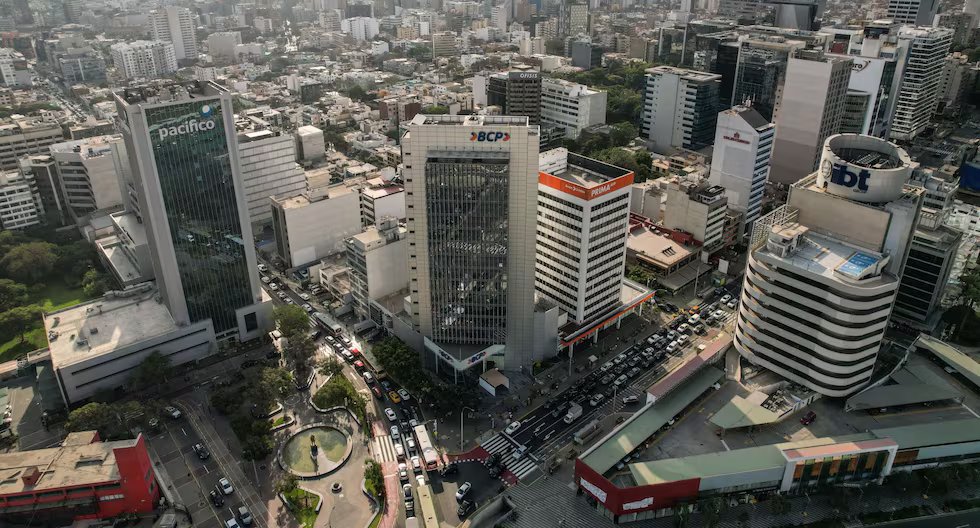
After two months in pessimistic territory, companies’ expectations about the Peruvian economy for the next three months were once again in the optimistic range (Source: Andina)
The change was not only limited to the perception of the economy. Companies also improved their expectations regarding the evolution of their own business, demand for their products, hiring of personnel and investment.
César García, economist at the Development Studies Network (REDES), highlighted that the main value of the report is that the improvement was generalized. “A specific indicator did not improve: all expectations indicators improved at the same time. When optimism is so broad, it has much more analytical weight than when only one isolated aspect improves,” he said.
The specialist added that some indicators even exceeded their historical averages. The 12-month investment expectation reached 67 points, compared to a historical average close to 59, while the expected demand reached 71 points, above its long-term average.
“Companies are not only less pessimistic; today they are more optimistic than they normally are,” he indicated.
Among the factors that drove this change of mood, García mentioned a more favorable macroeconomic context, the expected strengthening of the sun, lower expectations of input costs and greater predictability in interest rates.

After two months in pessimistic territory, companies’ expectations about the Peruvian economy for the next three months were once again in the optimistic range (Photo: iStock)
/ shironosov
Despite the strong rebound, analysts consider that it is still premature to talk about a structural change in business confidence.
Fuentes pointed out that it will be necessary to observe whether the indicators remain in optimistic territory during the coming months. “Confidence indicators must consolidate during the following months to conclude that there is a change in trend,” he indicated.
Along these lines, he recalled that a recent IPE survey showed that 83% of economists consider it a priority for the next government to quickly appoint a solid economic team to strengthen business confidence and boost private investment.
Jiménez also ruled out that there could be talk of a permanent change. “Expectations are the mood of the moment. Today the mood is good, tomorrow it may change. It is not appropriate to talk about a structural change, although we could see levels of confidence higher than those observed during the last governments,” he commented.

After two months in pessimistic territory, companies’ expectations about the Peruvian economy for the next three months were once again in the optimistic range (Photo: GEC)
/ VICTOR IDROGO
Although business optimism usually anticipates an improvement in economic activity, specialists remember that this effect is not immediate.
According to Fuentes, studies by the BCR itself show that improvements in expectations tend to be transferred to private investment with a lag of close to two quarters. “The recovery of business confidence will have an impact on the economy towards the end of 2026 and beginning of 2027,” he explained.
García agrees that the first effects could begin to be observed earlier in some indicators. “Purchase orders usually react in one or two months; contracting takes between two and four months, while investment can take between six months and a year. If this optimism continues during July and August, we could see concrete effects towards the fourth quarter,” he indicated.
Despite the better business mood, the current situation still reflects a certain caution. One of the few indicators that remains in pessimistic territory is demand compared to expectations, while some sectors and regions still show weakness.

After two months in pessimistic territory, companies’ expectations about the Peruvian economy for the next three months were once again in the optimistic range (Photo: iStock)
García explained that there is a natural difference between expectations and present activity. “Companies perceive that the bottom has already been touched and that the path forward will be better, but they still do not see it reflected in their current results. That is the difference between the thermometer and the weather forecast,” he stated.
In the case of the north of the country, for example, current production and sales fell, influenced by lower mining and hydrocarbon activity. However, investment expectations for the next 12 months reached the highest level among the three macro-regions analyzed.
For specialists, the behavior of July and August will be key to confirming whether the improvement observed in June marks the beginning of a more sustained recovery in business confidence or if it only represents a rebound after the end of electoral uncertainty.