Havana/We Cubans had already heard the celebration of the military pilots who, on February 24, 1996, had just destroyed a civilian small plane, unarmed and with defenseless people on board. “We broke his balls!” one of them shouted after firing his missiles at a Hermanos al Rescate Cessna, as if he had shot down an enemy bomber and not a small aircraft over international waters.
Now, a broadcast recording by CNN en Español allows you to hear the crime from the other side. Not from the cockpit of the MiG fighters, but from José Basulto’s plane, the only one of the three Brothers to the Rescue aircraft that managed to return to Florida. The tape, preserved for three decades in a collection of videos and cassettes by former pilot Reinaldo Martín, recorded the communications and fear inside the aircraft while the other two were destroyed.
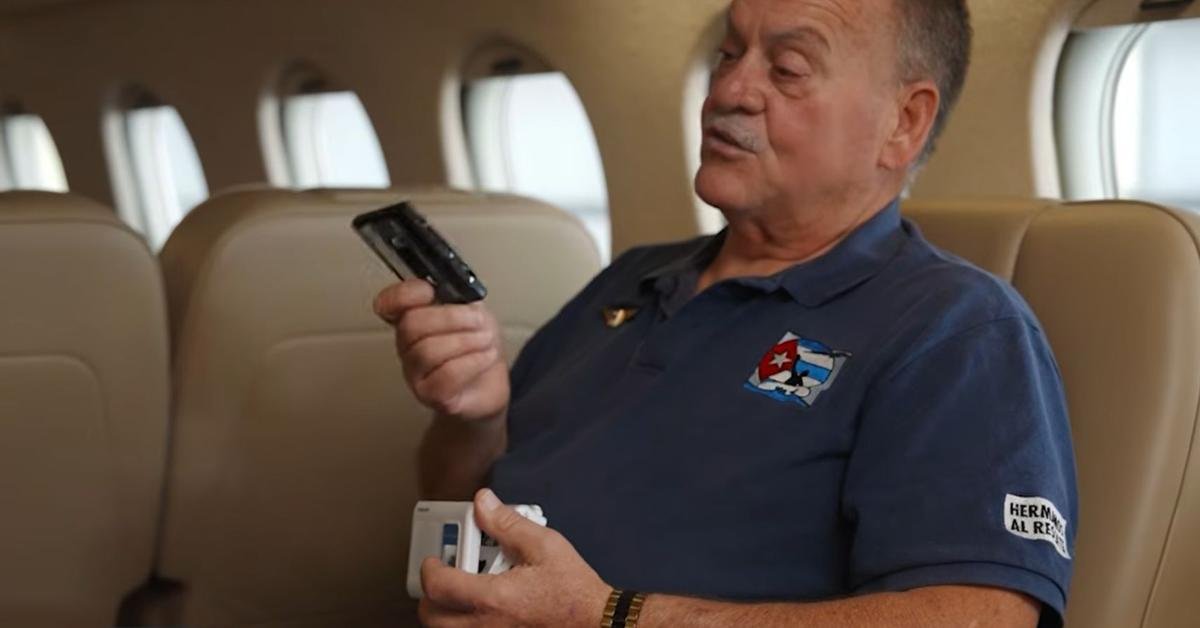
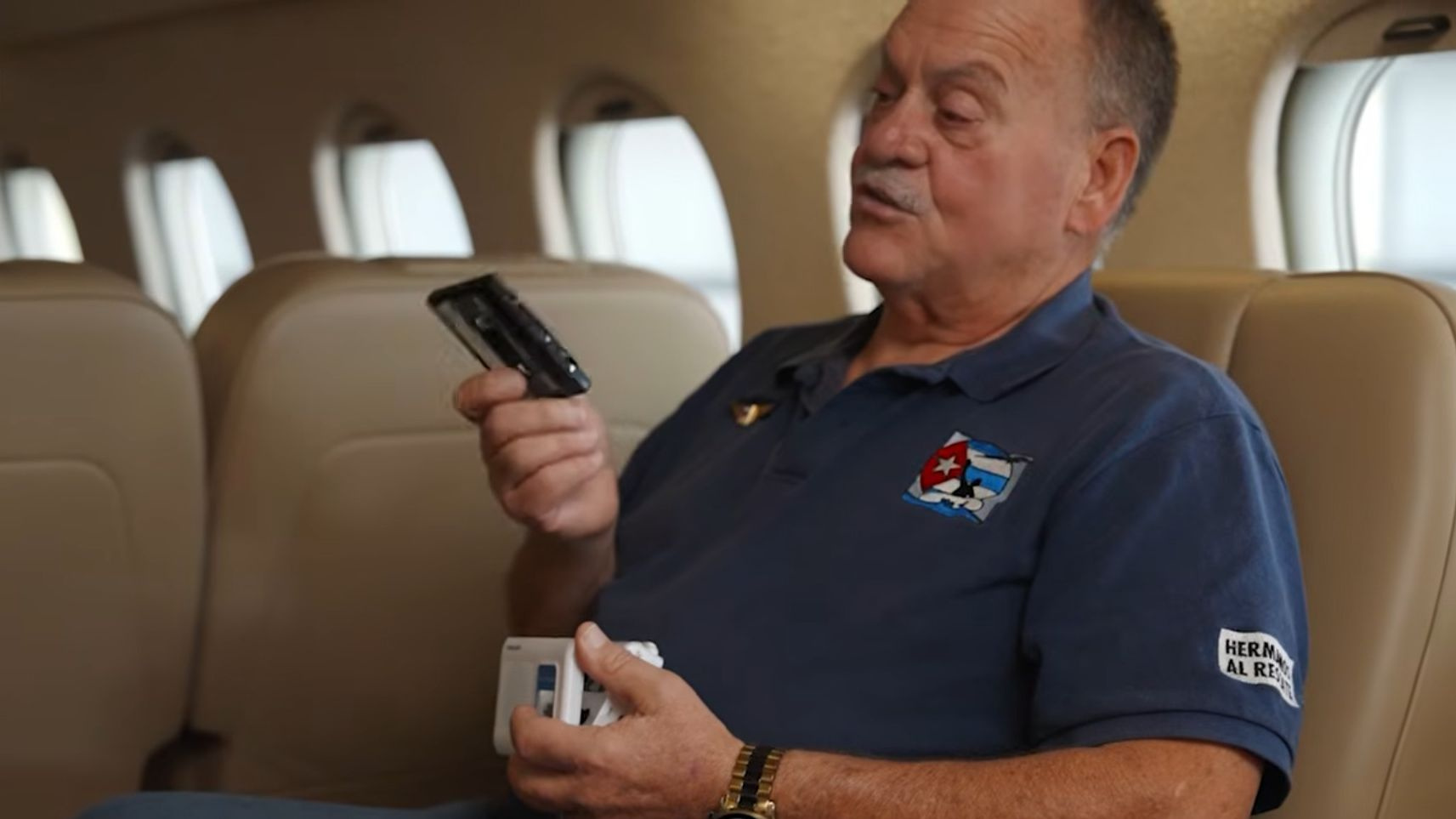
“This is gold,” says Martín when showing CNN the cassette recorded on Basulto’s plane, whose callsign was Gaviota 1. The file also allows us to hear Carlos Costa, identified as Gaviota Charlie, and Mario Manuel de la Peña, Gaviota Mike. “You get goosebumps when you hear it,” Martín confesses while listening to one of the voices.
“They are going to shoot us down,” the pilot is heard warning. Then comes the silence
Communications between the MiG fighters and the Cuban command post were intercepted by the United States intelligence services. Three days after the crime, on February 27, 1996, the then US ambassador to the United Nations, Madeleine Albright, released a transcript and he presented it as proof that the Cuban military knew that they were attacking civilian small planes and celebrated their destruction. “This is not cojones, it is cowardice,” Albright declared before the Security Council.
A decade later, Cuban journalist Wilfredo Cancio Isla revealed another decisive recording about the crime. Published in The New Herald In August 2006, the tape recorded a meeting in which Raúl Castro acknowledged having given several generals powers to shoot down small planes without waiting for authorization. “Throw them in the sea when they appear and do not consult,” he is heard saying. Cancio contrasted the authenticity of the voice with specialists and with Alcibiades Hidalgo, former personal secretary of Raúl Castro.
However, until now the tape with the audio recorded from the victims’ cabin had not been released. Costa was piloting one of the Cessnas alongside Pablo Morales, while De la Peña was driving the other, accompanied by Armando Alejandre Jr. The four died when the Cuban fighters fired air-to-air missiles at the planes.
The microphone connected to Basulto’s headphones records the confusion and panic inside the cabin. “They are going to shoot us down,” the pilot is heard warning. Then comes silence. “Charlie,” Basulto calls, trying to communicate with Costa’s plane. But there is no answer. “Mike,” he insists. Nobody responds either.
“This is the first time I have heard the recording of Basulto saying that we are next, that they are going to shoot us”
“Both have fallen. They shot down both planes,” explains Martín during the report. By then, the Cessnas had been pulverized and their remains had fallen into the Straits of Florida.
An investigation by the International Civil Aviation Organization concluded that both aircraft were destroyed outside Cuban airspace. The first was about 18 miles from the coast and the second more than 30 miles, when the Cuban territorial limit was 12. The Inter-American Commission on Human Rights also determined that no warning was given to the victims allowing them to land or leave the area.
The new recording also shows the reaction of Sylvia Iriondo, who was traveling as a passenger on Basulto’s plane and survived because the third plane managed to escape. “This is the first time I’ve heard the recording of Basulto saying that we are next, that they are going to shoot us,” Iriondo tells CNN cameras. For her, what happened does not allow for nuances or euphemisms: “They shot at unarmed and defenseless civilian planes in international airspace.”
“We are next,” warns Basulto. “The other one destroyed. The other one destroyed,” is heard later
CNN recalls that the families had already heard other recordings of the attack, some provided by the FBI and others played during a federal judicial process. But the cassette found in Martín’s archive preserves something different: the last communications of the crew members and the moment in which those traveling in the third plane realized that they could be the next victims.
“We are next,” warns Basulto. “The other one destroyed. The other one destroyed,” is heard later. The victims were Carlos Costa, a veteran of the US Marine Corps; Mario Manuel de la Peña, 24 years old; Armando Alejandre Jr., born in New Jersey and father of a family, and Pablo Morales, a former rafter who had been rescued before by Brothers to the Rescue. Three were U.S. citizens and the fourth was a legal resident.
For Mirta Méndez, a relative of one of the victims, the accusation brought recently in the United States against Raúl Castro and several Cuban soldiers cannot become another symbolic gesture. “We cannot have an accusation that remains kept in a drawer,” he maintains.
When CNN asks him how he imagines Raúl Castro appearing before Justice at 94 years old, he responds: “It doesn’t matter. He is still active and giving orders. So, if he can’t walk, in a wheelchair; if he can’t sit, on a stretcher.”