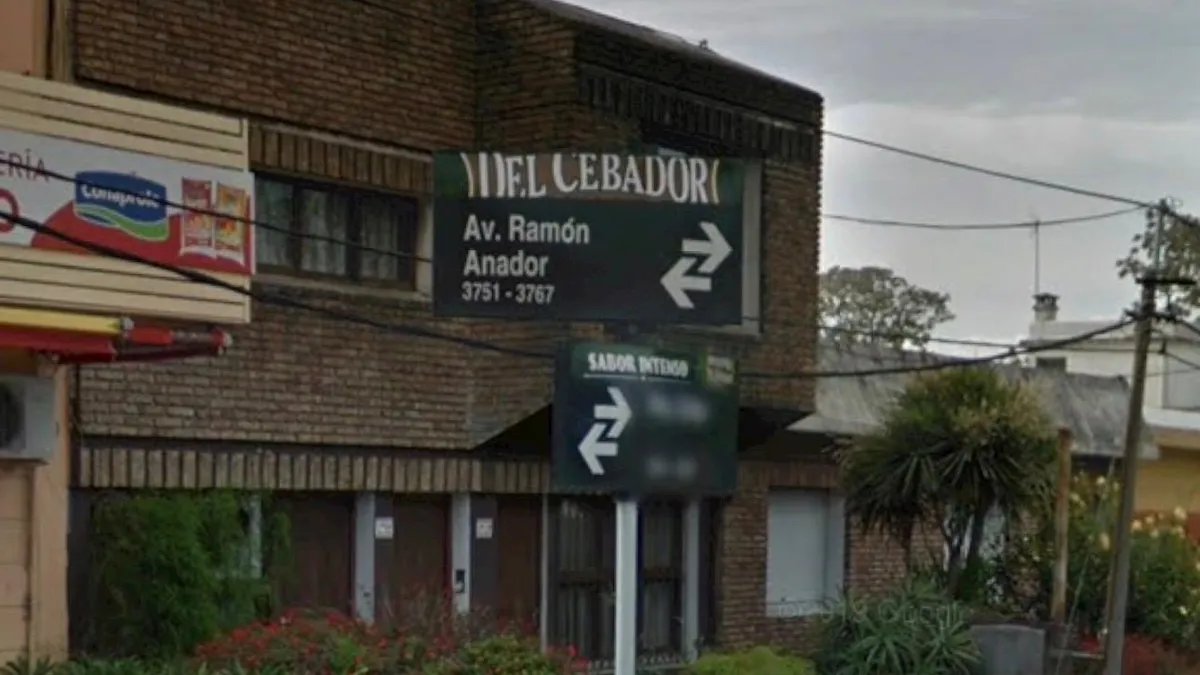
The Intendance of Montevideo (IM) proposed that Ramón Anador Avenue, an artery in the Buceo neighborhood, change its name. It will be – if the Departmental Board approves it – a subtle change of one letter: the last “r” for an “n”.
The honoree, a soldier born in Montevideo in the 18th century, was actually named Ramón Anadón.
This was determined by an investigation by genealogist Enrique Yarza. The professional’s finding was published in 2013, but was never taken into account by the different IM administrations.
Finally, 13 years laterOn April 13, Mayor Mario Bergara signed the draft decree to change the name of the avenue, which will now be called Ramón Anadón Avenue.
Now the project passes into the hands of the Departmental Board, which must analyze it first in its Nomenclature commission and then in the plenary session. The president of the commission, the Broad Front councilor Mayo González, advanced The Observer that “there should be no problems” in approving the change. In any case, he reported that the file has not yet been submitted to the commission and estimated that the process could take about two months.
Who was Ramón Anadón?
Juan Ramón Anadón y Sosa Cabral was born in 1791 in Montevideo. He had the same name as his father, a military man from Ariño (Aragón, Spain). His mother, Francisca de Sosa y Cabral, was born in Buenos Aires. The couple had four children, Juan Ramón, María Isabel, Francisco and Simón.
Ramón’s mother died when he was a child and the family moved to Santa Fe (Argentina) in 1810. At that time, according to Yarza’s research, Ramón was already a soldier.
He served as a cadet in the 1st company of the 2nd Squadron of the Horse Grenadier Regiment, which was under the orders of the Argentine hero José de San Martín.
Their first and only battle was on February 3, 1813. That day the troops of San Martín faced the royalist Army of Montevideo, the force that responded to the Spanish crown, in the battle of San Lorenzo.
Anadón, 21, was killed by machine gun fire from the Montevideo squad during the battle that lasted only 15 minutes.
Although it did not have much military relevance, The Battle of San Lorenzo was of great political and social significance and today is one of the most celebrated battles in Argentine history.. Furthermore, it was the baptism of fire of Saint Martin.
The other deceased oriental was Justo Germán Bermúdez, who was honored with a small one-block street with only exit to Ejido in the Palermo neighborhood. The IM also proposed changing the name of that street from “Bermúdez” to “Capitán Justo Germán Bermúdez.”
The investigation
The genealogist began his research in 2012 and published it in 2013 on the occasion of the bicentennial of the Battle of San Lorenzo.
“In 2012 I went to a conference in Rosario (Santa Fé) and they were making a book about the fallen in the battle of San Lorenzo. The topic came up that there were two orientals and I didn’t know it. There I learned the names and heard Ramón Anadón. I said, it’s the same person, it’s this one. Then I proved that it was this one, the same Ramón, born in the same year in the same place,” he told The Observer.
For the investigation, Yarza accessed Anadón’s baptismal certificate, the marriage certificate of his parents and the death certificate of one of his brothers, among other documents.
Something doubly curious happens with Anadón. It turns out that in the city of San Lorenzo, where the battle occurred, there is also a street in his tribute. However, it is also poorly written: “Cabo Ramón Amador”.