Tegucigalpa, Honduras
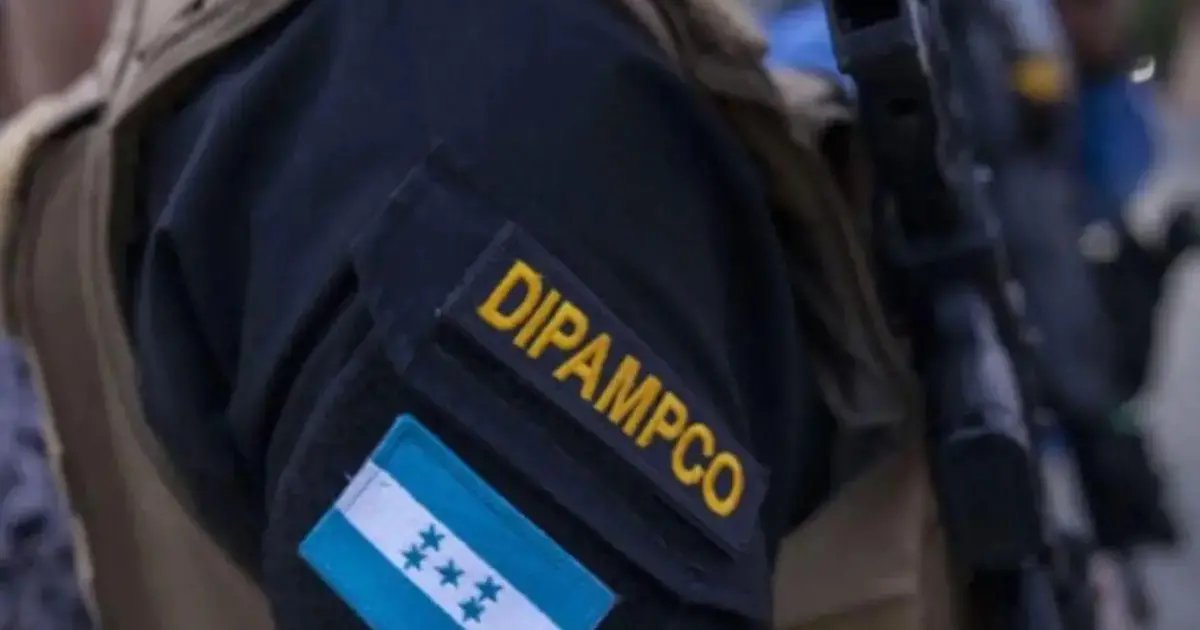
The Anti Maras and Gangs Police Directorate Against Organized Crime (Dipampco) executed just over 1,891 million lempiras between 2022 and 2026, according to official information obtained by LA PRENSA Premium.
The records show that most of these resources were concentrated during the second year of operation of the unit and, mainly, in personal services, fixed assets and rents.
The amount was provided by the Security Secretariat in response to the request for information SSSS-3168-2026through which this research unit required the budget approved and executed by Dipampco throughout its period of operation.
In 2022, the year it began operations, Dipampco executed just over 73 million lempiras. In 2023, the budget rose to more than 852 million lempiras, the highest amount recorded during the entire period analyzed.
From then on, the execution began to decrease. In 2024 it fell to more than 478 million lempiras and in 2025 it fell to more than 333 million. In 2026, the year in which the unit was dismantled, it still executed more than 153 million lempiras.
Almost one of every two lempiras executed by Dipampco was used for personal services. This item concentrated more than 864 million lempiras between 2022 and 2026, equivalent to 46% of the budget officially reported by the Ministry of Security.
According to him Sorter by Object of the Spent of the Secretariat of Finance, personal services It includes salaries, wages, supplements, bonuses, employer contributions, allowances and other payments related to personnel.
The second object of expense was recorded by the Ministry of Security as “fixed assets”, with more than 494 million lempiras, equivalent to 26% of the total.
However, in the Expenditure Object Classifier, a main group with that exact name does not appear; The document classifies expenses into personal services, non-personal services, materials and supplies, capitalizable assets, transfers, financial assets, debt service and other expenses. For this reason, this investigation unit maintains the name provided by Security, without attributing to it a scope different from that stated in the official response.
They followed him rentals and services, with more than 180 million lempiras, equivalent to 10% of the executed budget.
Together, these three objects of expenditure absorbed more than 1,539 million lempiras, equivalent to 82% of all resources executed by Dipampco during the analyzed period. The remaining 18% was distributed between food, fuel, goods and services, tickets, travel expenses and other items.
To find out how these public resources were managed and why most of the budget was concentrated on those three objects of expenditure, this research unit consulted the Press Department of the National Police. The institution responded that, since the case was under investigation, it could not refer to the financial management of the defunct unit.
Expense that can be tracked
With the official data as a starting point, this research unit reviewed the spending reports published by the Ministry of Security itself on the Single Transparency Portal to reconstruct how much of the budget executed by Dipampco could document with the available information.
The result was partial. After reviewing the records published between 2022 and 2026, it was only possible to identify just over 936 million lempirasequivalent to 49% of the almost 1.9 billion that the Ministry of Security reported as executed by the unit.
In other words, the documents available on that portal did not allow the reconstruction of almost 955 million lempiras, equivalent to 51% of official spending.
This absence does not imply, by itself, a use irregular resourcesbut it does limit the possibility of knowing, with the publicly available information, how just over half of the budget reported by the Ministry of Security was executed.
The review also shows that documented spending was not executed uniformly. More than a third of the identified resources were concentrated in just four months: August and November 2023, in addition to January and March 2025.
The review also shows that documented spending was not executed uniformly. The four months with the greatest execution were March of 2025, August of 2023, January of 2025 and November of 2023.
The largest disbursement occurred in March 2025, with more than 91 million lempiras. They followed him August 2023with more than 88 million; January 2025, with more than 83 million; and November 2023, with more than 71 million.
At the opposite extreme, May and December 2025 appear. Both months recorded executions of less than one million lempiras and, together, they represented just 0.1% of documented spending.
For the former Deputy Minister of Security, Julissa Villanuevathe magnitude of the resources executed by Dipampco never translated into proportional results against criminal structures.
“This shows that a million-dollar amount of money was injected into the unit that it is not known how it was spent or on what, and it did not give results. It ended up being a unit reported for different irregularities,” said the former official.
Honducompras only registers 14 contracts for L7.8 million
The documentary search did not end in the Single Transparency Portal. To identify what goods and services Dipampco acquired during its operation, this research unit also reviewed the processes published in HonduShoppingthe portal administered by the State Contracting and Acquisitions Regulatory Office (Oncae).
The result was the same. Between 2023 and 2025, only 14 contracts awarded in the name of Dipampco, for a joint value of 7.8 million lempiras.
Not all of the budget executed by the unit had to appear in Honducompras, since a part corresponded to the payment of salaries, benefits, travel expenses and other expenses that are not processed through public contracting processes. However, this platform did allow the identification of purchases and services contracted for the operational performance and administrator of Dipampco.
Among the processes located is the SEDS-LPN-GA-2023-025 contract, awarded in December 2023 for 6.4 million lempiras to provide Dipampco personnel with uniforms and tactical equipment, including boots, polo shirts, caps, sashes, waterproof jackets, balaclavas and gloves.
Even with this precision, the identified contracts represent less than 0.5% of the almost 1.9 billion of lempiras that the Ministry of Security reported as executed by Dipampco between 2022 and 2026.
The rest of the processes correspond to smaller purchases for institutional operation, including tires, batteries for vehicles and motorcycles, video surveillance equipment, office supplies, inks, toners, signs, badges, badges and flagpoles.
Thus, the third documentary search reached the same conclusion as the previous one: the public platforms consulted do not allow a complete reconstruction of how the Dipampco budget was executed.
From Dipampco to the new agency
The definitive closure of Dipampco was announced by the authorities on May 29, 2026, after a armed attack in Corinto, Cortés, in which five agents from that unit died during an ambush perpetrated by a criminal group.
The disappearance of the unit gave way to two new structures. One of them is the National Crime Agencywhich assumed part of its functions and was attached to the National Defense and Security Council, made up of the country’s main authorities.
Also created was the Anti-Extortion and Terrorist Associations Division (Daet), responsible for assuming other functions of Dipampco. This unit was placed under the Police Investigation Directorate (DPI), attached to the Ministry of Security.
For the security analyst Edgardo Mejiathe closure of Dipampco did not by itself solve the problems that the institution was facing, because the State’s response could not be limited to closing one agency and opening another with a different name, but rather internal supervision and control mechanisms over this type of structures had to be strengthened.
“The criminals They are going to take advantage of this transition process, because when a police structure is dismantled without a clear replacement, spaces are generated that criminal networks can occupy,” he warned.
Although Dipampco disappeared and was replaced by a new structure, the documentary review carried out by this research unit leaves an open question: how an important part was executed of the almost 1,900 million lempiras that the Ministry of Security reported as spent during the almost four years of operation of the unit.
Methodology
- The information on the budget approved and executed by Dipampco was obtained through the public information request SSSS-3168-2026, addressed to the Ministry of Security. This research unit contrasted these data with the expense reports published in the Single Transparency Portal and with the contracts available in Honducompras, to identify what part of the expense could be documented on public platforms.